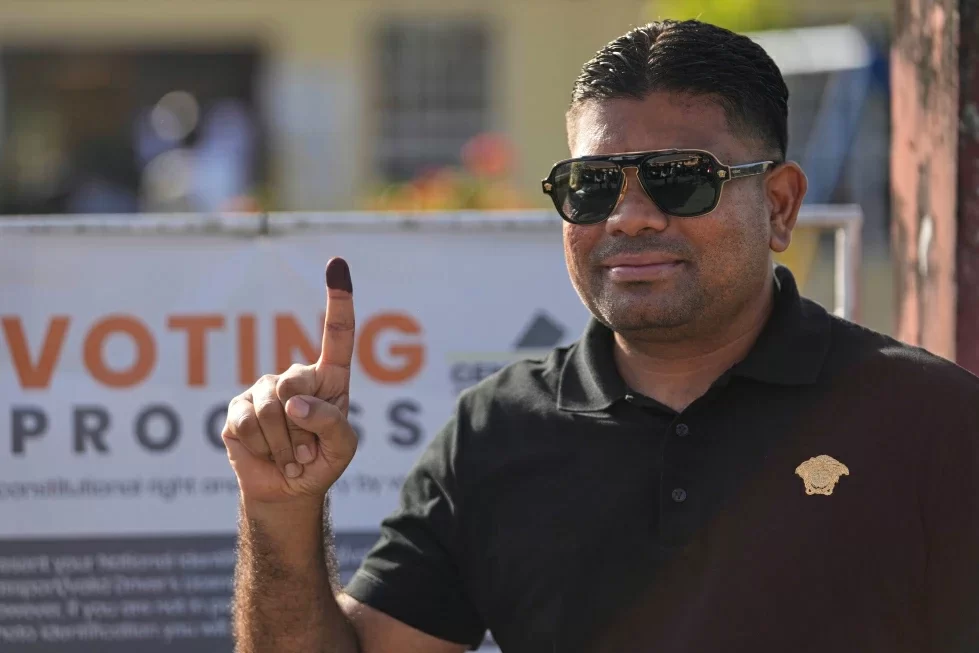
In a landmark ruling that ripples through Guyana’s volatile political landscape, the Caribbean Court of Justice (CCJ) delivered a decisive decision Wednesday, allowing the extradition process of Guyana’s top opposition leader Azruddin Mohamed and his father Nazar Mohamed to move forward. The court rejected the pair’s legal challenge against the extradition request filed by the United States, clearing a critical procedural hurdle in a high-stakes case that carries far-reaching implications for the oil-rich South American nation’s politics and rule of law.
The United States has charged both Mohameds with large-scale gold smuggling and money laundering offenses. According to the U.S. Department of Justice, the pair illegally exported over 10,000 kilograms of gold into the United States and evaded more than $50 million in tax obligations. Long among Guyana’s most prominent gold traders and exporters, the Mohameds built a sprawling business empire that included gold sales to buyers in Miami and Dubai, alongside a profitable currency exchange operation and extensive real estate holdings across the country.
Azruddin Mohamed, who was elected leader of the opposition in Guyana’s parliament earlier this year and founded the up-and-coming political party We Invest in Nationhood, has consistently denied all allegations against him. His rapid political ascent—just six months after launching his new party—cemented his status as a major power player in a country where systemic corruption and persistent political tensions have been longstanding issues.
The case has thrown into sharp relief the growing pains Guyana faces as it navigates an unprecedented economic boom driven by massive newly discovered offshore oil reserves. This newfound energy wealth has drawn billions in global investment, but it has also exacerbated internal political divisions and amplified widespread accusations of corruption and abuse of power among the country’s ruling and opposition circles. Complicating the political dynamics of the extradition case further is the longstanding close diplomatic and economic relationship between the U.S. and the current administration of Guyanese President Irfaan Ali, a tie that has sparked unconfirmed speculation among local political observers about behind-the-scenes influence.
Holding its public hearing in Trinidad, where the CCJ is based as the final appellate court for multiple Caribbean nations, presiding judge Winston Anderson described the case as uniquely “complex.” The defense team for the Mohameds argued that several of the charges brought by the U.S. did not qualify as extraditable offenses under regional and international law, but the CCJ rejected all of these legal arguments in its full 256-page ruling.
Following the court’s decision, Azruddin Mohamed addressed his supporters via social media, striking a defiant but respectful tone. “The fight continues,” he wrote. “While the CCJ did not rule in our favor, we respect the decision of the court.” His father Nazar added that the pair’s legal team is still reviewing the full ruling, and confirmed they are prepared to continue fighting the extradition request “until the end.”
The Mohameds have been released on bail since their arrest last year, but the greenlight for extradition proceedings means they could be compelled to travel to the U.S. in the near future to face the charges against them. Legal and political analysts warn that a potential extradition would reshape Guyana’s political balance ahead of upcoming general elections scheduled for 2025, and could set a major precedent for cross-border anti-corruption and anti-crime enforcement across the Caribbean region.