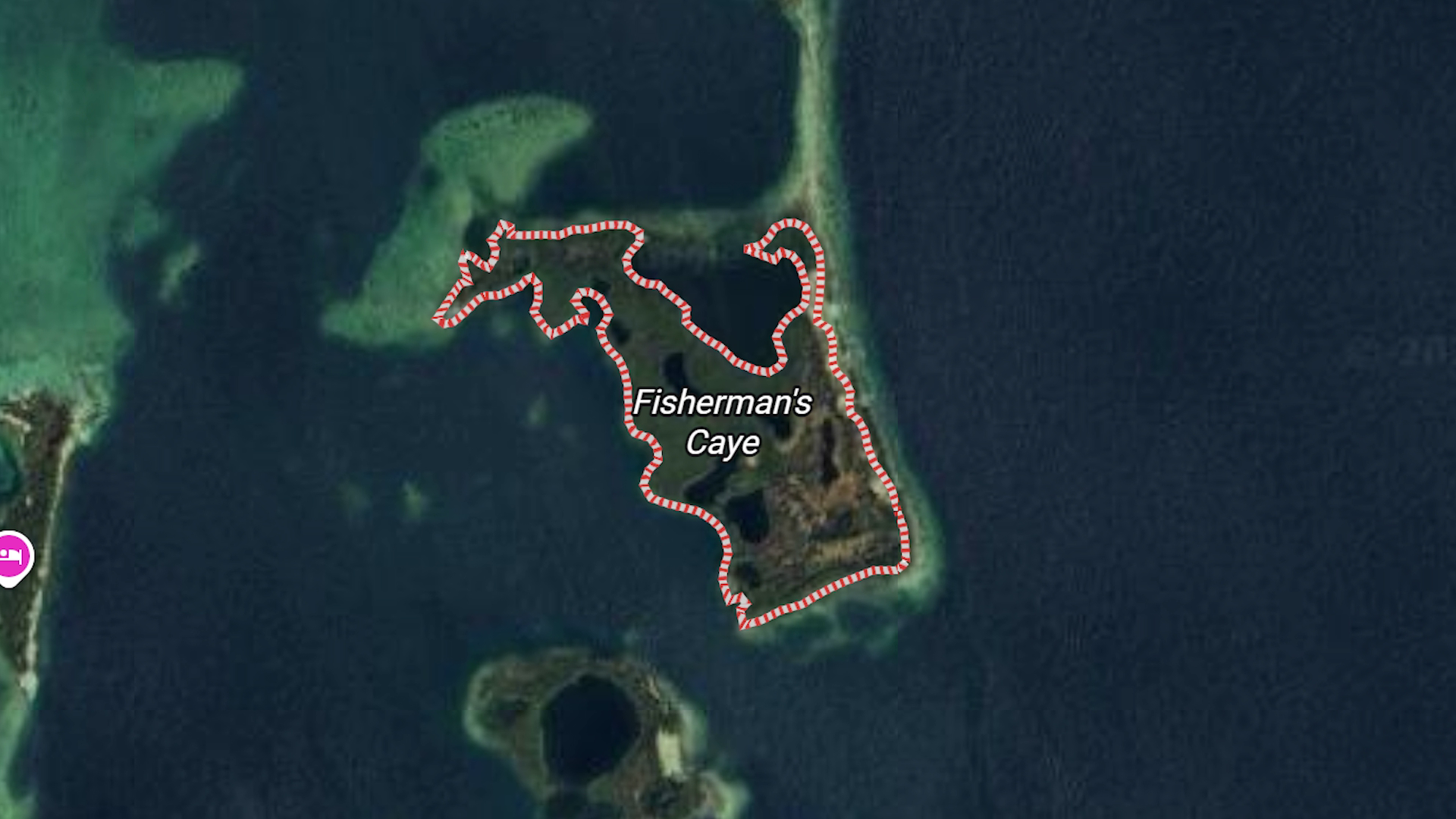
A decades-long controversial land dispute over a 14-acre parcel of prime coastal property at Fisherman’s Caye has reached the region’s highest judicial body, the Caribbean Court of Justice (CCJ), with millions of dollars in potential taxpayer liability hanging in the balance. The conflict traces its roots back to 2008, when the Belizean government issued a formal land grant to Rudolph Ramirez, despite the fact that the disputed property had already been legally transferred to a third party years prior to the grant’s issuance.
The legal battle has already wound its way through two lower courts: the initial High Court hearing awarded Ramirez and his co-claimant Julius Zabaneh more than $2 million in compensation for the flawed land grant. However, that ruling was later overturned by the Court of Appeal, which voided the original 2008 grant and rejected the multi-million damage award, leaving the claimants entitled only to the $2,878 that Ramirez originally paid for the land. Now, the claimants have brought their challenge to the Court of Appeal’s decision before the CCJ, which wrapped up three hours of oral arguments from both sides this week before reserving judgment for a future date.
Representing claimants Ramirez and Zabaneh, senior counsel and former prime minister Dean Barrow argued that the Court of Appeal overstepped its authority when it reopened core questions of legal liability that had already been settled in the initial High Court proceedings. Barrow explained that the unusual procedural history of the case worked in his clients’ favor: when the claimants originally moved to strike the government’s defense as legally defective and failing to state a valid claim, the government’s own legal team did not object to the motion. Following the unopposed motion, the High Court struck the defense and entered a default judgment on liability against the government, a procedural outcome Barrow says the Court of Appeal had no legal basis to undo.
“That notice of intention to vary, cross appeal in short, challenged the award of the two million and odd made by the trial judge on several grounds. One of those is the contract made between the claimant, the defendants, the appellants and the respondents was a nullity and that the court at first instance was therefore wrong to have made judgment and was wrong to have made the liability order,” Barrow told reporters in a post-hearing comment. “The judgment was entered after the claimants made an application to strike the defense on the basis that it was wholly defective, that it did not disclose any proper case. And what is important, slightly peculiar feature of all of this is that the respondents, the defendants in this instance, agreed with the application to strike. The way the judges strike out order framed it is that hearing Mr. Lindo, who was appearing then for the claimants and then being no objection from Ms. Matute, who was appearing then for the defendants, the court would proceed to make the order and enter judgement, Now the strike out application succeeded.”
On the opposing side, government legal representatives argue that forcing taxpayers to foot a $2 million bill for the error is unfair and legally unjustified. Senior counsel Eamon Courtenay, representing the government, told the CCJ that the government never held legal title to the land at the time it issued the 2008 grant to Ramirez, meaning it had no valid ownership rights to transfer to the claimants. Courtenay further argued that Ramirez was fully aware the land had already been granted to another party when he accepted the second, erroneous grant, and is now improperly seeking massive damages for a transaction he knew was flawed from its inception. Even official government rectification records explicitly confirm the 2008 grant was a bureaucratic mistake, he added.
“It is impossible for the government to grant title to land that it does not own and on the pleadings, which was the only thing before the court, what the claimants said was that I found that out, I knew it, I told the government and the government gave me a second grant for the same piece of land which it did not own and I am now coming to ask the court for a remedy,” Courtenay stated during his arguments. “The rectification reads your honor, fiat grant 204 of 2008 was erroneously issued to Rudolph Ramirez. So the minister is saying I gave you a title in error.”
After three hours of detailed submissions from both legal teams, the CCJ opted to reserve its ruling, with no specific date for judgment announced as of July 29, 2026. The outcome of the case will not only resolve a years-long private land dispute but also set a key precedent for government liability and damages for bureaucratic errors in Belize’s land grant system.