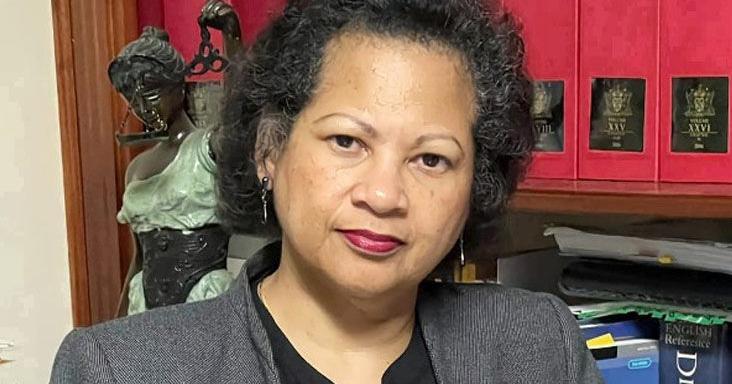
Following one of the deadliest maritime disasters in Guyana’s recent history, the Guyanese government has formally established an independent international commission of enquiry to investigate the sinking of the passenger ferry MV Barima, with five seasoned global experts tapped to lead the probe. Among the appointed commissioners is Nyree Alfonso, a prominent maritime law specialist from Trinidad and Tobago, who will join the multi-national panel ahead of the official enquiry launch.
In an interview with Trinidad and Tobago’s Express on the eve of her formal appointment, Alfonso outlined that the commission’s core mandate goes beyond simply identifying the cause of the tragedy: the panel will deliver evidence-based recommendations to close gaps in maritime safety regulation and prevent similar loss of life in the future. “I wish we could bring back the dead, but we can’t. We have to figure out what went wrong and make recommendations in the hope that such a tragedy does not happen again,” Alfonso shared, emphasizing the gravity of the panel’s work.
Alfonso, a practicing specialist in Admiralty and Maritime Law with years of experience investigating fatal maritime incidents, noted that while she has worked on multiple sea fatality probes, none have matched the scale of the MV Barima disaster. She added that the international makeup of the commission allows it to leverage diverse specialized expertise across every aspect of maritime operations, ensuring a thorough, unbiased investigation. The five-member panel brings cross-disciplinary experience ranging from legal adjudication to naval engineering, a design intended to address every potential factor that contributed to the sinking.
Beyond the investigation itself, Alfonso stressed that robust maritime safety is a global priority for any nation operating passenger ferry services, pointing to Trinidad and Tobago’s popular water taxi network as an example. “If something like this were to happen on a vessel such as the water taxi, the fatalities could be far greater. It is important that maritime safety is done properly,” she said.
Guyanese President Dr Mohamed Irfaan Ali first announced the creation of the independent commission in an official video statement posted to his public Facebook page, one day before the formal appointment of commissioners. Heading the panel is Justice Godfrey Phillip Smith, a senior legal figure from Belize who currently serves as the Caribbean Community (Caricom) High-Level Representative on Law and Criminal Justice, and also holds a position as an ad hoc Justice of Appeal in the Eastern Caribbean. Smith brings prior experience conducting high-level public enquiries in Guyana, having previously served on the country’s 2020 Presidential Commission of Enquiry into General and Regional Elections.
Joining Smith and Alfonso are three other internationally recognized experts: retired Rear Admiral Hayden Pritchard of Trinidad and Tobago, a former chief of defence staff for the Trinidad and Tobago Defence Force with decades of experience in maritime security and military operations; internationally acclaimed forensic naval architect and marine engineer Dr Andrzej Jasionowski of Poland, who has provided expert analysis for dozens of major maritime incident investigations; and Captain Hamada Fouda, a senior maritime surveyor and compliance auditor with the Maritime Authority of Jamaica.
President Ali detailed that the enquiry will leave no stone unturned in examining all circumstances surrounding the July 18 capsizing and sinking of the MV Barima, which was traveling from Guyana’s capital Georgetown to Port Kaituma when the disaster occurred. Key lines of inquiry include the MV Barima’s structural condition and seaworthiness prior to departure, weather and sea conditions on the day of the voyage, crew training and competence, passenger management protocols, the implementation of on-board safety procedures, and the availability and functionality of life-saving equipment. In addition to determining root causes, the commission will deliver formal recommendations for legislative, regulatory and operational reforms to strengthen Guyana’s overall maritime safety framework and reduce the risk of future tragedies.
Official casualty reports confirm that 179 passengers were on board the ferry when it sank. Rescue operations pulled 76 survivors from the water, while recovery teams have recovered 73 bodies to date.