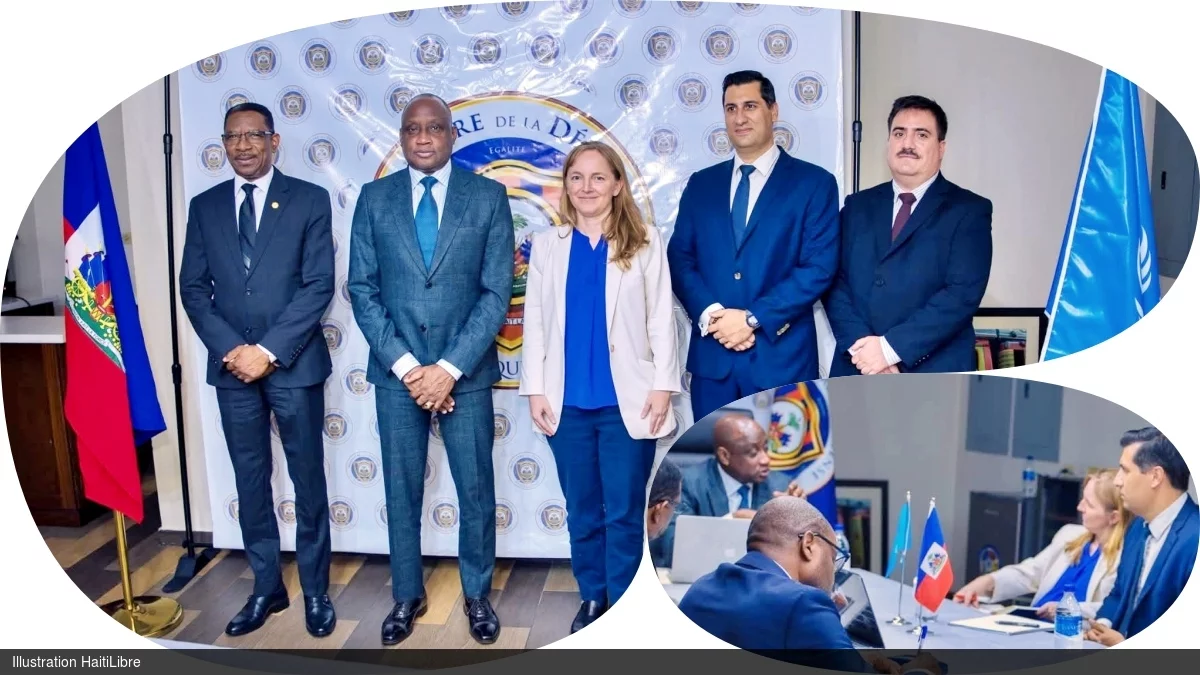
In a step to monitor international commitments aimed at stabilizing Haiti’s security landscape, a delegation from the United Nations Secretariat’s Department of Political and Peacebuilding Affairs recently traveled to the Caribbean nation to conduct an official assessment of how Port-au-Prince is rolling out the UN Security Council’s sanctioned sanctions regime. The visiting team, which includes Melanie Ramjoue, Pedro Inchauste, and Jean A. Charar, was received last week by Haiti’s Minister of Defense Mario Andrésol during official talks.
This on-the-ground visit forms one segment of a broader series of targeted consultations between the UN delegation and senior Haitian government officials. The core mandate of the mission is to measure the progress Haiti has made toward meeting three central priorities outlined by the UN Security Council when the sanctions framework was established. First, the assessment evaluates efforts to boost national institutional capacity in justice and rule of law sectors, a critical foundation for more effective countermeasures against violent armed gangs and transnational criminal networks operating across Haiti. Second, the mission reviews trends in violence linked to these groups, tracking whether levels of intentional homicide, kidnapping, and sexual violence have declined as targeted by the regime. Third, the delegation examines progress in curbing illicit arms trafficking, arms diversion, and the associated illegal financial flows that fuel gang activity, with a specific focus on increases in both the number of weapons seizures and the volume of illicit arms confiscated by Haitian authorities.
The entire assessment process is mandated under United Nations Security Council Resolution 2794, adopted in 2025. That resolution explicitly tasks the UN Secretary-General, working in close coordination with the UN Panel of Experts focused on Haiti, to carry out regular, rigorous evaluations of progress toward the resolution’s core goals, ensuring transparency and accountability for both Haitian authorities and the international community. The findings from this visit will inform future UN policy and support efforts to adjust the sanctions implementation framework to better address evolving security challenges in Haiti.