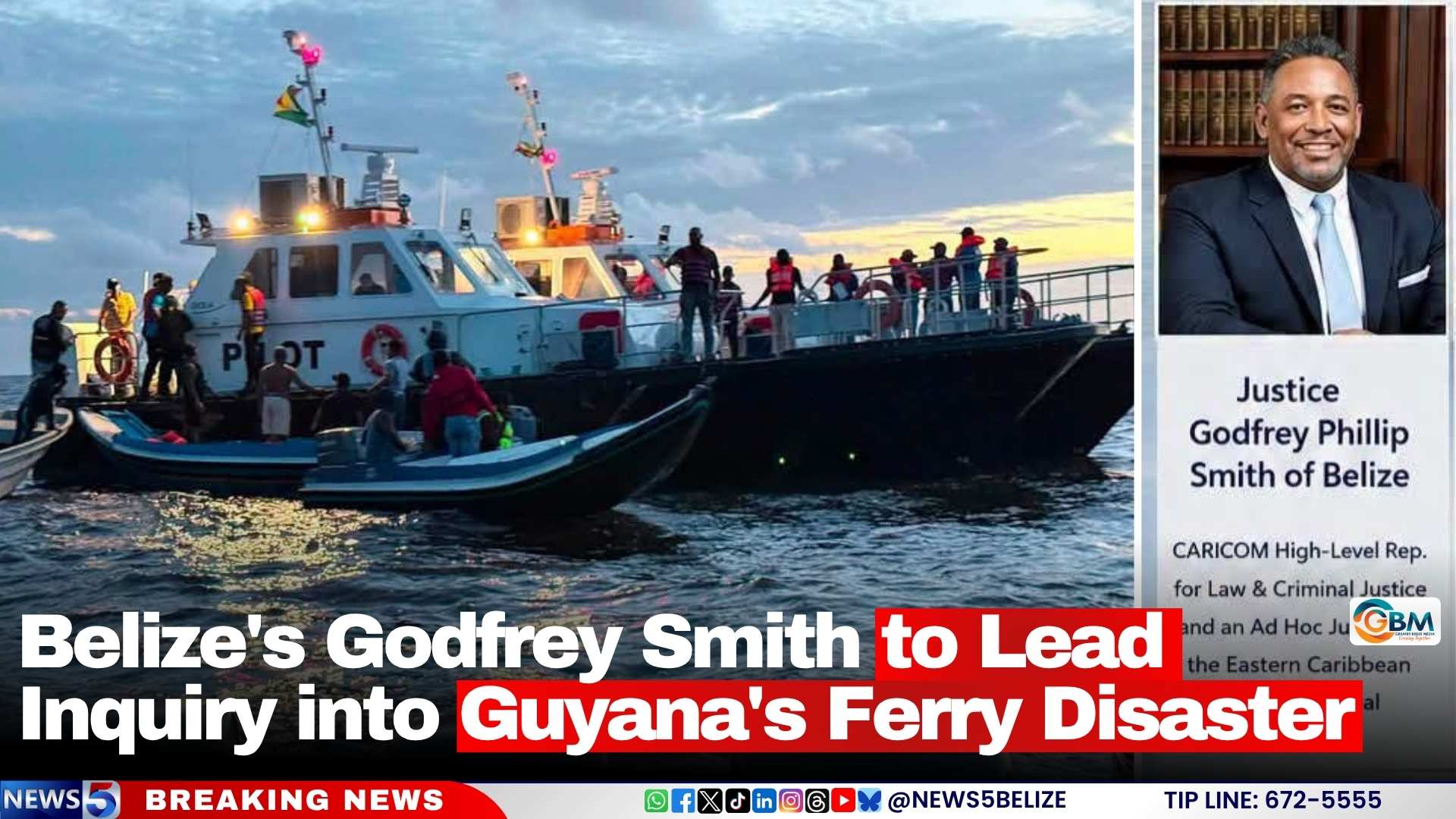
One week after the deadly capsizing of the Guyanese ferry MV Barima that sparked urgent calls for transparency and accountability, President Irfaan Ali has formally established an independent, international Commission of Inquiry to unpack every detail of the tragedy, tapping seasoned Belizean jurist Godfrey Philip Smith to lead the five-member investigative panel.
Smith brings decades of high-level regional legal experience to the role, currently holding two prominent positions: CARICOM High Level Representative for Law and Criminal Justice, and ad hoc justice of the Eastern Caribbean Court of Appeal. He will be joined by a cross-disciplinary team of international experts drawn from across the globe to ensure an impartial, thorough investigation: Polish naval architect and marine engineer Dr Andrzej Jasionowski, Jamaican maritime surveyor Captain Hamada Fouda, Trinidadian admiralty lawyer Nyree Dawn Alfonso, and retired Trinidadian Rear Admiral Hayden Pritchard. The diverse, international composition of the commission is designed to avoid conflicts of interest and deliver a credible, unbiased assessment of the disaster.
In an official announcement confirming the panel’s appointments, President Ali outlined the commission’s sweeping mandate, which leaves no aspect of the tragedy unexamined. From the initial processes of cargo loading and passenger boarding to the sequence of events that led to the vessel capsizing, every step of the ferry’s final voyage will be scrutinized.
“The terms of reference of the Commission of Inquiry will be establishing the full circumstances surrounding the tragedy, including the causes and all other factors relating to the loading of the vessel, the boarding of passengers, conditions on board, the capsizing and sinking of the MV Barima, and any other related matters,” Ali stated.
Beyond investigating the immediate causes of the capsizing, the commission is tasked with reviewing the effectiveness of the emergency search, rescue and recovery operations launched after the incident. It will also assess whether existing ferry safety regulations were properly followed by all relevant parties, and determine whether negligence or misconduct by any individual or public or private institution contributed to the disaster.
Additional areas of inquiry include the MV Barima’s full maintenance history and its seaworthiness ahead of the voyage, the weather and sea conditions at the time of the capsizing, and the training, qualifications and conduct of the ferry’s master and crew. Investigators will also audit passenger manifest management practices, examine claims of overcrowding, and verify whether the vessel carried sufficient, functional life-saving equipment to meet safety standards.
The disaster unfolded on July 19, when the MV Barima capsized mid-voyage while traveling from Guyana’s capital Georgetown to Port Kaituma. In the days following the incident, Guyanese authorities disclosed that the vessel was carrying far more passengers than initial official reports indicated. Two people connected to the ferry – the captain and a separate crew member – have already been taken into custody, after toxicology tests returned positive results for marijuana use.