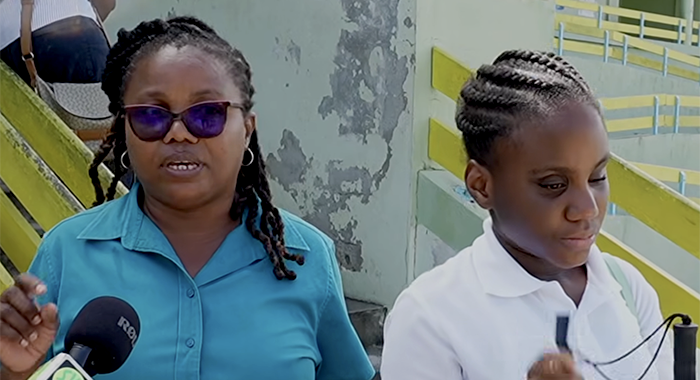
In a remarkable achievement that has captured the attention of St. Vincent and the Grenadines (SVG), a blind primary school student Faith Grant has posted exceptional results on this year’s Caribbean Primary Exit Assessment (CPEA), securing her a spot at the country’s most prestigious all-female secondary institution — and drawing widespread acclaim for her mother Yolanda Grant’s relentless dedication to her daughter’s success.
Out of 1,760 students across SVG who sat the 2024 CPEA examination, Grant ranked 43rd overall and 19th among all female test-takers, a feat that stands out even among top-performing students. A product of the special education program at Fair Hall Government School, Faith was born with visual impairment, and her journey to academic success has been shaped by intentional support, persistent advocacy, and extraordinary personal grit.
Local disability advocacy organization Voice of the Disabled (VOD), which works to remove barriers and improve quality of life for disabled people across SVG, has publicly congratulated Faith, her family, and the educators who supported her through her primary education journey. In an official press statement released this week, the group highlighted Yolanda Grant’s unwavering commitment as a key driver of Faith’s success.
“God has blessed Faith, kept her and provided guidance along the way. With a mother who has been passionate and persistent, Faith successfully completed her primary education and ultimately showed the country that all people are capable of achieving greatness, despite differences,” the statement read.
The partnership between the Grant family and VOD stretches back nearly a decade, when Sister Samuel, program coordinator for an annual disability recognition event hosted by Calder Adventist Church, introduced Yolanda Grant to VOD founder and president Cheryl Adams. That first meeting grew into a close friendship and collaborative partnership, with Yolanda quickly becoming an integral part of the organization’s work. Recognizing early on that targeted support and community connection would be critical to Faith’s success, Yolanda invested time in educating herself about disability inclusive education and sought out specialized resources to meet her daughter’s needs.
Soon after joining VOD as a member, Yolanda was appointed public relations officer and parent group coordinator, expanding her impact beyond her own family to support the broader disabled community in SVG. Over her years with the organization, she has co-developed and led training sessions for educators and parents of disabled children, and partnered with Adams to engage in cross-sector collaboration with SVG’s Ministry of Health, Ministry of Education, and the International Council for Education of People with Visual Impairment.
“Not only did Ms. Grant commit to enhancing the life of her own child, but she dedicated her time to serving the community and contributing to a meaningful cause for differently abled Vincentians,” VOD noted in its statement.
Adams and Yolanda Grant worked closely for years to secure appropriate educational placement and accommodations for Faith, a process that required sustained advocacy with government agencies. For a long period, Yolanda covered all costs for Faith’s specialized support and services out of her own pocket, placing a significant financial strain on the family. After VOD brought the family’s needs to the Ministry of National Mobilisation, which held oversight for disability issues at the time, the government stepped in to ease the burden, coordinating financial assistance through SVG’s Youth Empowerment Service (YES) program.
Despite the many systemic and personal obstacles the Grant family navigated, Faith emerged as a consistently high-performing, determined student, VOD said, describing the 12-year-old as “a determined, talented, intelligent and resilient young person with a strong desire to learn.” That resilience is reflected in her historic CPEA results, which have paved the way for her to attend the elite Girls’ High School (GHS) in the coming academic year.
Faith’s achievement has prompted VOD to call for broader systemic change to advance disability inclusion across SVG’s education system. The organization emphasized that “every child deserves a fair opportunity to reach their highest potential,” arguing that learning institutions at all levels must adapt to meet the diverse needs of their student populations. Key steps to build more inclusive education environments, the group said, include developing adaptive learning materials, investing in assistive technology, integrating Braille and other alternative communication methods, expanding family support services, providing specialized training for education staff, and upgrading physical accessibility across school campuses.
VOD acknowledged that SVG still has significant progress to make as a society to fully include disabled people in all areas of public life, but called on parents and guardians of disabled children across the country to draw inspiration from Yolanda and Faith Grant’s story. “We hope that you feel inspired by Ms. Grant’s unwavering pursuit of a quality life for her child. She understands the value of education, the power of advocacy and the importance of being present. This is only the beginning,” the statement said.
As Faith prepares to transition to secondary school, VOD noted that she will continue to need community support, particularly to cover the cost of high-priced assistive devices and specialized learning tools. The organization encouraged any community members who are able to contribute to reach out to the Grant family, and urged locals to support disability advocacy causes in their own communities to lift up other children like Faith.
For its part, VOD reaffirmed its long-term commitment to supporting the disabled community in SVG. The organization pledged to continue its core work: advocating for systemic policy change, fostering independent living for disabled people through education and skills training, providing peer and resource support for parents, partnering with churches and other local institutions, expanding outreach to underserved disabled communities, collaborating with local, regional, and international stakeholders, and raising public awareness about the ongoing barriers facing disabled Vincentians.