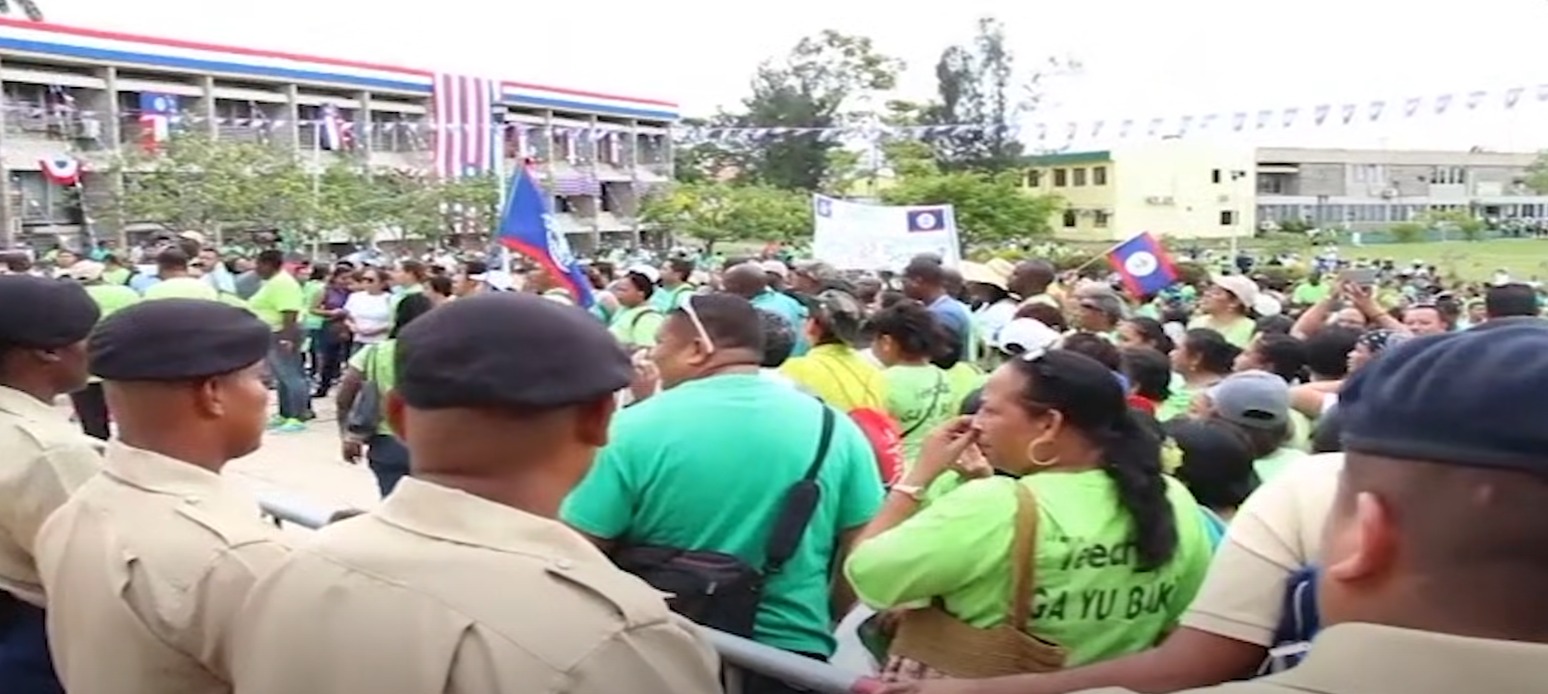
For nearly a century, organized labor has been the backbone of grassroots opposition and public advocacy in Belize, turning widespread public anger over government mismanagement into tangible, visible action that has reshaped the nation’s political trajectory. From the 1934 strikes led by Antonio Soberanis and the Labor and Unemployed Association against colonial exploitation, to large-scale mobilizations in the 21st century that forced ruling parties to confront public demands, Belize’s unions have long been the go-to voice for citizen discontent. Today, however, as two high-profile government procurement controversies – the Mira Millions affair and a corruption scandal at the Ministry of Defense – stir growing public anxiety over misuse of public funds, that historic activist muscle has gone surprisingly dormant. This sharp departure from longstanding labor tradition has not gone unnoticed by political observers and ordinary Belizeans alike, prompting questions about what has shifted within the country’s labor movement.
To understand the magnitude of this silence, it is necessary to revisit Belize’s recent history of high-impact union action. In 2005, for example, a proposed national budget that introduced $90 million in new taxes and widespread price hikes brought thousands of unionized workers and citizens into the streets of Belize City. What began as peaceful protest boiled over into mass civil unrest, with tire burnings, clashes with police, and widespread disruption of downtown commerce – a clear demonstration of organized labor’s ability to turn public anger into systemic pressure on the government.
A little over a decade later, in 2016, the Belize National Teachers’ Union (BNTU) cemented that reputation when it launched an 11-day strike after negotiations over promised salary adjustments collapsed. The walkout shut down classrooms across the country and delivered an unambiguous message to policymakers: organized labor remained a political force that could not be ignored. Speaking at the height of the strike, then-BNTU President Luke Palacio emphasized that the action was about more than worker pay, saying, “We need to stand up for our country. We are seeing so many issues affecting our country. We need to deal with those matters.” Former BNTU General Secretary George Frazer echoed that sentiment, adding, “I am glad we are seeing the thousands of teachers and other groups. We want to save our country before it goes ruin.”
Most recently, in 2021, Belize’s labor movement pulled off its longest-ever coordinated action: a 13-day joint strike led by a coalition of unions in response to the government’s emergency austerity measures. Facing ballooning public debt, the ruling administration implemented a mandatory 10% pay cut for public sector workers and teachers, alongside a three-year freeze on salary increments, prompting widespread walkouts and traffic blockades that brought parts of the country to a standstill. “We the people need to demand a change in the government, not to change the government. You change monkey and you get black dog. We want the government to change. We don’t want to change the government,” Darrell Spencer, president of the Nurses Association of Belize, said at the time.
Now, with two separate procurement scandals raising allegations of systemic abuse of government contracting processes, the same labor movement that led those mass actions has yet to organize a single national march or coordinated protest. In interviews with local outlet News Five, multiple union leaders offered explanations for the unexpected silence, pointing to everything from structural gaps to internal organizational delays.
Dean Flowers, president of the Public Service Union (PSU), framed the lack of mass action as a broader reflection of shifting societal attitudes toward government corruption. “My only response is that it’s a reflection of who we are as a society. It seems that we are indifferent to these things that are affecting us. You are right. Every single other union should be in the media, should be speaking out. But more so every citizen should be calling on the radio wave and flooding Facebook with the demand for more accountability where the Mira scandal is concerned. We are doing our part. We have demanded the removal of Oscar Mira from Cabinet, the permanent removal of Oscar Mira from Cabinet.”
Flowers did attend the opposition’s recent “Stand Up for Belize” rally at Battlefield Park, but he was the only PSU member present. Only one other union figure, Senator Glenfield Dennison, also joined the event, bringing total union representation at the well-publicized rally to just two people. When reached for comment, the president of the National Trade Union Congress of Belize declined to speak on the record, saying the body’s General Council had not held its July meeting to discuss a collective position.
BNTU President Nadia Caliz noted that most teachers are currently on summer holiday and traveling, making it impossible to reach a quick internal consensus on how to respond to the scandals. Caliz added that the union is closely monitoring developments and will hold a strategy meeting in August to decide on next steps. Leonora Flowers, president of the Christian Workers Union, similarly said the union must first consult its full membership before taking any public position.
As public concern over the procurement scandals continues to build, the question hanging over Belize’s political landscape remains: will the nation’s powerful labor movement overcome internal logistical hurdles and find common ground to launch a coordinated national push for accountability? Or will the once-vocal activist wing of Belizean civil society continue its historic silence on one of the most pressing corruption controversies in recent memory?