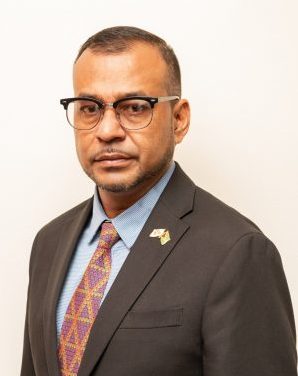
As of Friday, July 24, 2026, the United States has implemented a new 12.5% tariff targeting imports from 60 global trading partners, a policy framed as a penalty for nations that continue to allow trade in goods produced through forced labor. In response to the policy, Guyanese officials have moved quickly to clarify that local exporters will not face new disproportionate costs, while confirming the country will actively push for a full exemption from the measure.
In an official statement released Friday, Guyana’s Foreign Secretary Robert Persaud emphasized that the new 12.5% duty does not add an unplanned financial burden to local producers. The tariff replaces a 10% global tariff that expired July 24 under Section 122 of the U.S. Trade Act, and marks a continued downward trajectory from higher rates announced in previous months: a 38% rate unveiled in April 2025 was revised down to 15% before settling at the current 12.5% level.
Crucially, the tariff does not extend to Guyana’s top export commodities, oil and gold, multiple sources familiar with the policy confirmed to Demerara Waves Online News. U.S. Trade Representative Jamieson Greer first announced the tariff’s scope Thursday, noting that all affected nations, including Guyana, would be required to pay the 12.5% duty for targeted goods to gain entry to the U.S. market.
Persaud stressed that Guyana was not singled out for punitive action in the policy, which includes major global economies and regional neighbors across every continent: affected partners include Canada, the European Union, India, Trinidad and Tobago and Venezuela, among 55 other nations. Sixteen other countries are facing ongoing linked investigations, Persaud added, and Guyana is not included in that group.
Beyond that, top Guyanese officials have forcefully rejected any suggestion that forced labor-produced goods are traded through Guyana’s borders. “Guyana was not aware of evidence demonstrating that goods produced through forced labour are being manufactured in, imported into, or exported from Guyana,” Persaud said, a position reaffirmed during public hearings held by the U.S. Trade Representative (USTR) earlier this month.
Sharon Roopchand-Edwards, Permanent Secretary of Guyana’s Ministry of Foreign Affairs, told the USTR’s July 7-9 public hearing that any forced labor allegations must be resolved through lawful, evidence-based investigations, according to official hearing transcripts. Roopchand-Edwards backed the government’s position with official labor data: as of June 2026, more than 2,000 inspections across all major economic sectors have failed to turn up any substantiated cases of forced labor. The Guyana Revenue Authority has also confirmed no record of forced labor-produced goods entering the country through official ports of entry, she added.
Under Guyana’s existing Customs Act, Roopchand-Edwards noted, the government already has full authority to block imports of goods confirmed to be produced through forced labor. “When it is conclusively determined that imported goods were produced using forced labour, the responsible minister has powers to prohibit importation,” she said.
Persaud also framed the new U.S. tariff as a product of domestic U.S. political and legal shifts, rather than a judgment on Guyana’s trade practices. He explained that the policy was crafted by the current Trump administration to work around a U.S. Supreme Court ruling issued earlier this year that limits the executive branch’s authority to impose unilateral tariffs. “It is not a judgment on Guyana, and Guyana was neither singled out nor treated differently from dozens of other economies navigating the same recalibration,” Persaud said.
While the new tariff does not create new immediate costs for Guyanese exporters, Persaud confirmed the government will continue lobbying for a full exemption from the duty. Parallel to that effort, the administration is also finalizing work on a new reciprocal trade agreement with the U.S. that reflects the deepening, mature bilateral relationship between the two nations. “We are confident this process will continue on the basis of facts, mutual respect, and shared interest,” Persaud said, adding that Guyana remains fully committed to its ongoing trade and diplomatic partnership with the United States. Government officials have already engaged directly with USTR and other relevant U.S. agencies to reinforce Guyana’s position, most recently during the July public hearings, which Guyana participated in voluntarily.