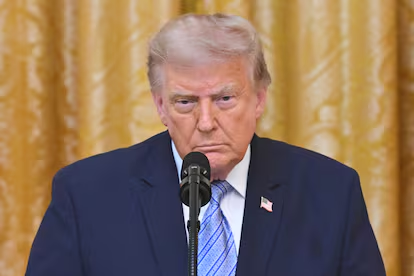
In a major escalation of its trade policy agenda, the second Trump administration unveiled new tariffs Thursday that will impose a 12.5% duty on imports arriving from the Dominican Republic. The measure is part of a sweeping trade enforcement initiative targeting 60 countries and economies worldwide, with the U.S. government justifying the move by claiming these nations have not done enough to crack down on forced labor in global supply chains.
Announced by U.S. Trade Representative Jamieson Greer, the new tariff will replace an expiring temporary 10% global tariff that is set to lapse this Friday. This updated duty marks the latest step in the administration’s aggressive reshaping of U.S. trade relations after returning to power in January 2025.
The tariffs stem from formal investigations launched this past March under Section 301 of the U.S. Trade Act. These probes were tasked with determining whether inadequate policies to block forced-labor-produced imports from the affected countries have caused harm to American workers and domestic businesses. Across Latin America, the new tariff structure varies by nation: Mexico, Guatemala, Honduras, and El Salvador will face a 10% import duty, while Costa Rica, Panama, and the Dominican Republic will shoulder the higher 12.5% rate. For other countries included in the action, tariff rates are adjusted based on product category and national origin.
U.S. trade officials confirmed that investigation outcomes confirmed the need for new trade restrictions, noting the policy shift came after the U.S. Supreme Court struck down the majority of Trump’s earlier round of global tariffs. That ruling forced the White House to reframe its trade agenda, leaning on Section 301 as the new legal foundation for imposing additional import duties. This latest round of tariffs aligns with President Trump’s long-stated broader trade goals, which prioritize targeted pressure on trading partners to rewrite trade rules and advance what the administration frames as U.S. economic interests.