A recent front-page report from local newspaper *Sunday Guardian* has drawn official pushback from Trinidad and Tobago’s Ministry of Public Administration and Artificial Intelligence (MPAAI), which firmly debunks the outlet’s claim that the current government already has fully built advanced infrastructure for a national artificial intelligence data centre.
In an official statement issued Wednesday, the ministry categorized the report’s core assertion as categorically inaccurate, stemming from a fundamental factual and conceptual confusion between two entirely separate projects. According to the explanation, the report incorrectly merged an uncompleted government data centre initiative inherited from the previous People’s National Movement (PNM) administration with a separate, still-planned commercial AI infrastructure project that the current administration is only in the exploratory phase of developing.
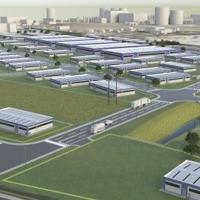
Breaking down the two distinct initiatives, the ministry outlined that the Tier IV National Data Centre proposed by the former PNM government was approved by Cabinet in 2022 and earmarked for the Phoenix Park Industrial Estate. The stated goals of this project were to underpin national government digital services, boost the country’s cybersecurity posture, and cut the state’s long-term reliance on expensive third-party external data hosting services. Critically, however, the previous administration never finished building or activated the facility before leaving office. The ministry also clarified that the Tier IV classification of this facility only refers to its expected level of reliability and operational resilience, not its capacity for artificial intelligence workloads, further undermining the report’s conflation.
In contrast, the commercial AI infrastructure referenced in the report refers to a proposed high-performance computing facility outlined in memoranda of understanding (MoUs) the current government signed with Ernst & Young LLP and Hummingbird AI Holdings. This project, designed to support private sector enterprise AI development and other advanced computing applications, has a fundamentally different technical design, financing and investment model, and core purpose than the inherited national data centre project.
The ministry also pushed back against the report’s framing of procurement activities and signed MoUs as evidence that the AI data centre is already operational. It emphasized that active procurement processes do not equal a completed and commissioned facility, and that an MoU is neither a binding construction contract nor a final greenlight for full investment.
Going further, the ministry criticized the decision to run the inaccurate story on the front page of a national publication, noting it lacked the technical rigor, factual balance, and source verification that the public has a right to expect from responsible journalism. It called for all future coverage of critical national technology and infrastructure projects to adhere to core journalistic standards of accuracy, fairness, contextual completeness, and proper fact-checking.
Closing its statement, the MPAAI reaffirmed its ongoing commitment to transparent governance, the modernization of Trinidad and Tobago’s national digital infrastructure, and the responsible development of artificial intelligence tools that serve the national public interest. It added that it will continue to share verified, accurate information with the public, and will not hesitate to issue corrections whenever misinformation risks distorting public understanding of matters of national importance.