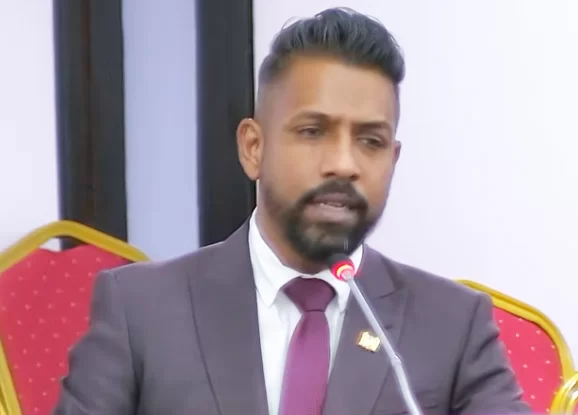
On July 21, Suriname’s Minister of Justice and Police Harish Monorath revealed a severe staffing gap in the country’s neighborhood policing initiative during a sitting of the National Assembly. Currently, the Suriname Police Corps only has 43 active neighborhood managers in service, while the immediate operational demand stands at 60 full-time positions. This shortfall has forced leadership to reassign several existing neighborhood managers to other departments within the force, leaving critical community policing roles understaffed.
Monorath’s comments came in response to a question from A30 parliament member Steven Reyme, who raised concerns about declining accessibility and effectiveness of neighborhood policing services, particularly for senior residents. Reyme shared that he recently held an extended conversation with an elderly citizen who complained about reduced communication between local residents and assigned neighborhood managers. He noted that in previous years, neighborhood managers were far more visible in communities and maintained consistent, regular contact with local residents, a standard that has slipped in recent times.
Reyme emphasized the urgent need to revitalize communication between community policing staff and local residents, especially for older adults who spend most daytime hours alone at home. These vulnerable residents need clear, reliable points of contact to turn to when safety or quality-of-life issues arise in their neighborhoods, he argued.
Monorath openly acknowledged the scope of the staffing challenge, confirming that out of the 60 required neighborhood manager positions, only 43 are currently filled. Limited personnel budgets and overall resource constraints have driven the reassignment of existing neighborhood managers to other police departments, creating gaps in community outreach. Accessibility to neighborhood managers has also become a persistent challenge as a result of these constraints.
In response to the gap, the entire neighborhood manager program is now undergoing a full re-evaluation to identify structural solutions. Beyond the review, Monorath has issued a directive to frontline basic policing units to increase their visible presence in residential neighborhoods and strengthen community engagement, even amid limitations in vehicle access and other operational resources. The minister specifically ordered that extra attention be prioritized for vulnerable groups including senior citizens and young people.
While Monorath reaffirmed the Suriname Police Force’s ongoing commitment to improving its relationship with local communities, he stressed that sustainable improvement will require sufficient staffing capacity and financial resources to support expanded community policing efforts.