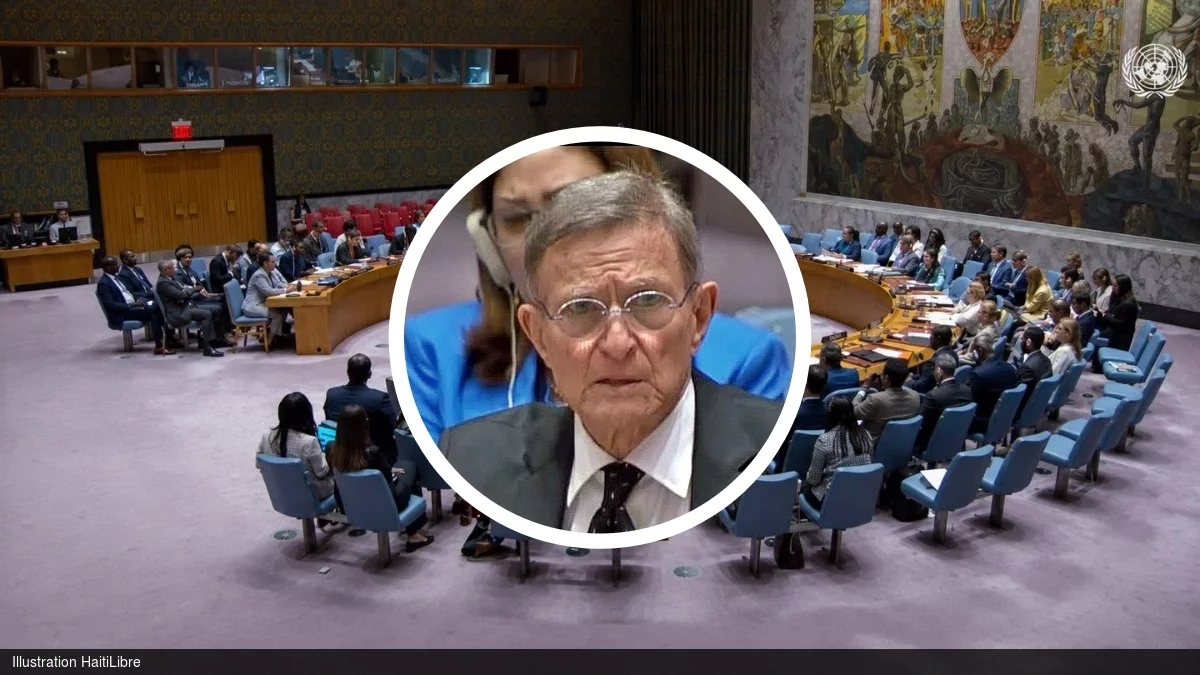
Addressing the United Nations Security Council on July 20, Dominican Republic Foreign Minister Roberto Álvarez delivered an urgent call for the international community to speed up deployment of the long-planned Gang Suppression Force (GSF) to crisis-stricken Haiti, while calling for stricter enforcement of existing sanctions against actors that arm and fund Haitian criminal gangs. The intervention comes as Haiti grapples with a spiraling security collapse that has derailed governance and plans for democratic elections, with gang violence displacing hundreds of thousands and leaving much of the capital Port-au-Prince under criminal control.
Álvarez warned the Council that a simple extension of the mission’s original mandate, first approved in September 2025, would fall far short of delivering the meaningful security progress Haiti desperately needs. He highlighted a critical gap in the force’s deployment: of the 5,550 authorized troops that are meant to make up the international contingent, only just over 1,000 have actually arrived in the country so far. The minister stressed that closing this gap by accelerating the deployment of the remaining personnel is non-negotiable for the mission to succeed.
Outlining the current state of preparation, Álvarez confirmed that the Dominican Republic has already fulfilled its commitments, contributing troops, allocating required resources and putting a functional operational command structure in place. He identified logistical bottlenecks, specifically a shortage of strategic military air transport, as the single biggest barrier holding up deployment, noting that the lack of heavy airlift capacity has delayed the arrival of both additional personnel and critical equipment. To overcome this hurdle, he called on nations that maintain large military transport fleets to step up and collaborate with the mission. “A purely logistical problem should not hinder the international community’s protection of an entire people,” Álvarez told the Council.
Beyond deployment challenges, the foreign minister pushed for far more robust implementation of sanctions outlined in Security Council Resolution 2653, which targets individuals and entities that finance and support Haiti’s armed criminal gangs. He argued that current restrictions must not only target the top leaders of gang organizations, but also extend to the entire criminal ecosystem that enables their operations: arms traffickers that smuggle weapons into Haiti, money launderers that clean illicit profits, and political and material backers that shield gangs from accountability. “We must fully utilize this instrument to identify and punish those who support and enable the operation of these criminal organizations,” he insisted.
At the core of Álvarez’s address was a clear argument that security restoration is an indispensable precondition for any legitimate democratic transition in Haiti. Repeating a core thesis that frames Haiti’s current path, he told Council members: “Elections do not guarantee security. But security will make elections possible.” He also acknowledged progress made by Haiti’s transitional government to rebuild its own security and judicial institutions, pointing to efforts including the induction of new officers into the Haitian National Police, expanded training for security personnel, and the establishment of specialized judicial units designed to prosecute high-level gang-related crimes.
In closing, the Dominican Republic reaffirmed its support for extending the mandate of both the Gang Suppression Force and the UN Integrated Support Office in Haiti, but issued a stark warning about the cost of half-measures. Extending the mandate without following through on the full deployment of promised personnel, he said, would amount to breaking a promise to the Haitian people. “We don’t need a new strategy; we need to fully implement the one we have developed,” he concluded.