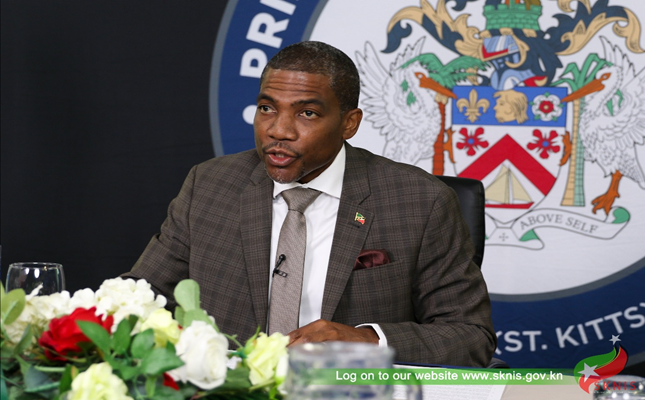
BASSETERRE, St. Kitts – In a public address to ease growing domestic concerns over a bilateral migration cooperation agreement with the United States, St. Kitts and Nevis Prime Minister Hon. Dr. Terrance Drew has issued a firm guarantee that rigorous multi-layered screening protocols will prevent any individuals with criminal histories from entering the federation.
Drew made the commitment during the July 16 episode of his monthly *Prime Minister’s Round Table* public forum, addressing widespread public speculation that the transfer arrangement would expose the small Caribbean nation to dangerous criminal offenders. The agreement, which applies exclusively to nationals of Caribbean Community (CARICOM) member states, explicitly grants St. Kitts and Nevis full sovereign authority to reject any transfer candidate that fails to meet the country’s strict national security thresholds.
Back in May 2026, the St. Kitts and Nevis government confirmed it had accepted three CARICOM nationals transferred from U.S. custody. Contrary to circulating misinformation that the transferees had criminal convictions, the Prime Minister clarified that the individuals only faced U.S. immigration violations, not criminal charges or convictions. All three candidates underwent comprehensive pre-transfer evaluations covering criminal background history, immigration eligibility, medical health and national security risk, Drew confirmed. U.S. authorities also shared full biographical, medical and criminal background data with local agencies ahead of the transfer, and St. Kitts and Nevis’ national security, immigration and law enforcement bodies all participated in the full review process.
“So these are not criminals. We have no reason to lock them up or anything like that,” Drew emphasized during the address.
The existing bilateral memorandum of understanding enshrines St. Kitts and Nevis’ full sovereign control over the transfer process: the federation holds sole discretion to approve or reject any proposed transferee, and the agreement explicitly bans the transfer of any individual convicted of violent or sexual offenses. Drew added that if post-transfer information emerges showing an individual does not meet the terms of the arrangement, the government will immediately implement all necessary remedial actions to protect public safety.
“There will be measures taken to ensure that St. Kitts and Nevis is not exposed to any criminals,” he reiterated.
The Prime Minister also confirmed that the International Organization for Migration (IOM) has played a key independent oversight role throughout the transfer process, ensuring all proceedings adhere to international law, global humanitarian standards and the fundamental human rights of transferred individuals.
On the topic of cost, Drew addressed another key public concern: all expenses tied to transferred individuals, including housing, food, clothing, healthcare and other essential needs, are covered on a case-by-case basis with no financial burden falling to the St. Kitts and Nevis government. “I can say broadly that one, it didn’t cost St. Kitts and Nevis one cent, and two, we made sure that the basics were covered for these people,” he noted.
Drew concluded by framing the agreement as a balanced approach to fulfilling the nation’s international and regional obligations while upholding the government’s core duty to protect the security and sovereign interests of St. Kitts and Nevis. He pledged the administration will maintain full transparency going forward, and will continue to apply strict immigration, security and law enforcement protocols to every candidate considered for transfer under the agreement.