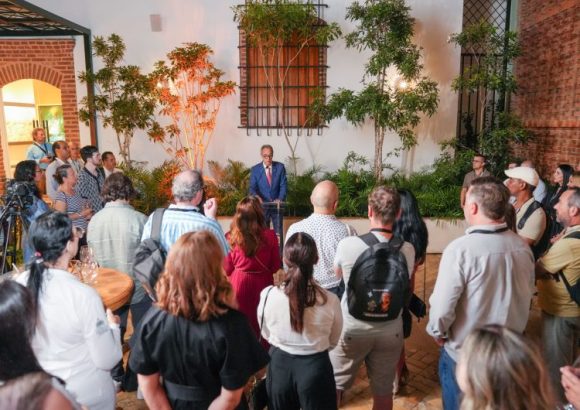
The Dominican Republic’s capital of Santo Domingo has become the global hub for Caribbean heritage research this week, as the XXXI International Congress of Caribbean Archaeology kicked off with an official welcome reception hosted by the Taíno Cultural Center Casa del Cordón. Backed as an initiative by Banco Popular Dominicano, the venue brings together over 150 leading professionals spanning archaeology, anthropology, history, and cultural preservation, with attendees traveling from 25 countries across the globe to take part in the event.
As a key co-sponsor of the week-long academic gathering, Banco Popular welcomed participating researchers ahead of the launch of the congress’s packed schedule of lectures, working sessions, and collaborative workshops. During the opening welcome ceremony, José Mármol, executive vice president of Corporate Communications, Reputation and Responsible Banking at Grupo Popular, highlighted the critical role that cultural and archaeological preservation plays in driving long-term, meaningful sustainable development for communities across the region. Mármol emphasized that anchoring development in a clear understanding of shared heritage creates stronger, more connected societies rooted in their own history.
The venue for the opening reception, the Taíno Cultural Center Casa del Cordón, holds deep significance for the event’s mission. The center hosts a permanent public exhibition of archaeological artifacts sourced from the García Arévalo Foundation, curated to highlight the rich legacy of the Taíno people – the first known inhabitants of the island that now holds the Dominican Republic and Haiti. Beyond displaying historic objects, the center works year-round to expand public awareness of the Dominican Republic’s indigenous roots and the enduring impact of Taíno culture on modern national identity.
Scheduled to run from July 13 to 18, the congress stands as one of the Caribbean’s most prestigious and long-standing academic forums dedicated to archaeological research. Beyond sharing new findings and cutting-edge analysis, the core goals of the 2024 gathering include strengthening cross-border collaborative research networks, facilitating open exchange of innovative methodologies, and advancing collective action to protect the Caribbean’s at-risk archaeological and cultural heritage for future generations.