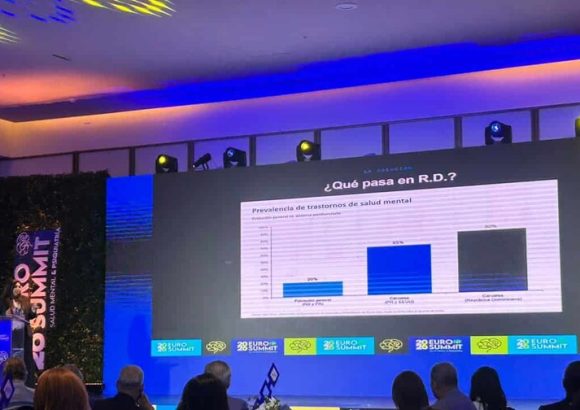
At the 2026 Euro Summit held on Saturday, forensic psychiatrist Nubia Lluberes delivered a stark, data-backed call for systemic reform to the Dominican Republic’s justice system, shedding light on a deeply disproportionate mental health crisis among the country’s incarcerated population. Lluberes, who has years of hands-on experience working in psychiatric facilities within the Texas prison system, revealed that nearly 80 percent of people deprived of liberty in the Dominican Republic live with a diagnosable mental health condition — a figure four times higher than the 20 percent prevalence recorded in the country’s general population. Contrary to common misconceptions that higher rates of mental illness among inmates mean mentally ill people are more likely to commit crime, Lluberes reframed the trend as a failure of public health systems, not a failure of the patients themselves. She explained that the vast majority of affected incarcerated people never received timely diagnosis or appropriate mental healthcare before they encountered the justice system, pushing them into the penal system through gaps in early intervention and community support. “What happens when a person with a mental illness commits an offense because of their untreated condition? That is the question we must answer as a society,” Lluberes opened her presentation, delivered at the conference titled “Justice without mental health is not justice: the SIM model as a framework for transformation.” Lluberes detailed that even after people enter the prison system, the lack of consistent access to specialized psychiatric care only exacerbates existing mental health challenges, creating a vicious cycle that harms patients, undermines public safety, and erodes the core principles of fair justice. A justice system that relies solely on imprisonment to respond to mentally ill people who offend, she emphasized, fundamentally fails to meet the core needs of this population and requires urgent rethinking. To address this gap, Lluberes introduced the Sequential Interception Model (SIM), an evidence-based framework originally developed in the United States that maps six critical intervention points where mental health support can be delivered before, during, and after a person’s involvement with the justice system. The model centers on coordinated action across community service providers, law enforcement, medical facilities, courts, and penitentiary systems, with a core goal of diverting people experiencing mental health crises away from unnecessary imprisonment and toward appropriate treatment. Drawing from her work in Texas, Lluberes warned that fragmented institutional coordination carries severe, often fatal consequences: unaddressed mental health decline among inmates, preventable suicides, and avoidable uses of force that could be eliminated with early, targeted intervention. She added that the Dominican Republic can successfully adapt the SIM framework to its local context through three key changes: expanding access to community-based mental health services, providing specialized training for police and justice sector personnel, and strengthening cross-institutional communication between hospitals, courts, and correctional facilities. Lluberes’ presentation was one of dozens featured at the 2026 Euro Summit, a major global gathering that brought together more than 200 national and international medical and justice specialists to examine pressing global mental health challenges and advance evidence-based public policy and clinical practice. The summit’s focus on integrating mental health into justice systems reflects a growing global recognition that equitable access to mental healthcare is a core component of fair and effective governance.