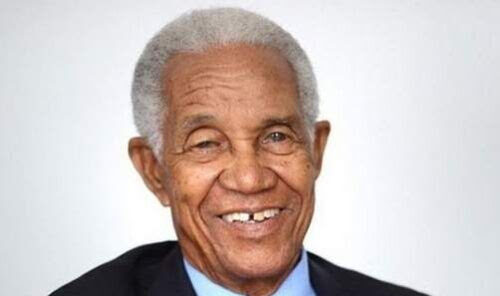
The global cricket community and nations across the Caribbean are in mourning this week following the passing of Sir Garfield Sobers, widely hailed as the greatest all-round cricketer in the history of the sport. In an official statement released by the Organisation of Eastern Caribbean States, Director General Dr. Didacus Jules confirmed the loss of the Barbadian icon, extending heartfelt condolences to Sir Garfield Sobers’ surviving family, the people of his home nation Barbados, and cricket lovers across every Caribbean territory that claimed the legend as their own.
More than a star athlete, Sobers embodied the full potential of cricket as both a craft and a unifying force. As a batsman, he moved with a breathtaking, almost poetic grace that left crowds and opponents mesmerized; as a bowler, he mastered three distinct bowling styles, making him an unpredictable and unstoppable force on the pitch; and his fielding was defined by raw, innate instinct that turned routine plays into spectacular moments. His record-breaking 365 not out in an international Test match stood as the highest individual Test score for 36 years, a benchmark that defined excellence for generations of batters. Even decades later, his feat of hitting six sixes from six consecutive balls in a single over remains one of the most iconic acts of bold brilliance in all of professional cricket. Over a 20-plus-year international career, he played 93 Test matches, amassed more than 8,000 runs, and captained the West Indies cricket team with imaginative strategy and unwavering national pride.
Yet Sir Garfield Sobers’ legacy stretches far beyond the statistics that line his career record. Born and raised in the working-class Bay Land neighborhood of Bridgetown, Barbados, he climbed to the pinnacle of a sport that, during the era of British colonial rule, had long been reserved for white elites, with Black Caribbean residents barred from competing at the highest levels. In a period marked by the gradual dissolution of empire and the fight for post-colonial identity, Sobers emerged as living proof that Caribbean talent and excellence answered to no outside power. For the first time, a Black West Indian man was universally recognized as the greatest to ever play the global game, and for the small, scattered island nations of the Caribbean, he became a mirror that reflected a new shared identity: unified, confident, and truly independent.
He played an unheralded role in helping the newly independent Caribbean nations forge a collective sense of shared purpose. The hard-won West Indian cultural identity, rooted in mutual dignity and shared athletic triumph, owes an incalculable debt to the Barbadian batsman who forced the entire world to stop and admire the region’s talent. A designated National Hero of Barbados and the first person to be knighted on Barbadian soil after the nation gained independence, Sir Garfield Sobers never turned his back on his working-class roots, and his home nation has already pledged he will never be forgotten.
“In this moment of grief, we stand with Lady Sobers and the entire Sobers family, we stand with the people of Barbados, and we celebrate the extraordinary legacy Sir Garfield leaves behind,” Dr. Jules added in the statement. “Thank you for the runs, for the wickets, for the collective pride you gave us, and for the sense of freedom you helped an entire region feel. Rest well, Master.”