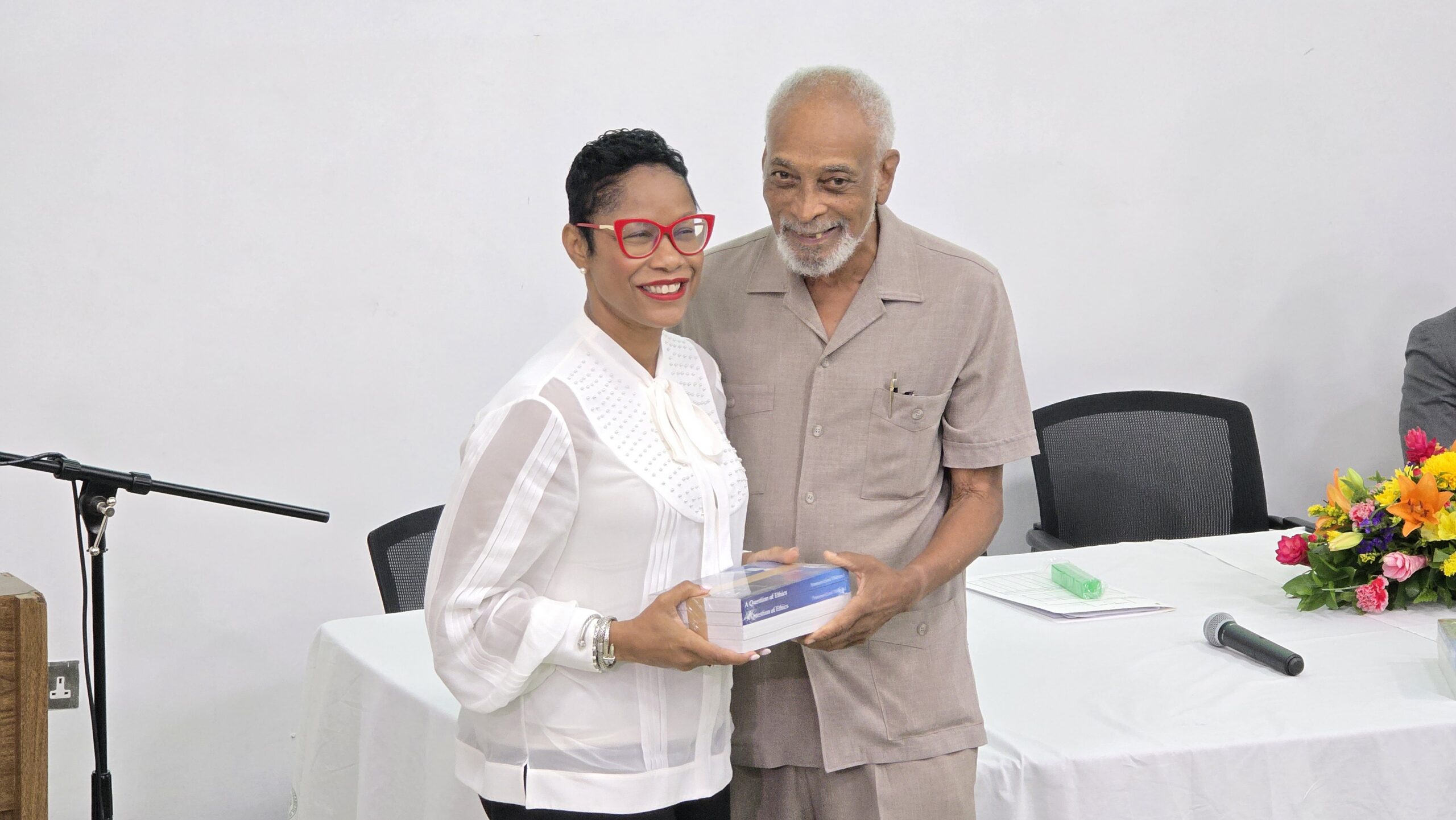
Against a backdrop of rapid global transformation in healthcare – driven by breakthrough technologies, shifting public expectations and emerging public health challenges – The University of the West Indies (UWI) at Cave Hill has announced a major update to its medical training curricula, centering expanded medical ethics education to reinforce physician professionalism and deepen patient-centered engagement. Faculty leadership outlined the changes Friday during the opening of the 25th annual Sir Errol Walrond Scientific Symposium, hosted at Bridgetown’s Queen Elizabeth Hospital.
Dr. Damian Cohall, Dean of the UWI Cave Hill Faculty of Medical Sciences, told attendees that the institution regularly revises its training programs to align with the evolving demands of 21st-century healthcare, equipping graduates with the competencies they need to practice modern medicine. The most significant curricular change, Cohall confirmed, is the strengthening of ethics training for undergraduate medical students, which adds two new academic credits dedicated to the subject at the fourth-year level. While ethics has long been part of medical training at the institution, the revision re-centers the topic as a core, formal requirement, with repeated reinforcement before students enter their fifth and final year of clinical training.
Cohall explained that the curriculum update was a direct response to feedback from key stakeholders, including the Barbadian government, the general public and industry partners, all of whom have called for greater focus on respectful doctor-patient communication and consistent professional conduct across clinical settings. “We have certainly heard comments from our key stakeholders about the state of engagement between our trainees – both undergraduate and postgraduate – and patients across all clinical and community care spaces,” Cohall said. “We conducted an internal review of all our programs and implemented targeted adjustments to ensure we stay aligned with our core mission: that the interaction between the public and emerging healthcare practitioners is consistently respectful, patient-centered and professional.”
In addition to the curricular changes, Cohall announced that stand-alone ethics conferences are now a mandatory requirement for both undergraduate and postgraduate medical students at the faculty. To date, the events have drawn far more participation than the institution’s own trainee body: the last two conferences attracted more than 160 attendees total, including practicing clinicians, nurses and other healthcare professionals from across the region. “We don’t want this critical training to be limited only to our medical students,” Cohall noted, acknowledging the cross-professional benefit of expanded ethics education.
Beyond ethics training, Cohall highlighted ongoing investments to strengthen the faculty’s research capacity, built through strategic external partnerships and targeted grant funding. One key collaboration is with the Sick Kids Initiative, which supports the Shaw Centre of Pediatric Excellence; the partnership has recently funded a new full-time research fellow position at the centre. The faculty currently runs five active catalyst research grants, bringing cutting-edge, community-relevant research projects to both academic and public health spaces in Barbados.
Cohall challenged medical trainees and residents to pursue transformative research that directly shapes clinical practice and health policy, rather than studies that only generate disconnected data. “One of the key gaps we have identified repeatedly is that we need transformative research from our residents,” he said. “We don’t want research that just counts beans – we want work that changes how care is delivered.” Cohall added that he expects research presented at this year’s symposium will not only secure academic publication but also drive tangible improvements to local healthcare delivery and clinical practice.
Barbados Minister of Health Senator Lisa Cummins echoed that call in her opening remarks to the symposium, which honors the legacy of legendary Barbadian surgeon Sir Errol “Mickey” Walrond. Cummins framed the work of medical training and research as a foundational investment in the future of regional healthcare, noting that progress emerges at the intersection of evidence-based policy, ethical practice, empirical research and intentional implementation.
She challenged researchers and trainees in attendance to consider their own professional legacy, following in Walrond’s footsteps by building the “institutional scaffolding” that will support future generations of clinicians and improve population health outcomes. “What is the role of everyone in this room in developing solutions to the pressing healthcare problems we face today?” Cummins asked. “How will you carry forward Sir Errol Walrond’s legacy by carving your own path, and building a foundation that those who come after you can stand on?”
The minister also reminded attendees that healthcare’s core mission is centered on the people it serves, warning that losing that focus undermines all research, policy and system reform work. “Any time we lose sight of the people on whose behalf we work, research, shape policy and introduce reforms, we have lost sight of the entire point of our work,” she said.
Cummins also emphasized that medical training must adapt to a host of disruptive forces that are reshaping global healthcare at an unprecedented pace, from technological innovation to climate change. “We are not operating in a vacuum today. Innovations and new interventions are changing our field at breakneck speed: artificial intelligence is already reshaping how we deliver care, genomics is rewriting what precision medicine means, robotics is redefining surgical practice, and climate change is creating public health emergencies that most classic medical textbooks never even considered.” Cummins concluded, “Change is happening. It is already here, and more change is still coming.”