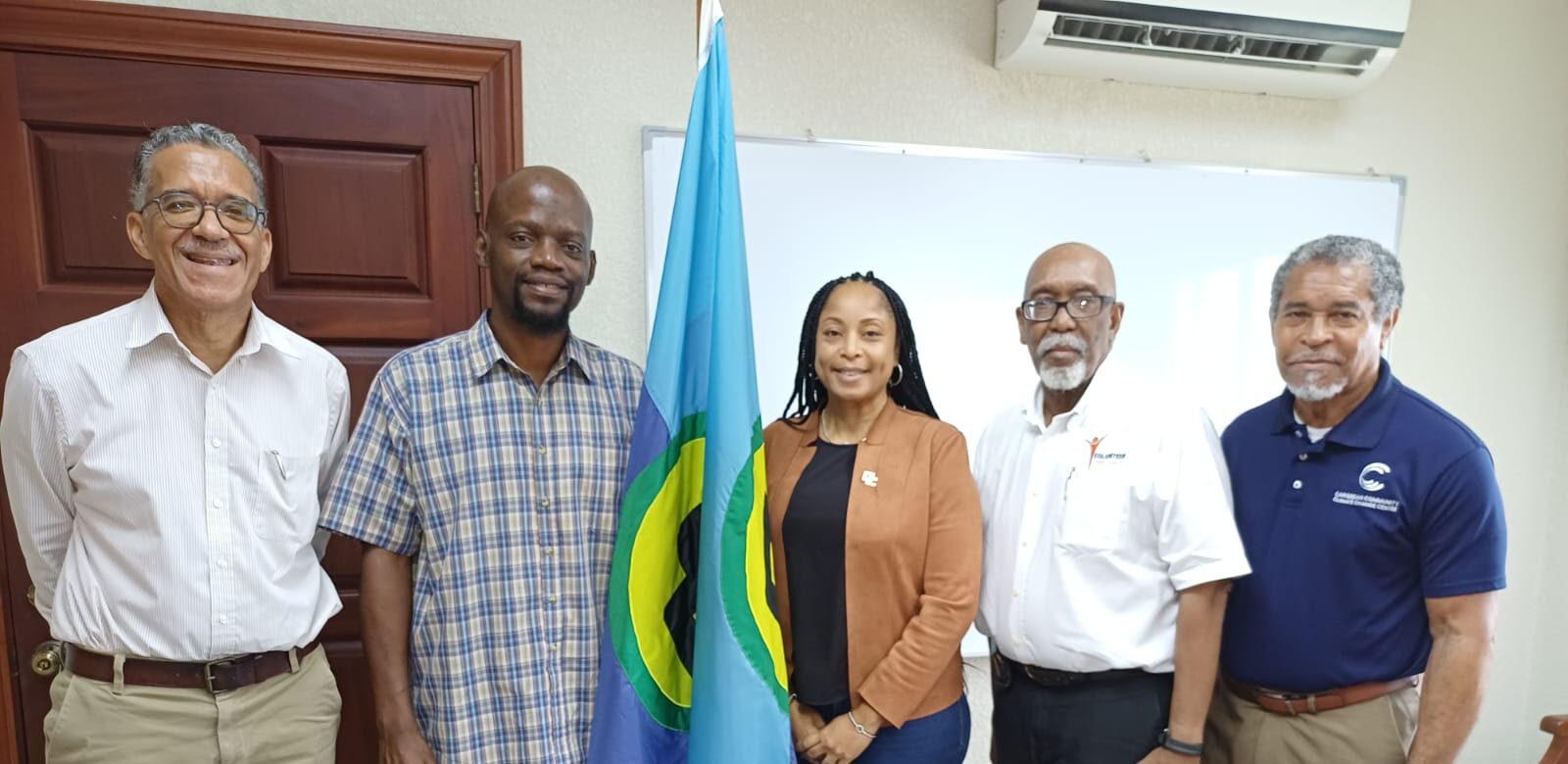
Two leading Caribbean regional environmental and resource management organizations have announced a strengthened collaborative partnership to counter the accelerating impacts of climate change on the region’s oceans, fisheries, and vulnerable coastal communities. The Caribbean Regional Fisheries Mechanism (CRFM) and the Caribbean Community Climate Change Centre (5Cs, also referred to as CCCCC) brought senior representatives together for strategic discussions on July 16, 2026, to map out how combining their specialized expertise, pooled resources, and existing ongoing initiatives can create more robust responses to the Caribbean’s most urgent marine and climate challenges.
During the day-long talks, CRFM leadership updated 5Cs counterparts on a slate of active regional projects designed to help CRFM member states build more climate-resilient, ecologically sustainable fishing sectors. These ongoing initiatives cover a wide range of priorities: from advancing evidence-based marine spatial planning and scaling up renewable energy adoption in fishing operations to strengthening the economic livelihoods of small-scale fishing communities and advancing gender equity across the fisheries industry.
One of the core priority topics on the meeting agenda was the persistent, growing crisis of invasive sargassum seaweed blooms that have plagued coastlines across the entire Caribbean basin for years. While both organizations acknowledged the severe harm that massive sargassum inflows cause to local tourism operations, commercial and small-scale fisheries, and fragile marine ecosystems, they also highlighted an under-explored opportunity: if processed safely following circular economy principles, sargassum can be converted into a range of commercially valuable products, from organic fertilizer to biofuel. Meeting participants also underlined that targeted additional scientific research, enhanced cross-regional coordination, and more streamlined information sharing are critical to implementing effective, long-term sargassum management strategies.
Discussions also turned to Blue Carbon, the carbon stored naturally in coastal ecosystems including mangrove forests, seagrass meadows, and salt marshes, which has emerged as a globally recognized key tool for climate change mitigation. According to the official CRFM press release summarizing the meeting, talks covered the ongoing regional policy process to develop a comprehensive regional Blue Carbon Policy, a framework that would support Caribbean nations in better protecting, restoring, and managing these ecologically and climatically valuable coastal ecosystems.
Improving equitable access to reliable climate and marine science data was another central focus of the strategic talks. Both organizations reaffirmed that high-quality, accessible data is a non-negotiable foundation for evidence-based policy making, robust public climate action, and enhanced regional climate resilience. They also emphasized that deeper collaboration and more open cross-institutional data sharing would deliver widespread benefits for governments, academic researchers, small-scale and commercial fishers, and coastal communities across every Caribbean nation.
In a joint statement shared via the CRFM press release, both organizations emphasized that cross-sector regional partnerships are not optional, but essential, to protect the Caribbean’s unique marine resources and ensure that future generations can continue to benefit from healthy oceans and productive, sustainable fisheries. The new strengthened partnership, they noted, reflects a shared commitment to advancing climate-smart, equitable development across the region, while supporting resilient coastal communities, sustainable fishing industries, and thriving, healthy marine ecosystems.