As the Cuban city of Pinar del Río prepares to host national celebrations marking the 73rd anniversary of the historic attacks on the Moncada and Carlos Manuel de Céspedes barracks, a province-wide initiative to upgrade public infrastructure, heritage sites and community facilities is in its final stages. Local leaders and cross-sector teams have been racing to complete dozens of renovation and restoration projects across the city ahead of the July 26 commemorations, touching everything from iconic cultural monuments to critical healthcare facilities.
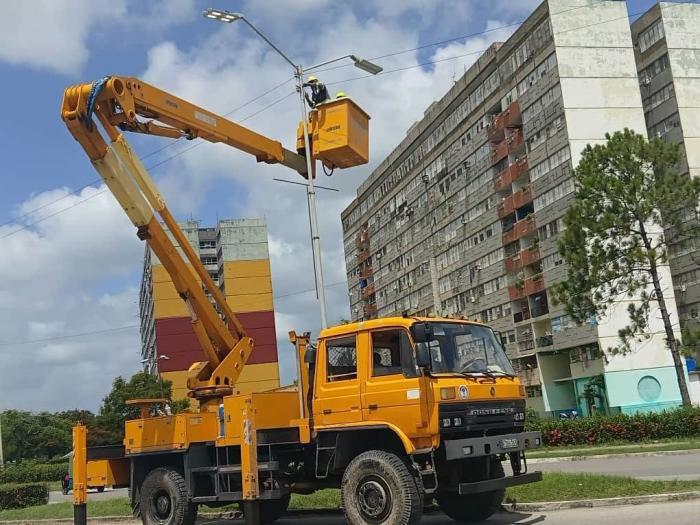
Leading the province’s preparations, Governor Eumelín González Sánchez told local outlet Granma that work is progressing across all major public green spaces, with one of the most transformative upgrades being the rollout of solar-powered public street lighting. This initiative, funded primarily through the local 1% territorial development contribution, addresses longstanding infrastructure damage caused by Hurricane Ian, which destroyed the majority of the region’s street lighting networks. The new photovoltaic-powered systems are designed to maintain consistent illumination even during unexpected power outages, bringing reliable, sustainable lighting to main parks in all municipal capitals across the province in addition to central Pinar del Río.
Heritage restoration forms a core part of the pre-commemoration work, according to José Manuel Fernández Paulín, provincial director of Cultural Heritage. Along Martí Street, the city’s busiest central thoroughfare, crews have undertaken a wide range of upgrades: resurfacing and revitalizing the central promenade, restoring public sculptures originally installed for Pinar del Río’s 150th founding anniversary in 2017, and completing structural and cosmetic restoration on two of the city’s most culturally significant buildings, the Museum of Natural Sciences and the Provincial History Museum. Two key heritage landmarks directly tied to the upcoming celebrations have also been prioritized: the monument to the Saíz Montes de Oca brothers at the city’s main entrance, and the José Jacinto Milanés Theater, which will host the official 26th of July artistic gala.
The improvements extend far beyond public spaces and cultural sites, reaching critical community healthcare and social services. The operating room at Pepe Portilla Pediatric Hospital has received a full renovation, while a new residential facility for children without parental care is set to open its doors alongside the commemorations. At the Abel Santamaría Cuadrado General Teaching Hospital, construction and renovation work continues on more than a dozen patient wards, supported by both state and non-state entities that have earmarked a share of their profits for what González Sánchez called a project of exceptional humanitarian value.
Beyond institutional projects, the lead-up to the anniversary has become a broad community-wide effort, with hundreds of local residents volunteering their time to support sanitation, food harvesting and production at the city’s community organic gardens. Dozens of public and private entities across the city have also launched volunteer efforts to repaint and refurbish their building facades, uniting the city in a collective push to present a renewed, vibrant public face for the national commemoration.