Every July 17, the global community observes the International Day of Justice, a date chosen to commemorate the 1998 adoption of the Rome Statute — the landmark treaty that established the International Criminal Court (ICC). This year’s commemoration arrives at a defining moment for the court: the current U.S. administration has ramped up its long-running opposition to the ICC, with Secretary of State Marco Rubio publicly stating Washington aims to “dismantle” the institution and pressuring other nations to withdraw their backing. Amid this growing tension, the anniversary offers a critical opportunity to highlight a transformative Caribbean contribution to global governance that has long been underrecognized by the international community.
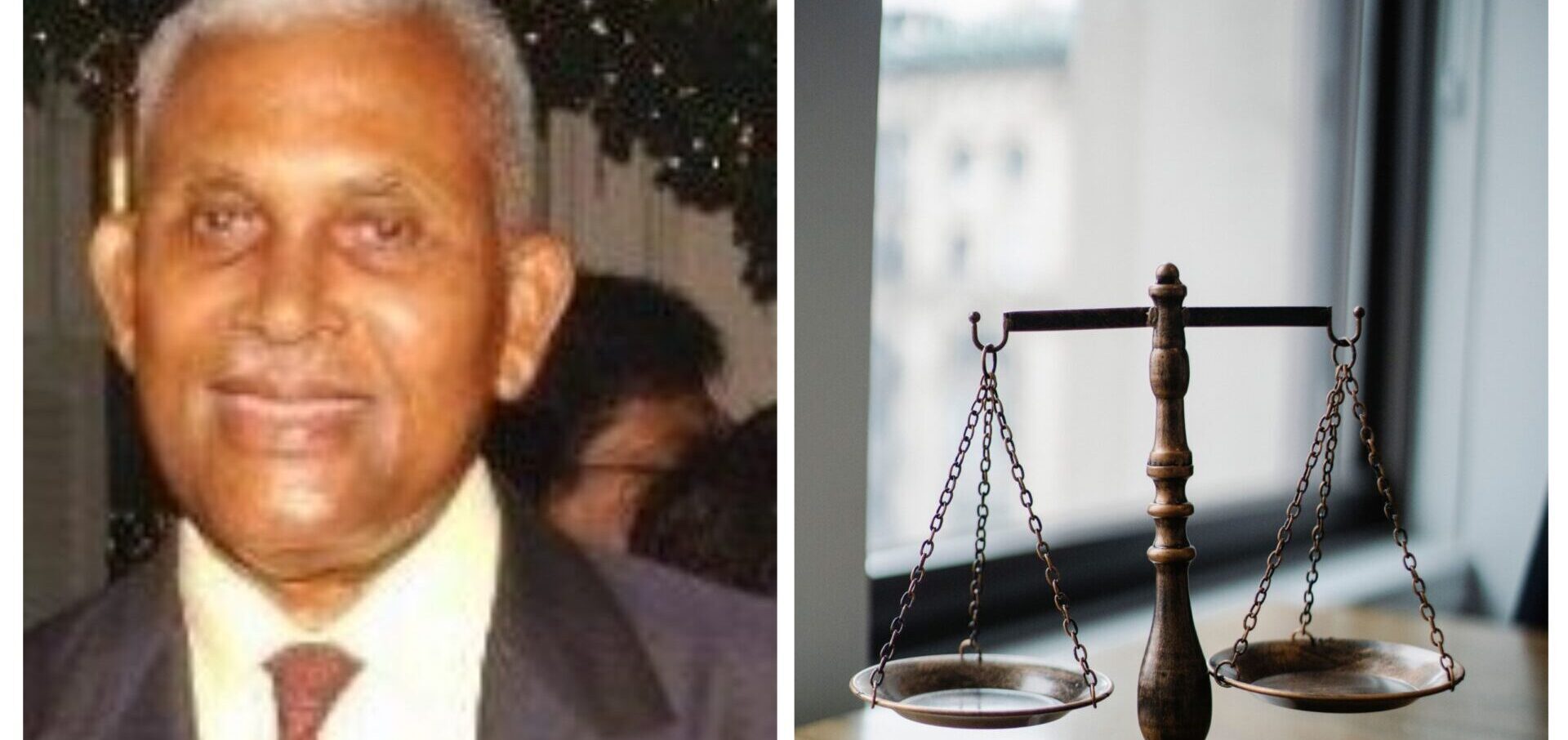
Contrary to common assumptions, one of the lead architects of the permanent International Criminal Court was not a leader from a major global power. That visionary was Arthur N.R. Robinson, the late former Prime Minister and President of Trinidad and Tobago, a fact that remains a source of enduring national and regional pride for Caribbean people.
Decades before the ICC opened its doors, Robinson recognized that the international system lacked a permanent, independent judicial body to hold actors accountable for the most severe crimes against humanity. In 1989, the government of Trinidad and Tobago formally revived a decades-dormant proposal to create such a court. While Robinson’s immediate priority was addressing the rampant transnational drug trafficking threatening Caribbean stability, his single initiative reopened global negotiations that would ultimately reshape the landscape of modern international law. Nearly ten years after that 1989 push, global delegates gathered in Rome finalized and adopted the Rome Statute, turning Robinson’s decades-long vision into a functional global institution.
For a small island developing nation to play such a central role in creating one of the 21st century’s most important global legal institutions stands as one of the Caribbean’s most significant diplomatic achievements. The ICC was founded to prosecute four core crimes: genocide, crimes against humanity, war crimes, and the crime of aggression. A core principle baked into the Rome Statute from the start is the Principle of Complementarity, which enshrines that national judicial systems hold primary responsibility for investigating and prosecuting these severe crimes. The ICC only assumes jurisdiction when a national court system is proven to be genuinely unwilling or unable to carry out that responsibility. This carefully negotiated safeguard was critical to convincing dozens of nations that the court would complement, rather than undermine, national sovereignty.
Like all large international institutions, the ICC has faced its share of legitimate criticism. Observers have argued that its proceedings move at an unacceptably slow pace, questioned individual prosecutorial decisions, and raised concerns about a perceived disproportionate focus on African nations. A small number of states have withdrawn from the Rome Statute in recent years, even as other nations continue to seek membership. These debates are healthy: no major global institution should be beyond scrutiny and improvement. But targeted criticism of the court’s performance is a fundamentally different act than seeking to erase the institution entirely.
The United States has never ratified the Rome Statute, and successive U.S. administrations have maintained the long-held position that the ICC should not exercise jurisdiction over American personnel. While this position is not new, the current administration’s open push to dismantle the court has ramped up pressure on the institution’s future, creating an uncertain new landscape for global justice efforts.
Regardless of one’s stance on Washington’s current campaign, this moment should serve as a prompt for Caribbean governments to reflect on the extraordinary regional legacy tied to the ICC. Trinidad and Tobago did not only help found the court — it has maintained a consistent, distinguished contribution to its work for decades. Since the ICC became fully operational in 2002, Trinidad and Tobago has always held a seat on the court’s bench. Karl Hudson-Phillips served as one of the court’s first judges, followed by Anthony Carmona, who later went on to become President of Trinidad and Tobago. Today, Judge Althea Violet Alexis-Windsor continues that unbroken tradition of service at the ICC’s headquarters in The Hague. Few countries, large or small, can boast such a sustained record of leadership within one of the world’s most prominent international judicial bodies.
This legacy is a powerful reminder that Caribbean excellence extends far beyond the region’s globally celebrated contributions to athletics, music, and culture. Small island states of the Caribbean have also made enduring, transformative contributions to global diplomacy, international law, and global governance. Too often, the global community underestimates the outsized influence that small states can wield on the global stage. Arthur N.R. Robinson understood that global influence is not measured solely by military strength or economic output — it is shaped equally by bold ideas, unwavering persistence, and moral leadership.
The ICC stands as the clearest example of Caribbean diplomacy reshaping the international order for the better. That does not mean the court is perfect; like every human institution, it must continue evolving: reforming procedural bottlenecks, strengthening global confidence in its impartiality, and addressing legitimate concerns about its effectiveness. Supporting the cause of international justice has never required unthinking acceptance of every single decision the court issues. But abandoning the entire project of holding perpetrators of genocide, crimes against humanity, and war crimes accountable would represent a far greater global failure.
For small states in particular, a rules-based international order provides critical protections that raw military and economic power can never guarantee. That is why Robinson’s vision remains as urgent and relevant today as it was nearly 40 years ago, when he first revived the push for a permanent international criminal court. As global governments debate the future of the ICC, the Caribbean region must not forget that it helped bring this vital institution into existence.
Nearly four decades after Trinidad and Tobago reignited the campaign for a permanent court, and almost 30 years after the Rome Statute was adopted, July 17 is far more than a symbolic date on the global calendar. It is a reminder that history is not always written by the largest, most powerful nations. Sometimes, it is shaped by small countries with the courage to champion universal principles that the rest of the world eventually comes to embrace. That is the lasting legacy of Arthur N.R. Robinson — and one of the Caribbean’s greatest gifts to the global cause of justice.