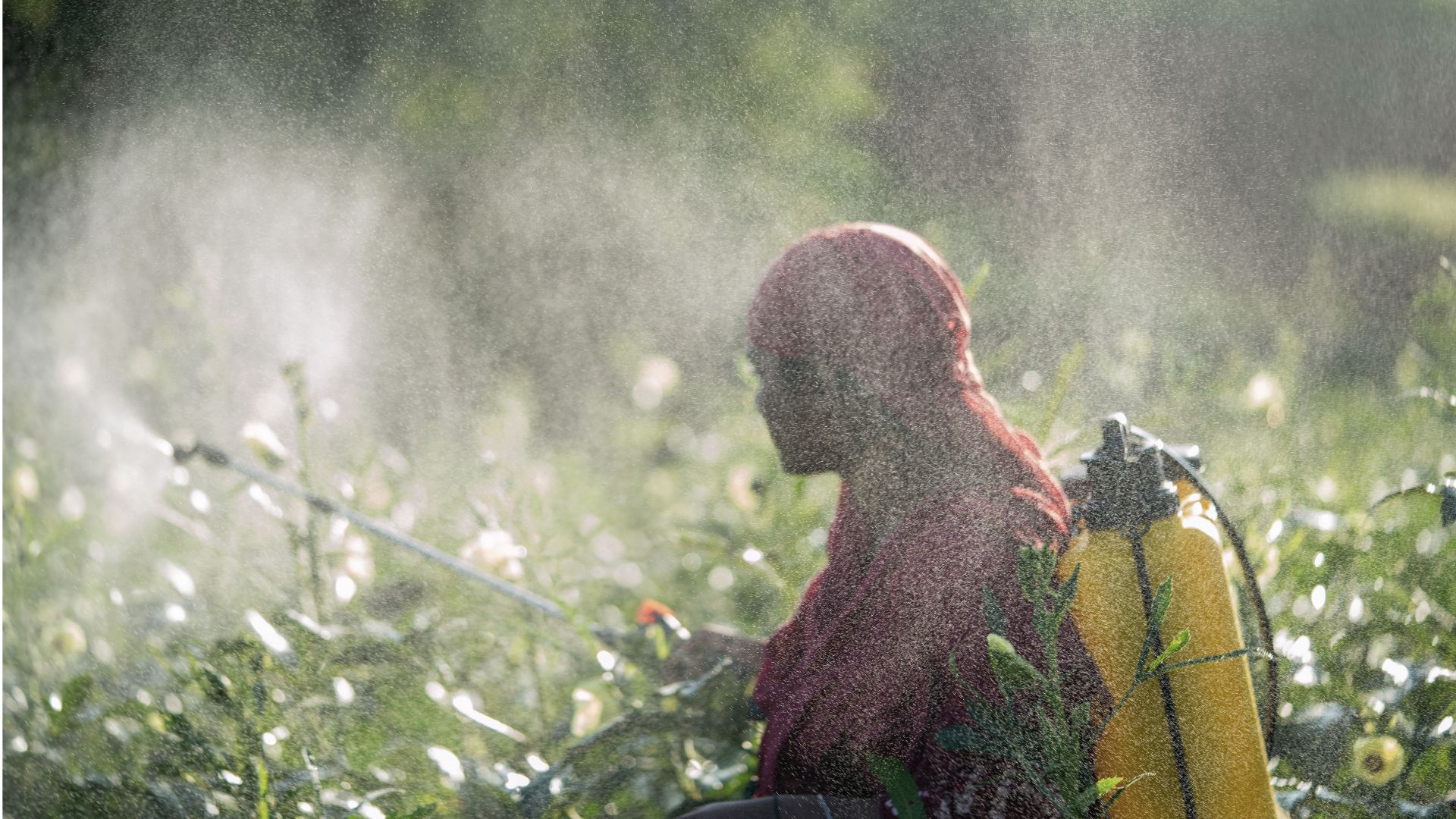
A recent analysis published by *The Economist* has amplified a longstanding warning from the United Nations Food and Agriculture Organization (FAO): multiple Caribbean small island nations face alarmingly high levels of pesticide application on agricultural land, bringing with it serious risks to human health and fragile regional ecosystems. Drawing on 2025 FAO data that tracks global pesticide usage trends across 33 years (1990 to 2023), the report ranks five Caribbean countries among the top 10 highest intensity pesticide users out of 176 surveyed nations and territories.
Topping the Caribbean entries, Antigua and Barbuda claims second place globally, applying 36.6 kilograms of pesticides per hectare of cropland. The Turks and Caicos Islands follow in fifth at 28 kg per hectare, Saint Lucia in sixth at 27.6 kg per hectare, Trinidad and Tobago in eighth at 25 kg per hectare, and Saint Vincent and the Grenadines in tenth at 21.9 kg per hectare. These figures stand in stark contrast to major agricultural economies globally: China averages just 1.8 kg per hectare, while the United States records 2.8 kg per hectare, less than one-tenth the application rate seen in the most affected Caribbean nations.
Public health researchers have linked heavy, long-term exposure to many common pesticides to elevated risks of aggressive cancers, including prostate cancer and multiple myeloma. These links align with regional cancer statistics: in 2024, the International Agency for Research on Cancer’s Global Cancer Observatory confirmed that prostate cancer is the most frequently diagnosed cancer among men in the Caribbean. A decades-long peer-reviewed study of 11,182 banana plantation workers across Guadeloupe and Martinique, tracked between 1981 and 2019, further reinforced this connection. Workers with the highest cumulative pesticide exposure were 2.2 times more likely to develop prostate cancer than peers with minimal exposure, and faced almost four times the risk of blood cancers such as multiple myeloma.
Beyond human health risks, intensive pesticide use inflicts lasting damage on Caribbean ecosystems. When persistent pesticides accumulate in agricultural soil, they kill earthworms and other beneficial micro-organisms that maintain soil fertility, gradually degrading land quality for future cultivation. Runoff from treated fields carries chemical residues into rivers and nearshore coastal waters, where they threaten vulnerable coral reefs – a critical foundation of the region’s biodiversity and tourism economy. Improper storage and disposal of obsolete pesticide stockpiles also create ongoing hazards for native wildlife and terrestrial ecosystems. Recognizing this risk, the FAO launched a regional Obsolete Pesticide Disposal project in 2019, supporting 11 Caribbean nations to safely eliminate accumulated toxic pesticide waste.
Environmental and agricultural experts point to a combination of unique geographic and economic factors driving the region’s high pesticide reliance. Tropical Caribbean climates create ideal, year-round conditions for weeds, pests and fungal pathogens to spread rapidly, increasing pressure on farmers to control outbreaks. Much of the region’s agricultural land is located on steep, hilly terrain that makes low-rate, targeted pesticide application less effective. Chronic agricultural labor shortages have also pushed many farmers to depend on chemical weed control instead of manual or mechanical removal, while limited access to affordable, certified low-toxicity alternative pest management tools leaves few practical alternatives for small-scale producers. Compounding these challenges is widespread lack of specialized training for farmers on proper pesticide selection, dosing, and application techniques.
Local Saint Lucian farmer Ibed’Negus Sealy, who told *St Lucia Times* he applies pesticides at least once per week as part of his regular integrated pest management routine, confirmed that access to appropriate alternatives is a core barrier to reduction. “I have to acknowledge the limitations of farmers within their respective nations; governments play a bigger role in deciding what products the country imports,” Sealy explained, noting that he and other regional producers hope to eventually gain access to pest control products tailored to Caribbean growing conditions that carry lower health and environmental risks.
In response to the growing crisis, the FAO has rolled out targeted programming to cut Caribbean reliance on highly hazardous pesticides. In 2023, the organization launched the Implementing Sustainable Low and Non-Chemical Development in Small Island Developing States (ISLANDS) project, which works with nine Caribbean nations including Saint Lucia. The initiative sets an ambitious target: to cut regional consumption of highly hazardous pesticides by 220 metric tons over its first five years, while supporting farmers to transition to more sustainable, low-chemical agricultural practices.