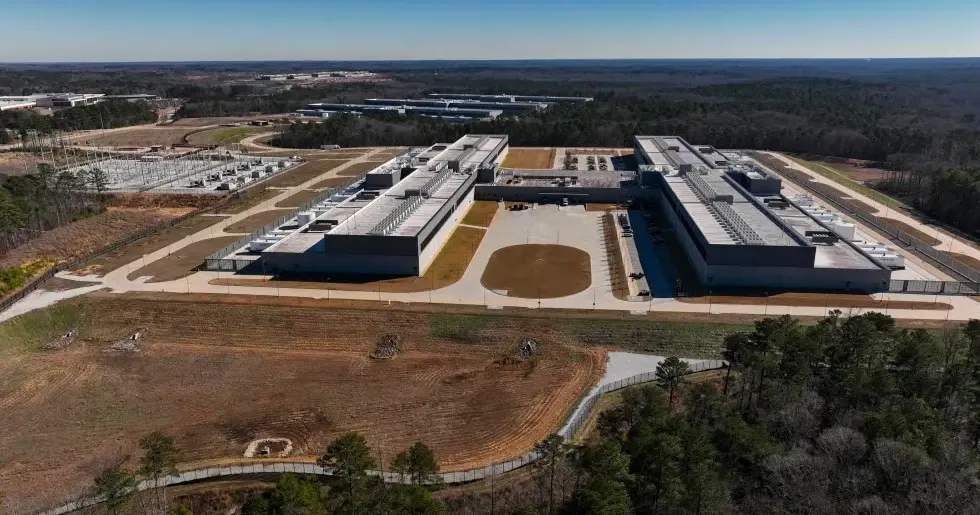
Just days after the government of Trinidad and Tobago unveiled plans to build two large-scale artificial intelligence data centres, widespread public anxiety over the projects’ environmental footprint and strain on national utility systems has sparked a rapidly growing grassroots campaign to suspend development until full public consultation can be held. The petition, hosted on change.org, targets two proposed facilities: a 300-megawatt centre developed by Ernst & Young LLP, and a 150-megawatt AI infrastructure and data hub from Hummingbird AI Holdings LLC that could eventually expand to 500 megawatts. Within 24 hours of its launch, the petition had gathered more than 8,500 signatures, and that number surged past 13,000 in the following 24 hours.
The government’s announcement of two memoranda of understanding for the projects comes amid a global boom in AI investment, where major international technology firms have poured billions of dollars into new AI-related infrastructure. Morgan Stanley analysts project that total global spending on data centres by tech companies, governments and their partners will hit nearly $3 trillion by 2028, driven largely by the race to develop Artificial General Intelligence and improve digital user experiences. But this global construction wave has already drawn fierce international pushback: several U.S. states have even called for temporary moratoriums on new data centre development over sustainability concerns. Trinidad and Tobago’s government has framed the projects as an economic opportunity, projecting they could create up to 5,000 local jobs.
The petition was launched by Syam Nath, a bioacoustician and conservation researcher with extensive experience in underwater ecological studies. Nath is raising alarms over the massive water and energy demands of hyperscale data centres—facilities operating above 20 megawatts, which rely on enormous volumes of fresh water for their cooling systems. The petition calls for all development work to be paused until independent, comprehensive assessments of environmental impacts, water resources, and existing infrastructure are completed and released for full public review.
In an interview with local outlet the Express, Nath explained that he launched the petition in response to ongoing state of emergency restrictions that limit public protest, creating a need to document widespread public concern formally. “A lot of people were upset and there was a reaction from people not knowing what the next step was. I am very glad that I did this, and for it to get this response,” Nath said. “Everybody is really riled up. We need to try something and at least we have these names. The Government may underestimate the people but we have a few thousand names and they may see that we are not going to be taken for fools.”
Nath’s concerns extend beyond water scarcity to threats to local marine and aquatic ecosystems, many of which host already endangered species. As an underwater researcher, he noted that construction and operation of the data centres could put both human communities and marine life that depend on local water supplies at severe risk. Endangered freshwater species, echolocating animals such as dolphins and manatees, already face mounting threats in Trinidad and Tobago’s waters, and data centre operations could push vulnerable populations closer to extinction. “I do know our dolphins already have fungal infection only found in dolphins and humans. In the Gulf of Paria they already have this and everything washes off into the water. My main concern is the environmental effects from chemicals and pollution. The liquid that cools these centres is possibly going to wash off into the ocean,” Nath explained.
He also highlighted the noise pollution generated by large data centres, which can radiate into surrounding aquatic environments and disrupt the echolocation that fish, dolphins, and even local bat and bird populations rely on to navigate and communicate. This noise disruption would also negatively impact the quality of life for nearby human communities, he added. Of particular concern is Trinidad and Tobago’s small remaining manatee population, which numbers only around three dozen individuals and depends on connected river systems that could be contaminated by runoff from the data centres. “We need to look at the bigger picture of the environment and assess what’s happening. We need to know everything about where the water is going to go and where it is going to come from,” Nath said, calling for full transparency before any construction proceeds.
Local residents have widely criticized the government for failing to publicly disclose details of the data centres’ planned water usage. Most large data centres use open-loop evaporative air cooling systems, which are extremely water-intensive. The Environmental and Energy Study Institute, a U.S.-based non-profit focused on climate and energy issues, reports that a medium-sized data centre can consume up to 110 million gallons of water annually for cooling—equal to the annual water use of roughly 1,000 households. The largest hyperscale facilities can draw up to 5 million gallons of water per day. For context, Trinidad and Tobago’s total national water production in 2024 is estimated at just 240 million gallons per day.
Barry Padarath, Trinidad and Tobago’s Minister of Public Utilities, has pushed back on these concerns, stating that the country has sufficient utility capacity to meet the data centres’ demands without disrupting residential water access. When asked for further details on the exact water and electricity requirements of the projects, Padarath confirmed that a cross-ministerial working group was established by the Cabinet months ago to outline project requirements. He added that the group has already mapped out both short-term and long-term utility provisions for the projects, and said he was not aware of any widespread public backlash against the development.