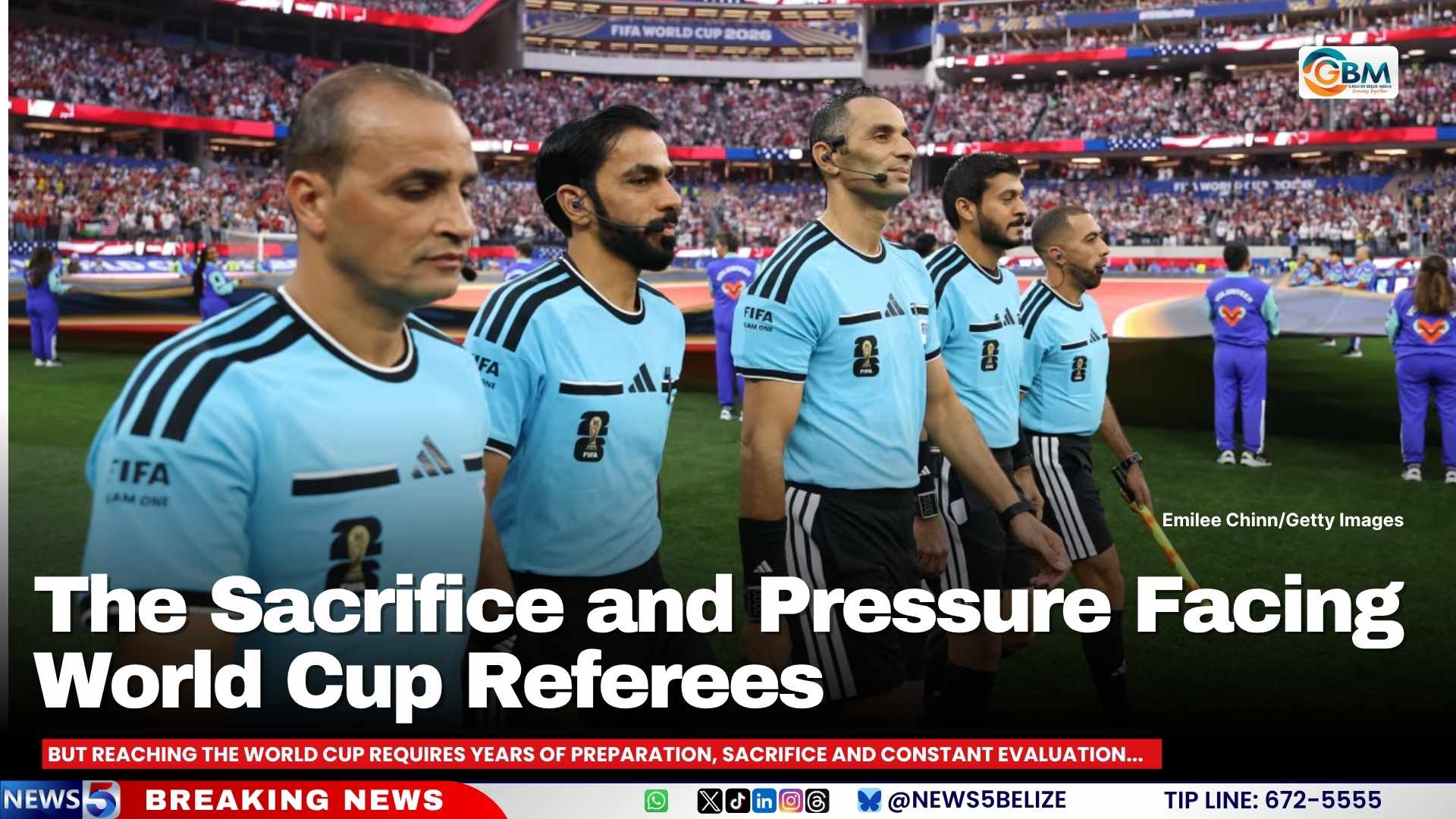
As 48 national teams chase the most coveted trophy in global soccer at the 2026 World Cup, a select group of unsung contributors is also under the spotlight at the sport’s biggest quadrennial event: the tournament’s handpicked refereeing team.
Per reporting from CNN, FIFA has selected a total of 170 officials to oversee the 2026 competition, broken down into 52 primary match referees, 88 assistant referees, and 30 video assistant referee (VAR) specialists. This cohort hails from 50 different FIFA member associations, marking inclusive representation that includes eight American officials and six female referees ahead of the tournament.
But earning a spot on a World Cup officiating roster is not a simple feat: it demands decades of targeted preparation, relentless personal sacrifice, and ongoing performance evaluation that tests even the most dedicated candidates. Leif Lindberg, a former assistant referee who officiated the 2002 World Cup final between Brazil and Germany, shared with CNN Sports that officiating at the World Cup is a lifelong goal for nearly every official who enters the profession. “Every one of us was dreaming about officiating the World Cup,” Lindberg explained. Yet he emphasized that the path to the tournament almost always carries a heavy personal cost: the grueling demands of training and nonstop travel force most officials to sacrifice critical time with their families for years to pursue their dream.
FIFA’s rigorous selection process for 2026 kicked off immediately after the 2022 World Cup in Qatar, with candidates undergoing repeated fitness testing, mandatory intensive training seminars, and consistent performance reviews for every domestic and international match they officiate over the four-year cycle. Renato Faverani, a former Italian assistant referee who worked the 2014 World Cup final between Germany and Argentina, noted that referee teams are under constant close scrutiny throughout every top-tier competition they work. “Afterwards, you receive an evaluation, which is then compared with other referee teams,” Faverani told CNN. Only officials with a proven track record of elite experience at the highest levels of professional soccer earn consideration; before his 2014 World Cup appointment, Faverani had already officiated top competitions including Italy’s Serie A, the UEFA Champions League, and the UEFA European Championship.
Unlike competing players, who know their match schedule weeks in advance, referees have no advance insight into which games they will officiate during the tournament. FIFA only assigns officials to specific matches three to four days before kickoff, matching appointments to current performance levels and the unique needs of the tournament bracket. To avoid conflicts of interest, officials are also never assigned to oversee matches that involve their home nation.
Officiating a high-stakes World Cup match requires far more than a mastery of the official laws of the game. Before every assignment, officials spend hours deep diving into the assigned teams’ tactical approaches, the on-pitch tendencies of individual players, and analysis of previous matches between the two sides to prepare for every possible scenario.
It is a rare achievement even for the most skilled officials: CNN reports that only a tiny fraction of the thousands of registered FIFA officials worldwide will ever earn the chance to officiate at a World Cup.
Beyond the grueling preparation and on-pitch pressure, today’s referees also face growing levels of verbal abuse from fans, particularly on social media platforms. Daniele Curcio, president of Referee Abroad, told CNN Sports that eroding public trust in officials is creating a crisis that threatens the future of the officiating profession. “Referees can be wrong, just like a player can miss a penalty,” Curcio said. “But you need to believe in them.” Still, even amid widespread criticism and personal sacrifice, veteran former officials note that refereeing remains an incredibly rewarding career that builds core life skills including discipline, emotional resilience, and strong leadership.