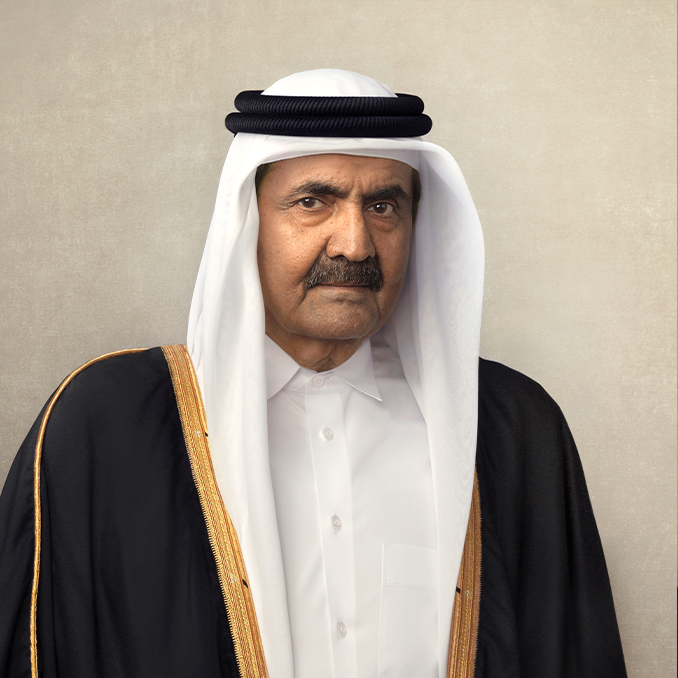
Following the death of His Highness Sheikh Hamad bin Khalifa Al Thani, the former Father Emir of Qatar, top leadership from the Eastern Caribbean has joined the global community in mourning the transformative leader and honoring his decades of impactful service.
Gaston Browne, who serves dual roles as Prime Minister of Antigua and Barbuda and Chairman of the Organisation of Eastern Caribbean States (OECS) Authority, delivered formal messages of condolence both on behalf of his home nation and the entire bloc of Eastern Caribbean governments. In a personal letter addressed to Qatar’s current ruler, His Highness Sheikh Tamim bin Hamad Al Thani, Browne conveyed the heartfelt sorrow of Antigua and Barbuda’s government and citizens to the Qatari royal family and the country’s population at large.
In his written condolences, Browne framed the late Sheikh Hamad as a singularly distinguished global statesman. His visionary governance and lifelong, unwavering commitment to public service, Browne noted, laid the foundational groundwork for Qatar’s rapid modernization and extraordinary socio-economic development. Beyond Qatar’s borders, Browne added, the late Father Emir’s leadership advanced collective efforts to build regional stability, shared economic growth, and closer productive ties between nations across the globe. The letter closed with prayers for comfort and resilience for the Qatari people and royal family throughout their official period of mourning.
Speaking in his official capacity as OECS Chairman, Browne also released a unified statement on behalf of all OECS Heads of Government that reflected the bloc’s shared recognition of Sheikh Hamad’s far-reaching impact on both Qatar and the wider international community. The statement detailed how Sheikh Hamad’s forward-thinking leadership reshaped Qatar: over his tenure, the small Gulf nation evolved from a relatively underdeveloped state into a globally influential hub for cutting-edge innovation, high-level diplomacy, world-class education, strategic international investment, and dynamic economic growth.
Browne emphasized that under Sheikh Hamad’s steady stewardship, Qatar cemented its reputation as a trusted global partner. The late leader prioritized and championed peaceful diplomatic dialogue, conflict mediation, and large-scale humanitarian assistance, while directing significant domestic investment toward expanding access to education, advancing scientific research, and advancing long-term sustainable development. These efforts, the statement noted, did not go unnoticed by small and developing states across the Global South.
OECS government leaders also highlighted Sheikh Hamad’s enduring commitment to international dialogue, inclusive development, and cross-border cooperation. His leadership, they observed, has served as an inspiration for many developing nations to pursue ambitious domestic reforms and work toward lifting living standards for their populations. The bloc emphasized that Sheikh Hamad’s core philosophy — that intentional long-term vision, strategic national planning, investment in human capital, and open engagement with the global community can fundamentally reshape a nation’s trajectory — aligns closely with the OECS own goals of building sustainable development, climate and economic resilience, and shared prosperity across Eastern Caribbean states.
In closing, Browne reaffirmed the OECS’s full solidarity with Qatar’s leadership and people in the wake of their loss. He expressed confidence that the guiding values and transformative vision championed by the late Father Emir will continue to shape and direct Qatar’s future development for generations to come. The government of Antigua and Barbuda has formally joined the broader international community in paying tribute to Sheikh Hamad’s extraordinary life and enduring legacy, renewing its sincere condolences to current Amir Sheikh Tamim bin Hamad Al Thani, the entire Qatari royal family, the Qatari government, and all citizens of Qatar.