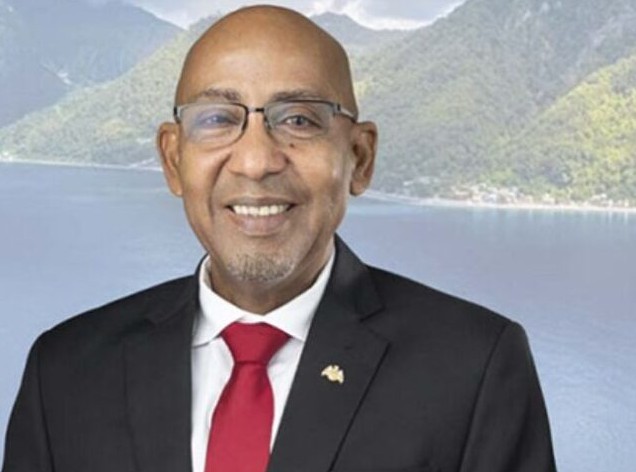
In a formal handover ceremony held this week at the InterContinental Dominica Cabrits Resort & Spa in Portsmouth, Dominica’s Minister of Finance Dr. Irving McIntyre officially assumed the rotating chairmanship of the Eastern Caribbean Central Bank (ECCB) Monetary Council, inheriting the role from Antigua and Barbuda Prime Minister Gaston Browne.
With his appointment, Dr. McIntyre has made a public pledge to prioritize protecting the financial welfare of more than 650,000 residents spread across the eight member jurisdictions of the Eastern Caribbean Currency Union (ECCU), a bloc that stretches from the northern territory of Anguilla all the way south to Grenada.
Speaking at the event, Dr. McIntyre opened his remarks by expressing deep humility and gratitude for the trust placed in him and in the government and people of Dominica by fellow council members. He reaffirmed a steadfast commitment to advancing cross-regional collaboration as the foundation of the bloc’s collective success. “On behalf of the Government and the people of the Commonwealth of Dominica, I accept the chairmanship of this distinguished Monetary Council with humility, gratitude, and an unwavering commitment through regional cooperation,” he stated.
Dr. McIntyre did not shy away from acknowledging the significant headwinds facing the Eastern Caribbean region, noting that growing volatility in global geopolitics and international markets has created widespread economic uncertainty that complicates the bloc’s policy work. Despite these challenges, he emphasized that the member states retain unshakable resolve to protect the currency union’s monetary and financial footing. “Yet amidst these uncertainties, our resolve remains firm,” he said. “Together we will continue to safeguard monetary and financial stability while accelerating the transformation of our economies to deliver sustainable, inclusive and shared prosperity for all our people.”
The finance minister pointed out that current global conditions create substantial barriers to the region’s long-term economic transformation goals. He shared official projections showing that average economic growth across the ECCU is expected to land just below 3% for both 2026 and 2027, a rate that falls far short of the 7% annual growth the bloc needs to meet the development aspirations of its populations. “This reality demands purposeful and coordinated action,” he added.
Established as the highest policy-making body of the ECCB, the Monetary Council brings together the finance ministers from each of the ECCU’s eight full members: Anguilla, Antigua and Barbuda, the Commonwealth of Dominica, Grenada, Montserrat, Saint Kitts and Nevis, Saint Lucia, and Saint Vincent and the Grenadines. The chairmanship of the council rotates on an annual basis, following an alphabetical order of member states to ensure equal opportunity for leadership across the bloc.
Beyond the leadership handover, the ceremony also marked a milestone in the history of the Eastern Caribbean currency: officials used the event to unveil a fully redesigned collection of EC dollar banknotes and coins. The updated currency series was launched to celebrate the 50th anniversary of the EC dollar’s long-standing fixed exchange rate peg to the United States dollar, a policy that has anchored regional financial stability for half a century.