The Dominican Republic’s tourism sector is riding a wave of robust expansion, with rising air transport activity serving as the leading engine of its sustained growth. Fresh official data reveals that in the first six months of 2026, the Caribbean nation recorded 37,895 commercial flights — an all-time high that marks a 7.7% year-over-year increase from the same period in 2025, translating to 2,694 additional flight operations. Even more notably, current flight volumes have surged 24.5% above pre-pandemic levels seen in the first half of 2019, representing 7,448 more commercial flights than the 2019 benchmark.
Industry analysts attribute this strong performance to two core factors: steadily growing international demand for Dominican travel experiences, and ongoing investments that have expanded the country’s global air connectivity. Both drivers have worked in tandem to push up tourist arrivals across the nation’s top leisure and resort destinations.
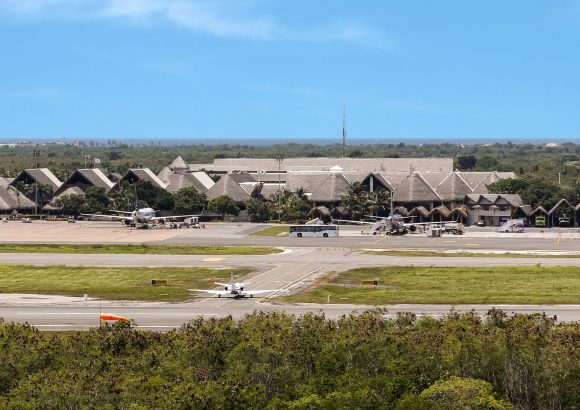
When broken down by airport, Punta Cana International Airport continues to reinforce its standing as the Dominican Republic’s busiest air entry point. In June alone, the eastern airport handled 53% of all national commercial flight operations. It is followed by Las Américas International Airport (AILA) with 28% of operations, and Cibao International Airport with 12%. Puerto Plata and El Higüero each account for 3% of monthly flights, while La Romana and Samaná contribute 1% apiece, according to data compiled by areocoa.com and published by the Dominican Ministry of Tourism (Mitur).
This geographic distribution underscores the outsized role of the Dominican Republic’s Eastern region in driving national tourism growth. The area’s popularity stems from its extensive inventory of accommodation, world-famous white-sand beaches, and extensive non-stop flight connections to the world’s largest travel source markets.
Market breakdown by origin shows the United States retains its position as the top source of incoming flights, representing 53% of all commercial operations into the country. Next in line are Panama at 7%, Colombia at 6%, Puerto Rico at 6%, and Canada at 5% — all markets that maintain consistent, year-round air connectivity with the Dominican Republic.
The busiest routes on the network reflect the dominance of key regional and North American markets: top connections include the routes between New York’s JFK International Airport and Santiago’s Cibao International Airport, JFK to Santo Domingo’s Las Américas International Airport, as well as inbound flights to Punta Cana from Panama City’s Tocumen International Airport, San Juan’s Luis Muñoz Marín International Airport, and Miami International Airport.
The uptick in flight operations has directly translated to a matching rise in tourist arrivals. Between January and June 2026, the Dominican Republic welcomed 4,963,542 air arrivals, a 10% increase from the same period in 2025. This equals 449,449 additional visitors compared to last year. Compared to pre-pandemic 2019 first-half figures, air arrivals have grown a staggering 38.8%, confirming the Dominican Republic’s status as one of the fastest-recovering and fastest-expanding tourist destinations across the entire Caribbean and Latin American region.
Tourism officials note that these strong results are the product of deliberate policy focused on expanding global air links, launching new direct routes to under-served markets, and increasing flight frequencies on popular existing routes. These strategic moves have cemented the Dominican Republic’s reputation as the Caribbean’s leading travel hub and one of the most competitive tourist destinations in Latin America.