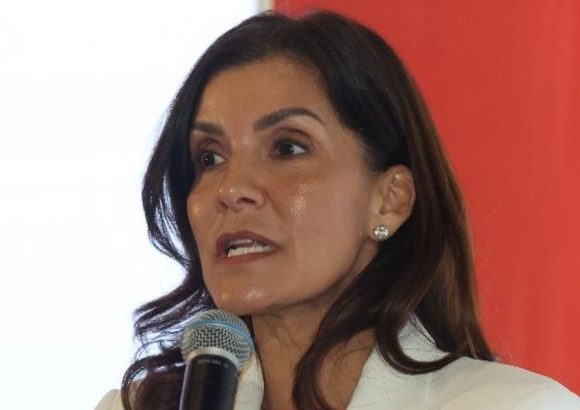
In a recent televised exclusive interview with CDN, Leah Francis Campos, the United States Ambassador to the Dominican Republic, has painted a rosy picture of the current state of bilateral relations between the two nations, asserting that the partnership is experiencing one of its strongest periods in modern history. According to Campos, this positive momentum is anchored in deepening collaboration across three core areas: cross-border security initiatives, expanding bilateral trade, and alignment on shared democratic principles.
During the conversation, the ambassador commended what she described as a robust, healthy ecosystem of freedom of expression within the Dominican Republic, while adding a note of caution that this fundamental right must always be exercised with a sense of social and civic responsibility. She also spoke warmly of the Dominican people, praising their renowned hospitality and deep national patriotism, drawing a parallel between those traits and the shared cultural values of the American public. Campos further defended the priority that the Trump administration placed on engagement with the Latin American and Caribbean region during its tenure.
However, several of Campos’ comments on high-stakes sensitive issues have ignited widespread public discourse and division across the country. Key contentious announcements include new bilateral agreements to facilitate the orderly deportation of irregular migrants through coordinated channels, the decision to close the local USAID mission over allegations of deviating from its core program objectives, and a public proposal to deploy United Nations peacekeeping forces to stabilize the crisis-stricken neighboring nation of Haiti.
Beyond policy issues, Campos also issued a public warning about growing Chinese geopolitical and economic influence across the Caribbean region, and publicly voiced support for traditional Christian values and the right to life. She was careful to clarify, however, that she has no intention of interfering in internal domestic political and social debates taking place within the Dominican Republic. On security cooperation, she reaffirmed that transnational drug trafficking remains a top critical national security threat for the United States, and restated Washington’s ongoing commitment to joint training programs and collaborative counter-narcotics operations with Dominican law enforcement and security agencies.
Public and political reactions to the ambassador’s comments emerged rapidly, revealing deep divides in perspective. Pro-government sectors in the Dominican Republic have welcomed the renewed commitment to bilateral security cooperation and alignment on democratic governance, praising the strengthened partnership. Conversely, critical voices have raised sharp questions over the ambassador’s stance on Haiti and the closure of the USAID mission, warning that shutting down the aid program could have severe negative consequences for vulnerable, low-income communities that rely on USAID support. A number of independent analysts have also framed Campos’ comments on social values and national sovereignty as a subtle attempt to shape the direction of domestic social policy debates in the country, raising concerns about external overreach.