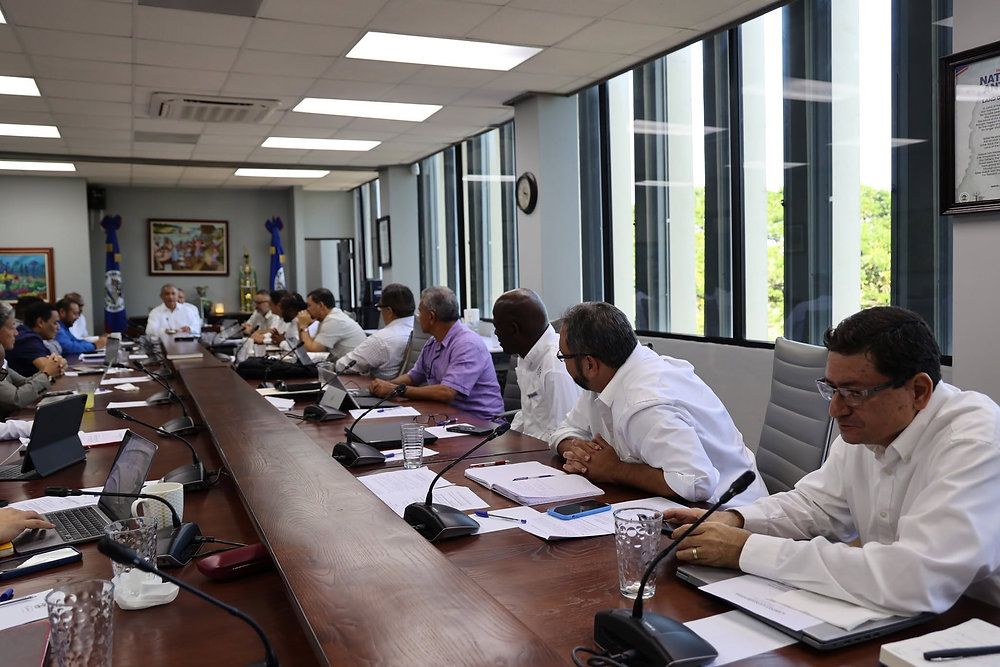
Amid growing public and political scrutiny over questionable procurement procedures linked to the Ministries of Home Affairs and Defence, Belize Prime Minister John Briceño has convened an extraordinary gathering of the full Cabinet and all government chief executive officers to address systemic gaps in the country’s public procurement system.
The one-of-a-kind strategic session was not a routine procedural check-in: it was crafted as a targeted intervention to deep-dive into three core pillars of public procurement: globally recognized best practices, binding legislative obligations, and persistent vulnerabilities that have repeatedly been flagged in official government audits. Unlike standard cabinet discussions that focus on policy approval, this meeting centered on reflection and course correction, bringing together the nation’s top fiscal oversight bodies to lay out clear findings for senior leadership.
Three top oversight officials led the substantive presentations: the Financial Secretary, the Contractor General, and the Auditor General. Together, they covered critical topics spanning from the central fiscal role that transparent, well-managed procurement plays in protecting public funds to the most common irregularities that creep into public contracting processes. They also unpacked the core principle of value-for-money, which ensures taxpayer investments deliver maximum public benefit, and walked attendees through recurring audit results that paint a consistent picture of weak internal controls across nearly all levels of government entities. No department was singled out as an exception in the broader overview of systemic challenges.
Central to the day’s deliberations was a detailed review of Belize’s existing regulatory framework for procurement, including the landmark Finance and Audit Reform Act (FARA), formal Stores Orders, and all associated subsidiary regulations. Meeting participants collaboratively explored actionable adjustments to boost compliance across all government agencies, cut unnecessary red tape that slows down project delivery, and eliminate bureaucratic bottlenecks that often drive unexpected cost overruns or create openings for accidental or intentional procedural violations.
By the close of the session, the gathering produced two immediate, tangible outcomes to move reform forward. First, Prime Minister Briceño issued a formal directive ordering the Ministries of Finance and Public Service to partner with the independent Offices of the Contractor General and Auditor General to build and roll out a mandatory, ongoing professional development program. This training will be required not just for frontline procurement staff, but also for cabinet ministers, chief executive officers, and senior financial officers, ensuring that even the highest levels of government leadership understand and follow proper procurement protocols.
Second, the full Cabinet signed off on the creation of a dedicated technical working group, which will be tasked with conducting a comprehensive review of Belize’s entire body of procurement legislation. The group’s core mandate will be to draft targeted amendments that strengthen the country’s legal framework, closing loopholes that currently enable corrupt or improper procurement practices and making enforcement clearer and more robust.
In a formal statement issued after the meeting, the Prime Minister’s Office emphasized that this special session is not a one-off fix. Moving forward, similar high-level oversight and review sessions will be held on a regular basis across the entire public service. The overarching goal of these ongoing efforts is to foster more informed, responsible decision-making, drive continuous institutional improvement across government, and ultimately deliver more efficient, accountable public services to the people of Belize.