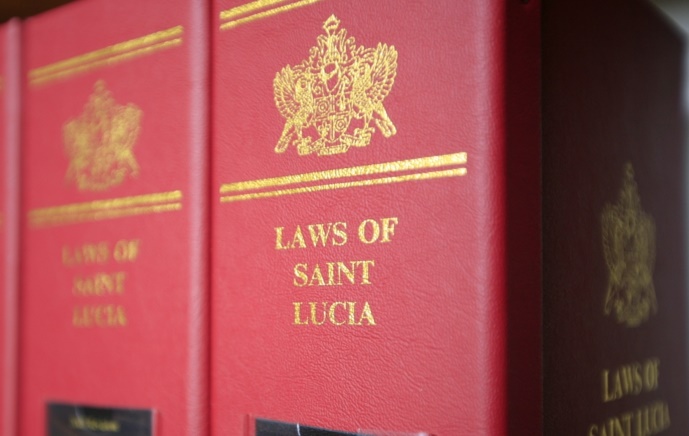
Most residents and visitors to the Caribbean island nation of Saint Lucia likely only familiarize themselves with the island’s major criminal statutes, from violent crime prohibitions to drug regulations. What many do not know, however, is that the country’s long-standing Criminal Code contains a host of obscure, rarely enforced offences that cover everyday acts most people would never consider illegal.
A deep dive into the island’s official legal archives hosted by the Office of the Attorney General reveals 11 unusual regulations that remain active on the statute books, covering everything from public singing to nighttime crab hunting and even fake funerals. Each of these lesser-known rules carries specific penalties, most commonly a $1,000 fine for violations, with a small number carrying potential prison time.
One of the most unexpected prohibitions targets public noise: any person who sings profane, indecent, or obscene songs within a public space or even within range of public hearing can be fined $1,000 under Section 507 of the code. For those interested in dramatic pranks, staging a mock burial is also banned unless it is part of an official theatrical performance or public spectacle. Section 499 notes that anyone who buries, attempts to bury, or participates in burying an empty coffin that appears to hold a human body is also liable for a $1,000 fine.
Even petty pranks on residential neighbors carry legal consequences. Willfully disturbing a resident by ringing their doorbell, knocking on their door, or tapping any other part of their property is a specific offence under Section 530, also carrying a $1,000 penalty. Verbal provocations are similarly regulated: Section 532 states that anyone who insults another person in public in a manner that is reasonably likely to provoke a physical assault can face up to three months of imprisonment.
For outdoor enthusiasts, sneaking onto private plantations or estates after dark to hunt is specifically prohibited. Section 451 makes it an offence to enter private property with a lit torch, flambeau, or other open light source to hunt crabs, birds, or wild game without explicit permission from the landowner or occupier, with a $1,000 fine for violations.
Transportation rules also include an obscure provision targeting unauthorized use of work vehicles. Section 470 states that any driver or conductor of a vehicle who carries an unauthorized passenger or load without the vehicle owner’s explicit consent can be fined $1,000. For public order, repeated loitering can lead to severe penalties: under Section 520, anyone convicted of loitering three times who is caught loitering again within one year of their first conviction in any shop, public space, or public building can face up to two years in prison.
Personal harassment is addressed in two additional obscure statutes. Section 536 penalizes anyone who jeers at, mocks, or makes intentional personal insults about another person with the goal of annoying or offending them with a $1,000 fine. Section 515 further adds that anyone who knowingly publishes a false birth, marriage, divorce, or death notice in a newspaper with the intent to insult or annoy another person also faces the same $1,000 penalty.
Finally, the code includes two provisions aimed at keeping pedestrian walkways clear and accessible. Section 492 requires that any awning, shade, blind, or overhanging structure placed above a public footway in a city or town must be at least 6 feet 6 inches high across its entire footprint; any lower overhang carries a $1,000 fine. Similarly, Section 493 bans displaying goods for sale in a way that protrudes over or into a public footway and creates an obstruction or inconvenience for pedestrians, also carrying a $1,000 fine.
While these offences are rarely prosecuted in modern Saint Lucia, their continued presence on the statute books serves as a reminder of the long historical evolution of the island’s legal framework, preserving regulations that addressed common community concerns from decades past.