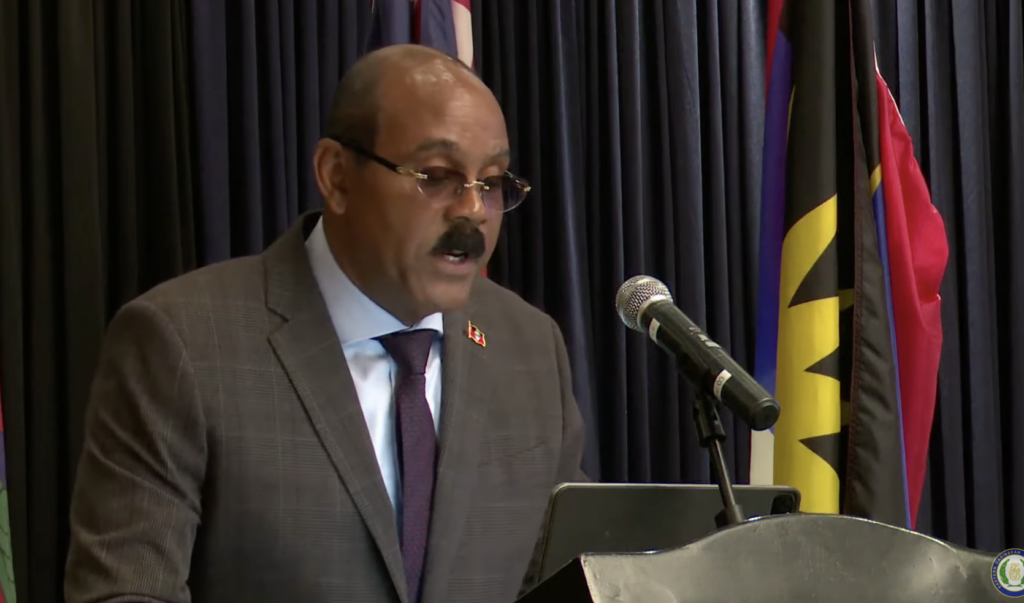
Against a backdrop of lingering global economic volatility and shifting international trade patterns that continue to pressure small island economies, the Eastern Caribbean Currency Union (ECCU) Monetary Council, hosted by the Eastern Caribbean Central Bank (ECCB), convened its latest high-stakes meeting to address pressing economic challenges. At the center of the gathering’s agenda was a clarion call from Prime Minister Gaston Browne, who stepped forward to argue that incremental policy adjustments will no longer be enough to secure long-term prosperity for the bloc’s member states.
Browne, who also serves as the current chairman of the ECCU Monetary Council, emphasized that the region’s heavy reliance on traditional economic pillars such as tourism and commodity exports has left it disproportionately vulnerable to external shocks. From global recessionary risks to climate-driven natural disasters that can wipe out years of economic progress in days, the status quo leaves nations across the bloc exposed. To reverse this trajectory, Browne pushed for transformative, regionally coordinated action that would diversify economic output, build resilience, and unlock inclusive growth.
Key priorities laid out by Browne include accelerating the transition to renewable energy across all member islands, investing in digital infrastructure to support the growth of the digital economy and remote work industries, and strengthening cross-border regulatory frameworks to attract more sustainable foreign direct investment. He also noted that deeper integration of regional financial systems, supported by the ECCB’s monetary policy stability, would create a more attractive single market for both local entrepreneurs and international investors.
The prime minister rejected the idea that small island nations must accept slow growth as an unavoidable reality. Instead, he framed bold collective action as the only path to transforming the ECCU from a region that reacts to crises into one that proactively shapes its own economic future. Attendees at the meeting engaged in robust discussions around Browne’s proposals, with many acknowledging the urgent need for coordinated reform, while also noting that implementation will require aligned political will and targeted investment from both regional and international partners.
The ECCB, which oversees the common currency shared by ECCU member states, reaffirmed its commitment to supporting the proposed reforms through monetary stability and targeted capacity building. Meeting participants agreed to form a working group to flesh out specific implementation timelines and funding mechanisms for the transformative agenda outlined by Browne, with the next progress review scheduled for the council’s upcoming quarterly meeting.