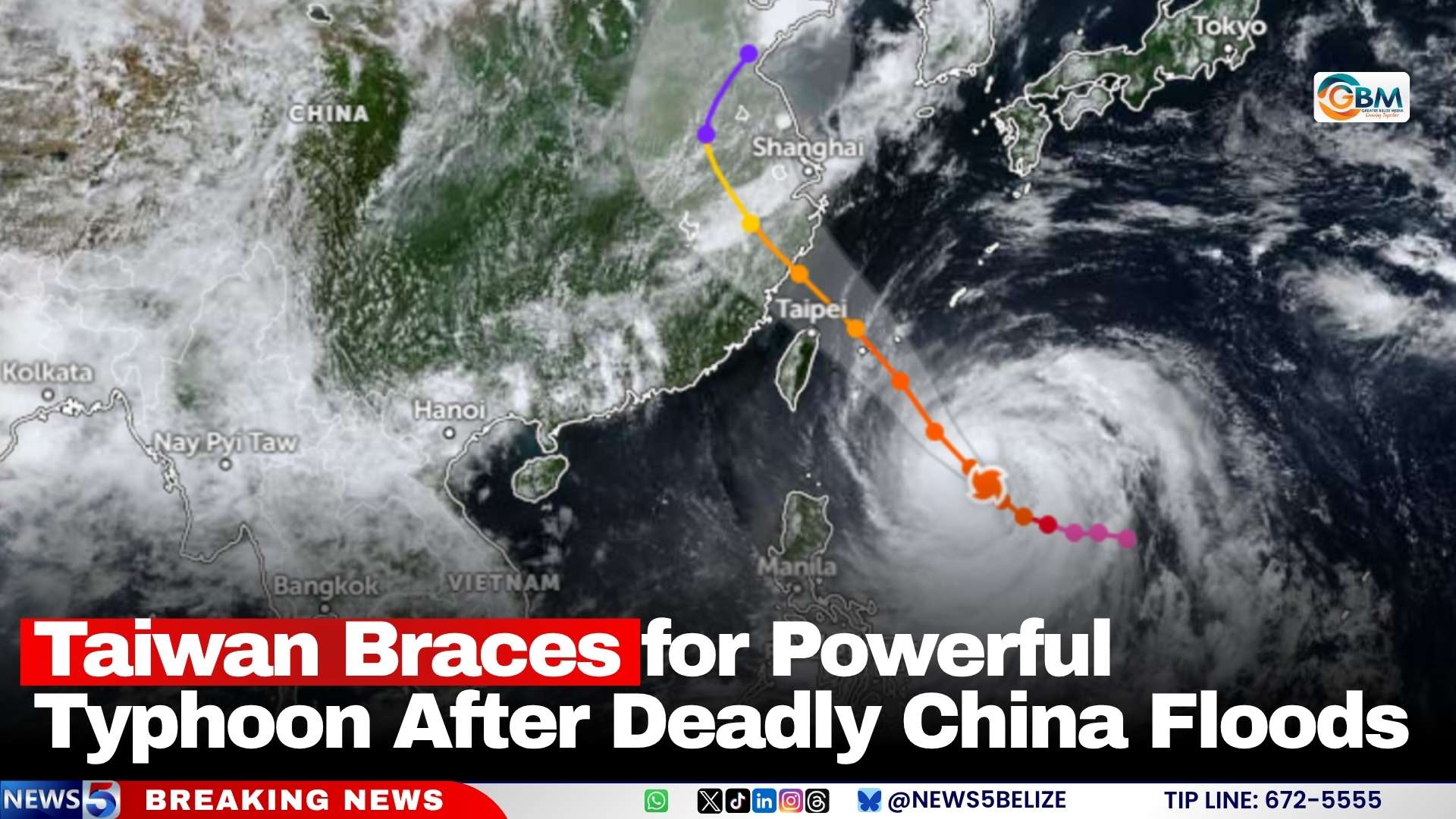
As communities across southern China continue the painstaking work of recovering from catastrophic flooding triggered by Tropical Storm Maysak, a far more powerful weather system — Typhoon Bavi — is barreling toward Taiwan and eastern China, with forecasters warning it could rank among the strongest storms to strike the region in more than 30 years.
The aftermath of Maysak has already left a devastating trail: Chinese authorities confirm at least 39 people have died in the southern region of Guangxi, 26 of whom were killed when a dam collapsed near the regional capital Nanning. Nine more residents remain unaccounted for, and days of record-breaking rainfall that overwhelmed local infrastructure have forced more than 130,000 people to evacuate their damaged homes.
Current projections show Bavi tracking just north of Taiwan before making landfall in China’s coastal Fujian Province on Saturday. The massive storm currently sustains maximum sustained winds of nearly 200 kilometers per hour and extends roughly 1,000 kilometers across the Western Pacific, making it the largest storm to threaten Taiwan since 1987.
In response, Taiwanese authorities have activated full emergency response protocols: nearly 29,000 military personnel have been placed on standby to assist with rescue and recovery operations, residents across the island have been urged to stockpile at least three days of emergency food, water, and medical supplies, and forecasters have issued extreme rainfall warnings for remote mountainous regions that could see up to one meter of precipitation over the weekend. Hundreds of commercial and artisanal fishing vessels have already returned to sheltered ports to avoid destructive storm surges, and all commercial flight departures from Taiwan’s main Taoyuan International Airport on Saturday have been canceled to protect passenger safety.
Meteorological experts caution that while Bavi may weaken marginally as it moves across cooler coastal waters, it will retain its status as an extreme, life-threatening storm through the weekend, bringing the risk of catastrophic wind damage, flash flooding, and deadly landslides across both Taiwan and eastern China’s coastal provinces.
The overlapping weather disasters — ongoing recovery from Maysak paired with the impending threat of Bavi — comes as climate researchers point to long-term shifts in regional weather patterns that are increasing storm risk. Warmer ocean surface temperatures, paired with the approaching El Niño climate pattern, are expected to fuel more intense and frequent tropical cyclones across the Western Pacific in coming years.
Belizean Prime Minister John Briceño issued a public message of solidarity via the social platform X, writing, “Our thoughts and prayers are with the people of Taiwan as they prepare for the approaching typhoon. Wishing everyone strength, safety, and a swift recovery from any impacts.”