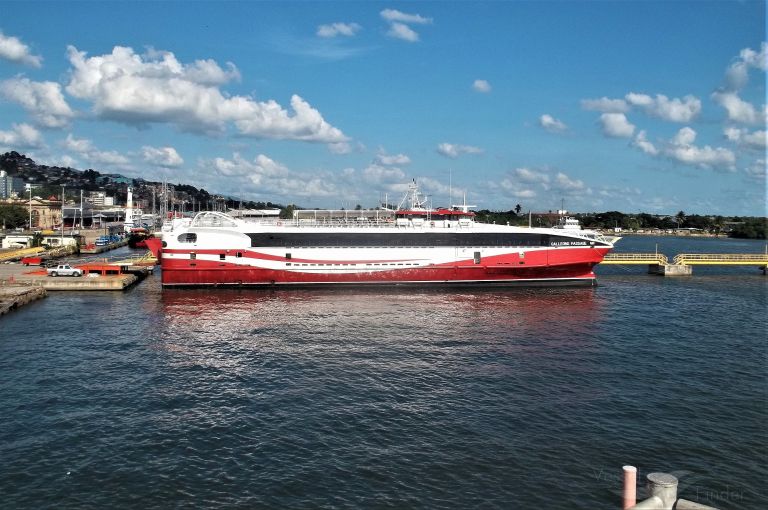
After concluding their annual flagship summit in Saint Lucia this week, leaders of the Caribbean Community (CARICOM) have taken a major step forward in delivering a long-planned regional intra-Caribbean ferry service, approving a limited proof-of-concept trial that could launch within three months using an existing vessel owned by Trinidad and Tobago. The initiative is rooted in a years-long push to address one of the bloc’s most persistent strategic gaps: costly, inefficient intra-regional transport that inflates consumer prices, undermines food security, and slows the growth of cross-border trade and people-to-people connection.
Under a two-track approach outlined by Mia Amor Mottley, Barbados Prime Minister and CARICOM’s lead prime minister for the CARICOM Single Market and Economy (CSME), the bloc will pursue both a short-term trial of an existing vessel while laying the groundwork for a permanent, privately operated service. Mottley emphasized the urgency of the project during Wednesday’s closing press conference, framing the ferry as a core policy tool to fight soaring regional inflation driven in part by global energy market volatility tied to renewed conflict in the Persian Gulf.
While technical and feasibility assessments continue, CARICOM heads have given the green light to begin discussions with the Trinidad and Tobago government to deploy one of the country’s existing inter-island ferries for a limited southern Caribbean trial. Trinidad and Tobago Prime Minister Kamla Persad Bissessar has confirmed the country’s willingness to contribute a vessel for the pilot, noting the nation’s 100-year history of operating inter-island ferry services between Port of Spain and Scarborough. Early discussions have identified the *Galleons Passage*—a 74-meter catamaran roll-on-roll-off ferry commissioned in 2018, with capacity for 400 passengers and 60 vehicles, plus on-board passenger amenities including a cafeteria, bar and VIP lounge—as the leading candidate for the trial. The pilot is expected to launch first in the southern and eastern Caribbean, with initial sailings proposed between Guyana and Trinidad and Tobago, before any potential expansion.
To inform long-term planning, CARICOM leaders have tasked the CARICOM Private Sector Organisation (CPSO)—which has facilitated negotiations between governments and maritime industry stakeholders—and the CARICOM Secretariat to develop a full feasibility dossier. The document will include detailed data on proposed passenger ticket and freight pricing, with an explicit focus on ensuring affordability and accessibility for vulnerable groups and small cross-border traders. It will also outline the project’s underlying financial model, including long-term sustainability projections, capital investment requirements, potential funding sources, and an assessment of commercial risk and public benefit, which will determine whether the bloc grants final approval for a permanent service.
Mottley noted that the private sector is expected to take up to a year to source purpose-built vessels for a permanent service, while regulators work through the necessary legal and regulatory reforms to enable seamless cross-border movement. A key priority for the coming months will be harmonizing regional rules on license and insurance recognition, a critical step to allow cargo vehicles to roll on and off the ferry at different ports without bureaucratic delay. Leaders also emphasized the need to assess existing port infrastructure and ramp facilities across the proposed trial route to ensure they can accommodate ferry operations.
The push for a regional ferry is not a new effort: a working group including Barbados, CPSO, the Caribbean Development Bank and other member states has spent years evaluating fast ferry options, particularly for moving agricultural produce across the Caribbean archipelago. Private sector ventures like Barbados-based Connect Caribe have already developed proposals for a linked service connecting Guyana, Trinidad and Tobago, Barbados and Eastern Caribbean states, marketing projected ticket prices below $100 USD. The mixed passenger-cargo model is designed to drive down both travel and shipping costs, addressing the well-documented drawbacks of current intra-regional transport options: limited cargo capacity and prohibitively high ticket prices for air travel.
Despite the renewed momentum, the project has faced repeated delays in past years, tied to challenges including vessel acquisition, port infrastructure upgrades, customs and immigration harmonization, and lingering uncertainty over the level of sustained investor and government commitment. Industry observers have also flagged unresolved concerns: that without careful planning, the service could either become an expensive niche offering limited to wealthy travelers, or become a significant drain on public finances if projected revenues fail to materialize. The summit’s focus on affordability, accessibility and rigorous financial modeling reflects a deliberate effort to address these longstanding concerns.
Mottley tied the ferry initiative directly to the bloc’s ongoing efforts to shield Caribbean households from soaring imported inflation, amplified by recent renewed tensions between the U.S. and Iran that have pushed up global oil prices. “We are singularly focused on being able to reduce the cost of intra-island cargo, which, in addition to the other measures that we have taken to increase disposable income of our citizens, but also to reduce the cost of freight, the cost of gas, and the cost of electricity,” she told reporters. Acknowledging growing uncertainty from the Persian Gulf conflict, she added that CARICOM governments are committed to working collectively to mitigate impacts on regional populations, even as the ferry project moves forward as a work in progress. Detailed operational negotiations and regulatory treaty drafting are set to begin in the coming weeks, with leaders hopeful the proof-of-concept trial will launch before the end of 2024.