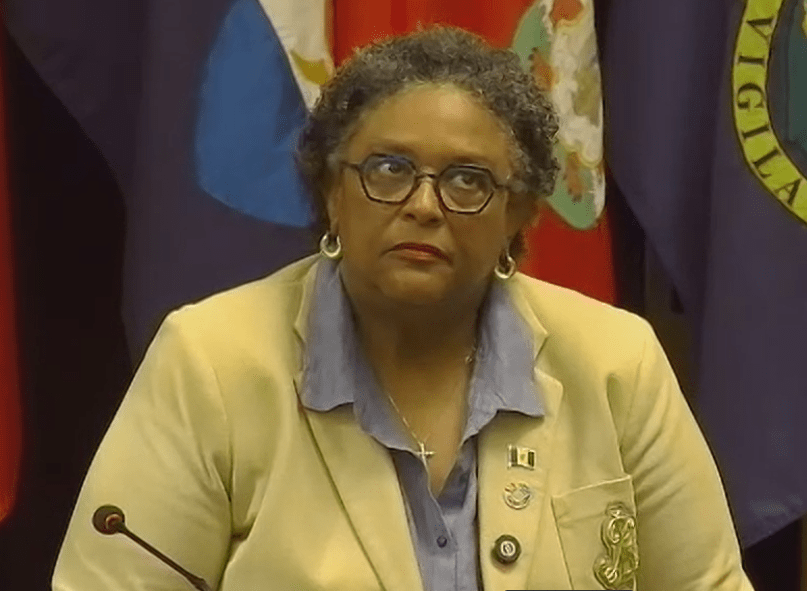
At the closing press conference of the 51st regular Caribbean Community (CARICOM) Summit held in St. Lucia from July 5 to 8, 2026, Barbados Prime Minister Mia Mottley, who oversees the CARICOM Single Market and Economy within the regional quasi-cabinet, announced a key regional initiative to counter growing cost of living pressures driven by volatile global oil prices linked to ongoing Middle East conflicts.
Mottley confirmed that Trinidad and Tobago Prime Minister Kamla Persad-Bissessar has offered one of the country’s five active ferries for temporary intra-regional cargo transport, filling a gap while the CARICOM private sector works to acquire a permanent dedicated regional vessel, a process expected to take roughly 12 months. The temporary service will launch as a proof-of-concept pilot focused on ports in the southern and eastern Caribbean, with leaders first conducting assessments of required port infrastructure modifications, including whether existing ramps can be adapted to accommodate the vessel.
In the coming weeks, Mottley will hold tripartite discussions with Persad-Bissessar and Prime Minister Godwin Friday of St. Vincent and the Grenadines to finalize operational logistics for the pilot service. Beyond vessel deployment, Mottley announced plans to fast-track regulatory reforms, aiming to finalize mutual recognition agreements for trade licenses and cargo insurance within three months. These agreements will enable seamless cross-border movement of cargo vehicles between member states, cutting down on transit delays and associated costs.
CARICOM Chair and St. Lucia Prime Minister Phillip J. Pierre framed the temporary ferry initiative as a notable step forward for regional integration. Pierre noted that the accelerated development of an affordable intra-regional ferry network will not only reduce trade costs but also improve connectivity, boost food security, and strengthen overall economic ties across the Caribbean bloc.
The new temporary initiative marks a shift from earlier regional shipping plans. In April 2023, Guyanese President Irfaan Ali first proposed that CARICOM partner with India to develop a long-term solution for regional shipping needs, but no concrete progress has been announced on that proposal since it was tabled.
In addition to the ferry plan, summit leaders agreed to share information across governments on the policy measures each has implemented to mitigate the impact of skyrocketing food and fuel prices. These measures range from targeted tax adjustments to expanded welfare allowances designed to ease household financial burdens. Guyana, for example, has already eliminated all excise taxes on retail fuel and maintains subsidies for state-owned power and water utility companies, keeping consumer utility costs locked at 2020 price levels.