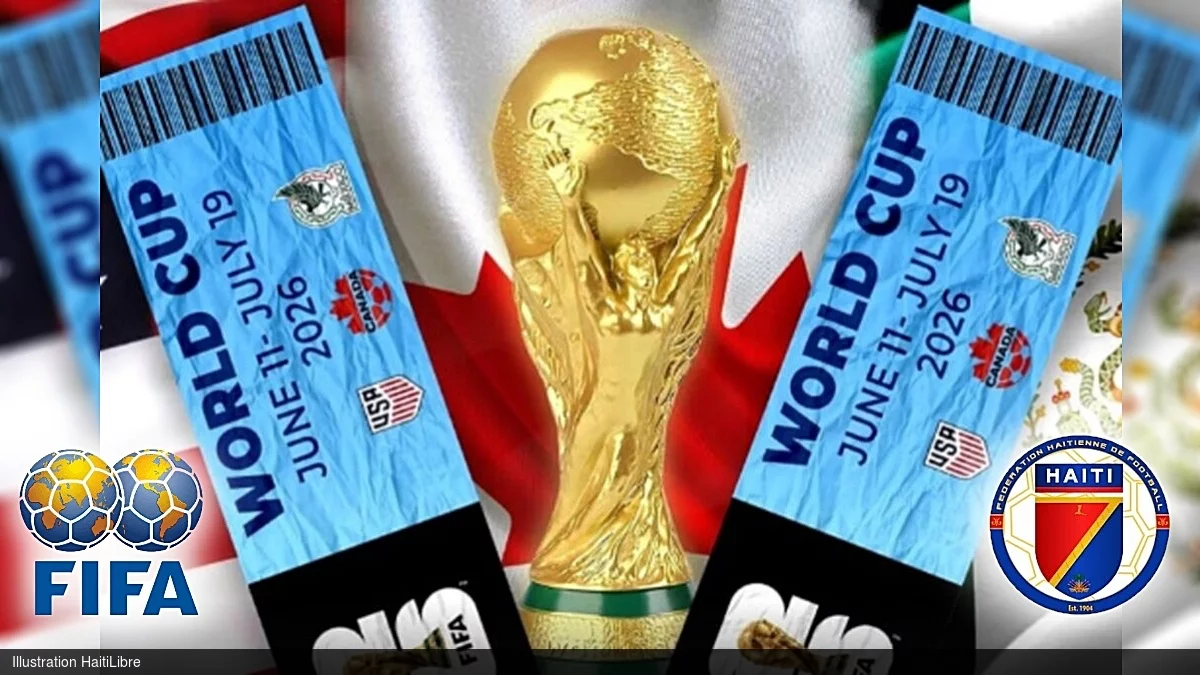
Amid growing public questions surrounding access to 2026 FIFA World Cup match tickets, the Haitian Football Federation (FHF) has released an official public statement to clear up confusion, laying out the dual ticketing structures established by FIFA and defining exactly what responsibilities the federation holds in the overall process.
FIFA’s framework for 2026 World Cup ticketing splits distribution into two fully separate, independent systems, the FHF confirms. The first pathway is open to the general public and Haitian national team supporters, operated entirely directly by global soccer’s governing body through FIFA’s own official ticketing portal. Under this system, the FHF has no involvement whatsoever in sales processing, payment collection, or ticket distribution to individual fans. The federation’s only function here is to validate official fan group affiliations with FIFA, following strict protocols set by the tournament organizer. The FHF also confirmed that the widely reported $60 starting ticket price referenced in multiple local publications applies exclusively to this FIFA-managed public sales system, with all financial transactions processed directly between buyers and FIFA, no third parties or federation intermediaries involved.
The second ticketing pathway is the institutional allocation reserved exclusively for participating national member associations like the FHF. This allocation follows a fixed timeline of requests, approvals, and payments, all contained within FIFA’s official ticketing window for participating nations. Contrary to some circulating rumors, these tickets are not provided for free; the FHF must purchase its allocation directly from FIFA through the official member association ticketing program. The allocation is designated solely to cover institutional needs tied to Haiti’s participation in the tournament, including tickets for the national team delegation, players, coaching and support staff, club representatives, institutional partners, official guests, and other members of the Haitian football community. All steps of this process – from initial request to validation, invoicing, payment, and final ticket issuance – are completed through FIFA’s official ticketing portal, following the governing body’s strict administrative protocols. Every ticket allocated to the FHF is ordered, invoiced, paid for, and issued by FIFA, with every step logged in FIFA’s official systems to ensure full traceability for every ticket the federation acquires.
To reinforce transparency, the FHF emphasized that every ticket in its institutional allocation goes through a fully documented, rigorous administrative process that includes written ticket requests submitted to FIFA, formal allocation confirmations, official FIFA invoices, proof of FHF payment, FIFA ticket issuance, and final distribution to pre-approved beneficiaries. The federation also issued a clear warning: it has not authorized any individual or third-party organization to sell 2026 World Cup tickets on its behalf outside of FIFA’s official, publicized channels.
Outlining its core role in the overall process, the FHF explained that its responsibilities begin and end with acquiring tickets for the Haitian football community per FIFA’s rules and distributing those tickets to the pre-approved beneficiaries. Once distribution is complete, the federation has no practical or legal authority to control how individual ticket holders use their tickets. Any subsequent resale, transfer, or circulation of a ticket after distribution falls entirely under the responsibility of the ticket holder, and cannot be interpreted as official involvement or endorsement from the FHF. The federation added that it stands ready to cooperate fully with FIFA and any other competent regulatory authority if specific, verifiable information emerges that warrants an investigation.
The statement also noted that since the FHF was placed under the oversight of a FIFA-appointed Normalization Committee, it has adhered to strict global standards of governance, transparency, and accountability. Multiple independent oversight mechanisms are already in place: these include periodic management and compliance audits carried out by independent firms commissioned by FIFA, annual independent external financial audits, and regular public publication of financial statements in line with the federation’s transparency commitments.