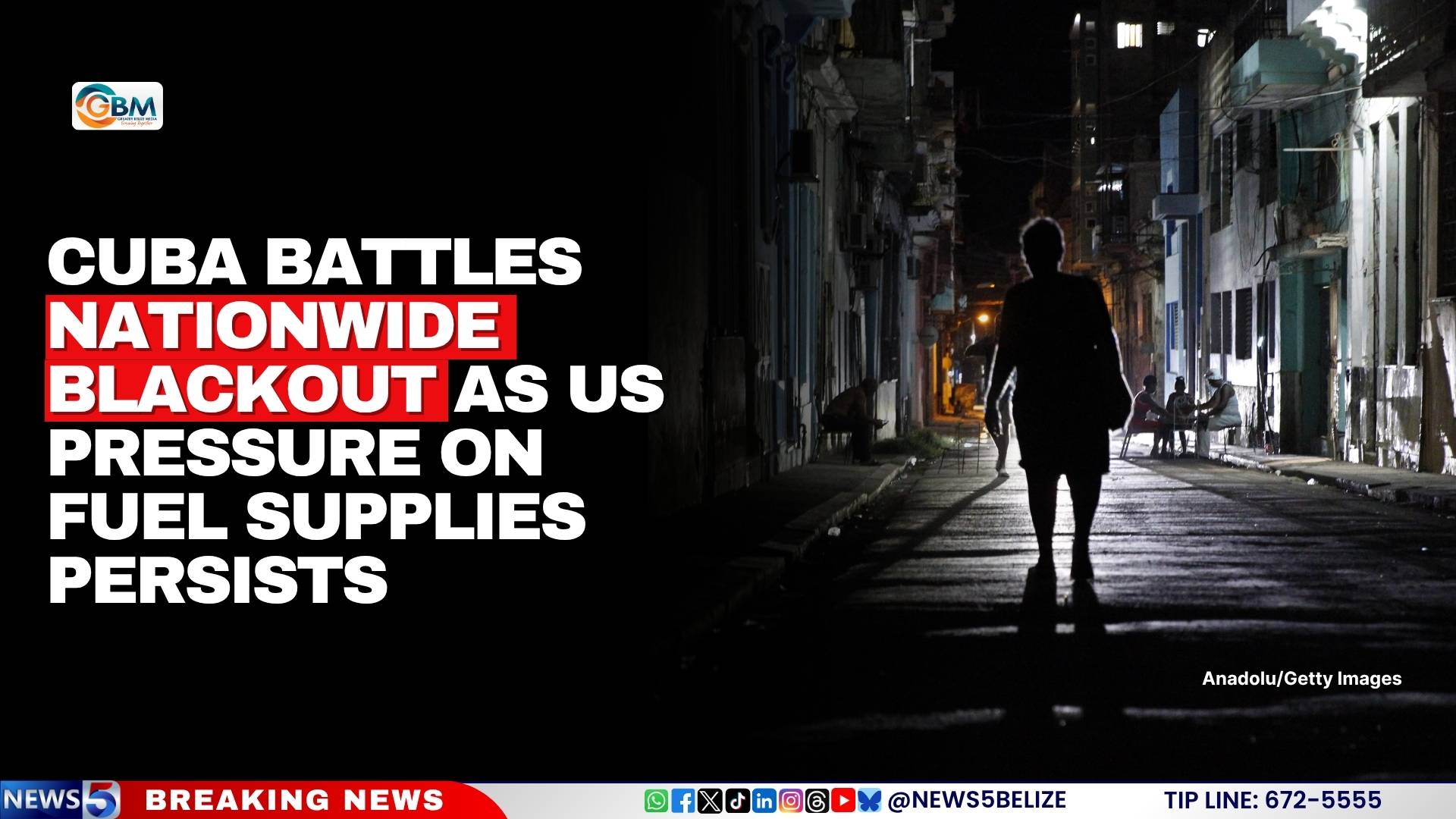
On a Monday in July 2026, Cuba entered an unprecedented national crisis when its entire interconnected power grid shut down completely. This total collapse amplified the long-simmering energy crisis that Cuban authorities have repeatedly pinned on sustained pressure from the United States, which has targeted the island nation’s fuel import networks for years.
Cuba’s Ministry of Energy and Mines officially confirmed the full grid failure on Monday morning. Energy Minister Vicente de la O Levy released a statement confirming that utility teams had immediately activated emergency backup power generators to maintain critical operations for hospitals, water treatment facilities, government communication hubs and other essential services while repair crews worked to restore the system. As of Tuesday, gradual restoration efforts were underway across the country, with the capital Havana’s main utility provider reporting that approximately 33 percent of customers in the city had regained access to electricity.
Officials have not yet released a final determination on the root cause of the collapse, with investigations still ongoing. Even so, the incident is far from unprecedented for Cuba, which has grappled with rolling blackouts and full-grid failures for years. Two core challenges have fueled the ongoing crisis: decades of aging power generation and transmission infrastructure that has not received sufficient upgrades to meet growing domestic demand, and intensifying U.S. pressure that has cut off most of the country’s regular oil shipments.
The crisis reached a similar breaking point earlier this year, when two separate nationwide blackouts hit the island within the span of a single week in March 2026. Cuban President Miguel Díaz-Canel publicly addressed the collapse via the social platform X on Monday, leveling a sharp accusation against Washington: he claimed the U.S. is deliberately attempting to force a “social explosion through asphyxiation” by strangling the country’s energy supplies.
The ripple effects of the chronic energy shortage have already devastated key sectors of Cuban society. Public schools have faced repeated closures, public transportation systems have been grounded or scaled back dramatically, and hospitals have struggled to maintain care for patients with reduced access to power for medical equipment. On top of the energy pressure, broad U.S. economic sanctions have dragged down overall economic performance and sharply reduced international tourism, a critical source of revenue for the Cuban government.
For its part, the U.S. government has framed its pressure campaign as an effort to push Cuban leaders to relax centralized political control over the economy and open the country to increased foreign direct investment. Last month, Cuba’s National Assembly passed a sweeping package of economic reforms aimed at stabilizing the country’s struggling economy. Cuban Foreign Trade Minister emphasized that the reforms were not a reactive concession to outside pressure, but a domestically driven adjustment to address economic challenges. A spokesperson for the U.S. State Department quickly pushed back on the reforms, dismissing them as superficial changes that were long overdue.