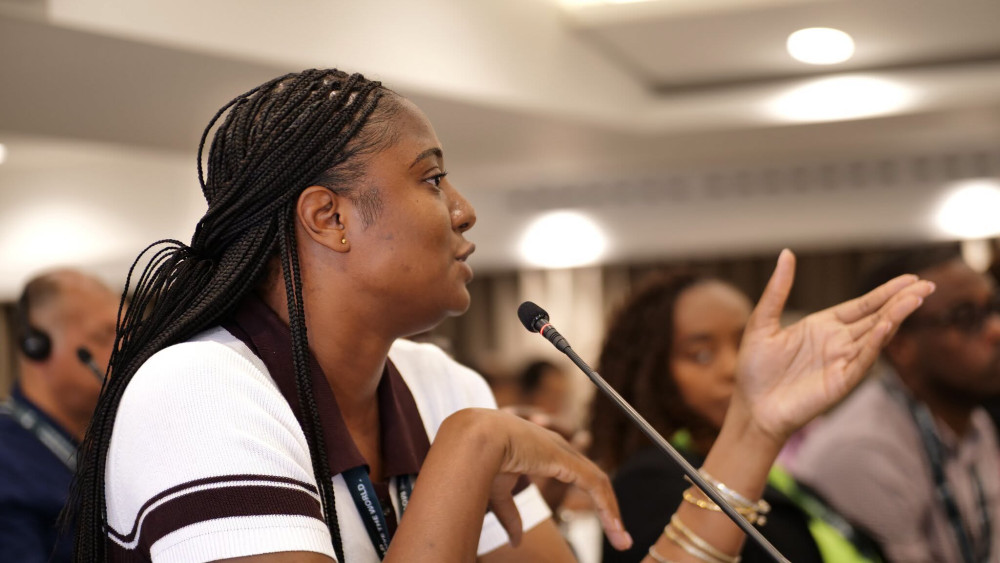
In late June, London played host to the landmark International Transport Workers’ Federation (ITF) Tourism Services Section Conference, where global labor leaders and industry stakeholders gathered to map out a more equitable and sustainable future for the global tourism transport sector. Among the attendees were David Massiah, General Secretary of the Antigua and Barbuda Workers’ Union (ABWU) and Chair of the ITF Tourism Services Section, alongside ABWU Shop Steward Briann Russell.
Opening the two-day gathering, Massiah delivered a stark assessment of the industry’s unaddressed inequalities. He pointed out that while billions in global investment continue to pour into expanding and upgrading tourism infrastructure, the millions of working people who keep the sector running are still systematically left behind.
“Too often, those same workers are the ones facing the greatest insecurity—informal work, low wages, unsustainable working conditions, and increasing pressure from changing business models,” Massiah told delegates, highlighting a systemic gap between industry growth and worker well-being that has persisted for decades.
Gender equity emerged as the central priority of the 2024 conference, with discussions and policy efforts culminating in the official launch of a groundbreaking joint report by ITF and the United Nations: the *Global Report on Women in Tourism Transportation*. The comprehensive new study documents long-standing gender gaps across every stage of employment in the sector, from entry-level recruitment to senior leadership representation. It also lays out clear, actionable recommendations to help employers, governments, and unions build more inclusive, fair, and equitable workplaces across the global tourism transport industry.
Beyond advancing gender equity, conference delegates agreed on a set of core strategic priorities to guide the sector through its ongoing transition to sustainability. These priorities include raising industry-wide Environmental, Social and Governance (ESG) standards, expanding union membership and building organizational capacity for labor groups globally, advancing safety standards for tourism destinations worldwide, and ensuring a just transition that protects worker rights as the sector shifts to lower-carbon operations.
To advance cross-sector collaboration, the conference hosted a dedicated Tourism Industry Event that brought together trade union delegates with representatives from leading global tourism bodies. Participants included officials from UN Tourism, the University of Surrey, the World Travel & Tourism Council, the World Sustainable Hospitality Alliance, and other major industry organizations, all joining to debate shared challenges and opportunities for the global tourism sector.
Speaking to assembled industry and organizational leaders, Massiah emphasized that no single stakeholder group can build a better future for tourism on its own. “The future of tourism cannot be shaped by any one group alone,” he said. “Governments set the framework. Industry drives investment and innovation. Workers deliver the service and the experience.”
Following the London conference, Massiah traveled to Madrid to hold discussions at the UN Tourism Office, continuing diplomatic efforts to align labor priorities with global tourism development goals. Massiah stressed that genuine cross-stakeholder partnership is the only path to turning tourism into a powerful driver of inclusive development—especially for small island developing regions like the Caribbean, where tourism forms the backbone of national economic activity and social progress.