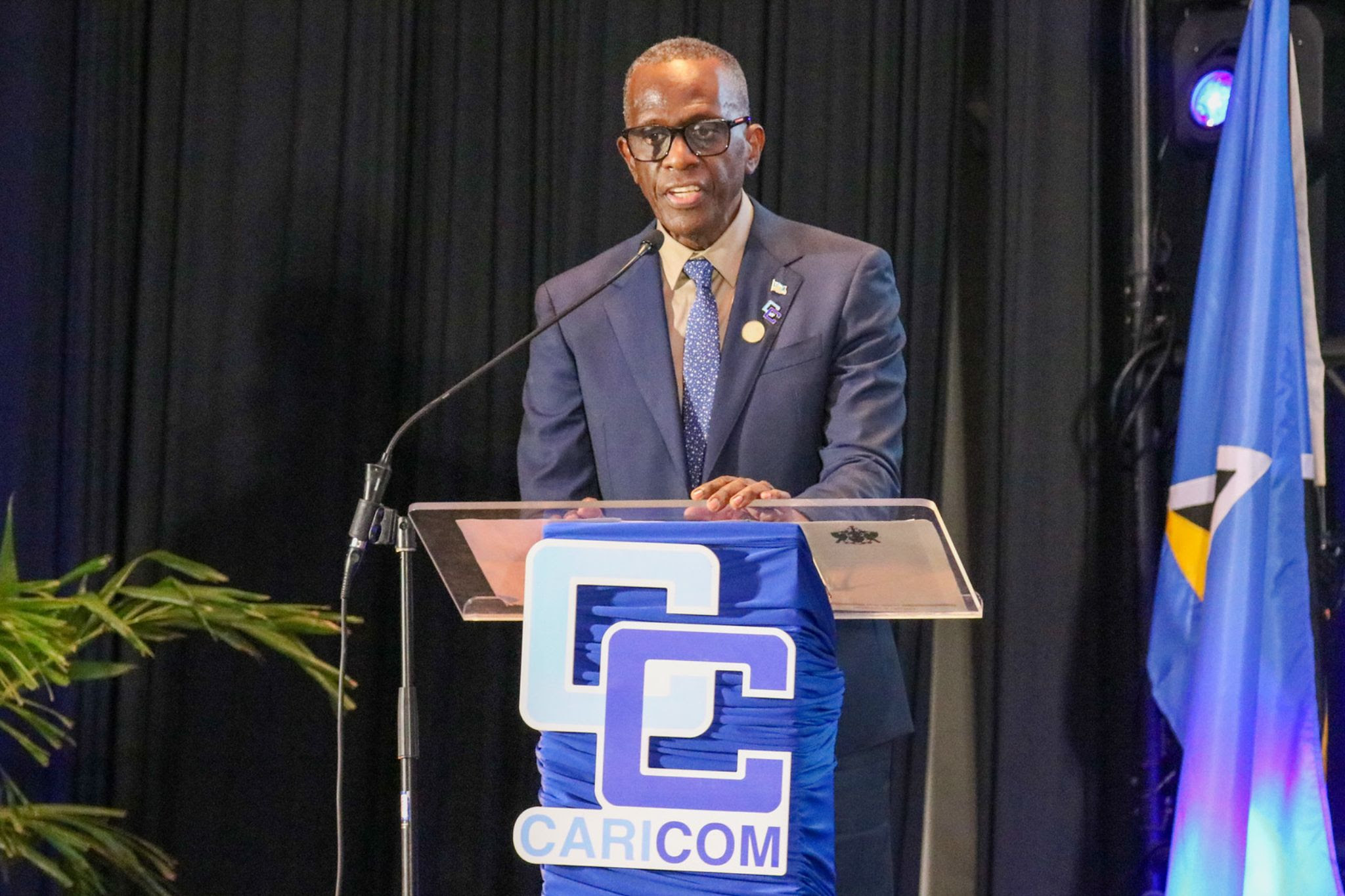
On the evening of July 5, at the opening ceremony of the 51st Regular Meeting of the Conference of Heads of Government held in Sandals Grande, Saint Lucia, newly installed Caribbean Community (CARICOM) Chairman Philip J. Pierre laid out a transformative vision for his tenure, centering his leadership on a question that resonates with ordinary residents across the region: “What more can CARICOM do for me?”
Pierre, who also serves as Prime Minister of Saint Lucia, assumed the top CARICOM post on July 1. He was quick to clarify that the question does not represent criticism of the regional bloc, but rather a sincere call from residents grappling with a cascade of daily challenges. These pressures span soaring food and energy prices, the growing intensity of Atlantic hurricanes, erratic rainfall patterns that disrupt livelihoods, climate change-driven harms to farming and fishing communities, and widespread public anxiety over rising crime and violence.
In his keynote address, the new Chairman stressed that decades of regional integration must move beyond institutional processes to directly impact the daily lives of the 16 million people who call CARICOM member states home. He argued that the bloc’s work must transition “from conference rooms to communities; from rhetoric to reality; from communiqués to results,” shifting from an institution focused on policy agreement to one driven by tangible, on-the-ground implementation.
Outlining his vision for a people-first, action-oriented CARICOM, Pierre emphasized that his Chairmanship belongs not just to regional governments, but to the ordinary citizens the bloc was created to serve. Every major decision made by CARICOM, he said, should be evaluated by its tangible impact on residents’ daily lives. “It is not enough for our decisions to be recorded. They must be acted upon, measured, and followed through. My mantra is simple: Integration that our people cannot feel will not last,” Pierre told attendees.
At the top of Pierre’s priority list is strengthening regional unity, which he described as the foundational pillar of all future progress for the bloc. He noted that outside larger powers and global markets have long benefited from divisions among Caribbean nations, as a fragmented region is far easier to engage and influence on the global stage. By contrast, when CARICOM speaks with one unified voice, acts collectively, and negotiates as a single bloc, the region’s collective global influence grows exponentially. To advance this goal, Pierre pledged to work to ensure that no CARICOM member state ever feels unheard, overlooked, or isolated during his tenure. “Every voice counts. Every nation matters. Every citizen must be able to see themselves reflected in the work of CARICOM,” he said.
Beyond unity, Pierre outlined a broad slate of additional priorities for his term: advancing comprehensive citizen security across the region, leading global advocacy for climate justice for small island developing states, driving post-shock economic renewal, strengthening regional food and nutrition security, and centering inclusion for youth, women, and vulnerable groups in all regional development planning.
Young people will be a particular focus of Pierre’s Chairmanship, he confirmed, noting that more than 60% of CARICOM’s population is under the age of 30. The future of the regional integration project depends entirely on young people’s participation and their confidence in the movement, Pierre argued. Echoing the core question of his tenure, he noted that young Caribbean residents are asking whether CARICOM can deliver a viable future for them – and the bloc must answer that question not with empty slogans, but with concrete action.
Pierre also called for renewed investment in and support for CARICOM’s core institutional bodies, describing them as critical tools for boosting regional development and collective resilience. He noted that ordinary citizens often lack a clear understanding of how these institutions support daily life across the region, from advancing public health and coordinating disaster response to improving education standards, boosting cross-border security cooperation, and driving inclusive economic growth.
Established in 1973 via the Treaty of Chaguaramas (revised in 2001 to launch a single market and economy), CARICOM counts 15 full member states and six associate members, standing as one of the most successful examples of regional integration in the developing world. The bloc organized its work around four core pillars: economic integration, foreign policy coordination, human and social development, and security cooperation, with its administrative secretariat headquartered in Georgetown, Guyana.