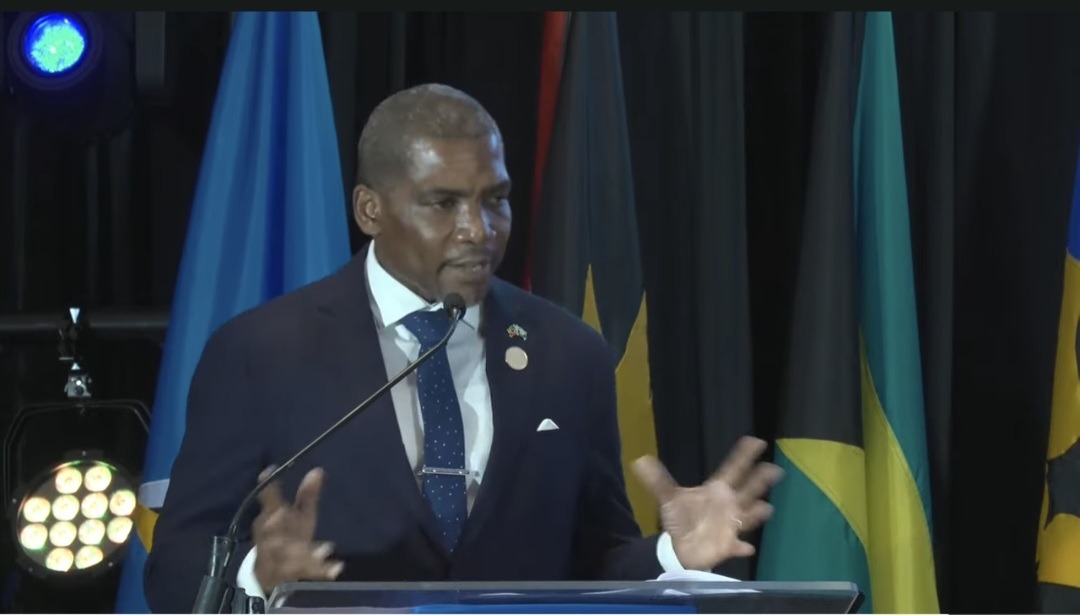
The 51st regular summit of the 15-nation Caribbean Community (CARICOM) kicked off in St. Lucia Sunday, opening with a stark rebuke from outgoing Chairman Dr. Terrance Drew, who also serves as Prime Minister of St. Kitts and Nevis, targeted at regional leaders who skip critical decision-making gatherings.
Drew’s opening address came amid a growing regional controversy tied to his role in announcing a second five-year term for incumbent CARICOM Secretary-General Dr. Carla Barnett, set to begin in August. The announcement has drawn fierce pushback from the government of Trinidad and Tobago, whose Prime Minister Kamla Persad-Bissessar has publicly pledged not to recognize Barnett’s tenure after her current term expires on July 31, 2026.
The dispute over the appointment process stretches back months: Persad-Bissessar walked out of a February CARICOM summit hosted in St. Kitts and Nevis before the vote on Barnett’s re-appointment, delegating her attendance to Foreign Minister Sean Sobers. Reports later confirmed Sobers ultimately did not travel to the summit venue on Nevis, citing safety concerns related to the required ferry crossing. More recently, Persad-Bissessar also missed a virtual CARICOM summit called to address her formal objections to the appointment process, a absence that drew quiet scrutiny ahead of the St. Lucia summit.
At Sunday’s opening ceremony, Persad-Bissessar arrived at the venue only minutes after CARICOM’s Secretary-General delivered her opening address, aligning with the pattern of partial participation that Drew called out in his speech.
“Whenever this community faces matters of great significance, let us ensure that every head of government makes every effort to be present,” Drew told assembled delegates. He went on to emphasize that CARICOM’s internal disputes should be resolved through closed, candid dialogue between member leaders, rather than through public posturing that plays out in media headlines.
“No newspaper headline has solved a disagreement among Caribbean leaders. No public commentary has ever replaced honest dialogue,” Drew said. “But respectful conversation among colleagues committed to a common purpose has repeatedly strengthened this community. Trust is strengthened, misunderstandings are resolved, consensus is built [when we meet in person].”
Despite the public rift over Barnett’s appointment, Drew struck a conciliatory note in key portions of his address. He publicly praised Barnett for her tenure, highlighting her consistent professionalism, unwavering integrity, and careful commitment to upholding the impartiality of the CARICOM Secretariat while faithfully executing leaders’ policy decisions.
“Madam Secretary General, thank you for your professionalism, your integrity, and your steadfast commitment to this community throughout my tenure,” Drew said. “Whenever I called, you answered. Whenever support was required, you and your team responded with diligence, competence, and excellence. You have served with distinction, you have understood the importance of preserving the impartiality of the Secretariat while faithfully implementing the decisions of heads of government — that balance has strengthened this community.”
Drew also reaffirmed CARICOM’s collective commitment to Trinidad and Tobago’s upcoming candidacy for a seat on the United Nations Security Council, noting that the region’s unified backing has been critical to the small island nation’s campaign. He stressed that CARICOM’s collective influence on the global stage is only possible when all member states stand together, even amid internal disagreements.
“Although Trinidad and Tobago was the candidate, it entered that election carrying the united and public support of the Caribbean community,” Drew said. “That support demonstrated that when CARICOM stands behind one of its own, our collective voice commands respect on the world stage. One could not imagine that Trinidad, a very small country when considered against the rest of the world, would be in a position to compete for a Security Council seat on its own.”