On the eve of CARICOM Day, Guyana’s main opposition-aligned Working People’s Alliance (WPA) has issued a nationwide call for peaceful public demonstrations to push back against the Irfaan Ali administration’s proposed legislation that would restore uncapped financial and service benefits to all former Guyanese presidents. The protest, scheduled to kick off at 10 a.m. local time on July 6, will center on a main gathering at Church of God Road in Buxton, with organizers urging civic and community groups across all regions of the country to host parallel peaceful demonstrations in their own localities.
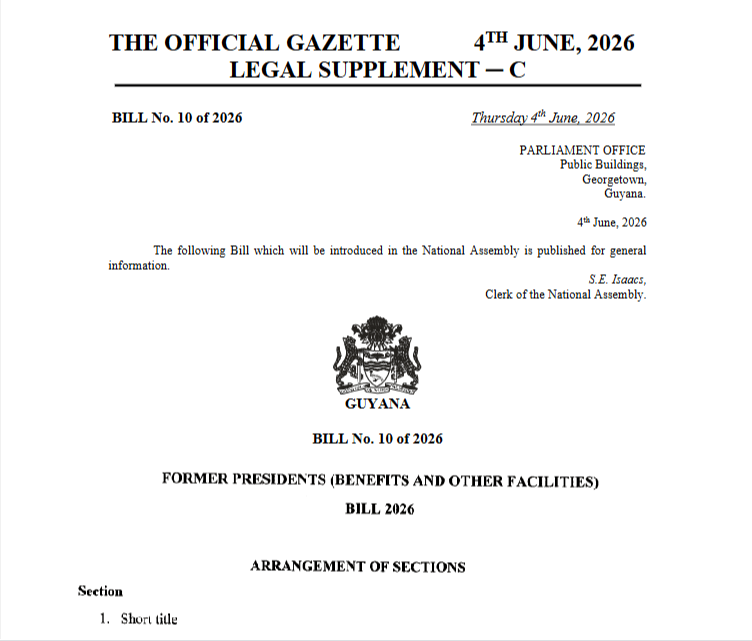
WPA executive member Kidackie Amsterdam made the announcement during an appearance on the *Politics 101* program hosted by Dr. David Hinds, appealing for cross-sector participation from trade unions, religious institutions, youth organizations, private sector leaders, and other civil society groups to join the demonstration. The core target of the protest is the *Former Presidents’ Facilities and Benefits Bill 2026*, which the current administration has introduced to repeal the 2015 benefits act implemented by the former APNU+AFC government that placed strict caps on all post-presidency benefits.
Amsterdam laid out the high projected cost of the proposed legislation, estimating that the three living former presidents – Samuel Hinds, Bharrat Jagdeo, and Donald Ramotar – would drain an additional 100 million to 200 million Guyanese dollars annually from public coffers, on top of the existing arrangement that grants former presidents seven-eighths of the sitting president’s 3 million-plus GY$ annual salary. He drew a sharp contrast between this proposed generous spending and the struggles of ordinary Guyanese, noting that the country’s more than 76,000 senior citizens receive just 46,000 GY$ per month in old age pension. Former President David Granger, the fourth living former head of state, currently travels to Cuba for ongoing specialized medical care under existing benefits provisions.
Joining Amsterdam on the program, former PNCR executive member Annette Ferguson threw her full support behind the protest, rejecting the proposal that the bill be sent to a bipartisan parliamentary select committee for review – a position put forward by PNCR executive and APNU parliamentarian Ganesh Mahipaul. Ferguson argued that the bill is unconscionable and imposes an unfair extra financial burden on Guyanese citizens already grappling with soaring cost of living, underfunded public healthcare, and underresourced education systems. She also recalled that a nearly identical uncapped benefits bill was pushed through by the Jagdeo administration in 2009, despite widespread public outcry from civil society and the then-opposition.
Notably, the broader A Partnership for National Unity (APNU) coalition, which counts the WPA as a member, has not formally backed public protests against the bill. But the WPA has framed the demonstration as a non-partisan push to scrap legislation it argues would place an unnecessary drain on public finances at a time when most Guyanese are struggling to cover basic living costs.
Key provisions of the 2026 bill that have sparked outrage would eliminate nearly all restrictions on former presidents’ benefits. Under the proposed law, former presidents would be exempt from all income taxes, just like the sitting head of state. Critically, the legislation would grant unlimited benefits regardless of whether a former president engages in private business, paid employment, or even if they are convicted of a criminal offense that results in a prison sentence.
The 2015 law currently in effect – which the Ali administration is moving to repeal – puts clear limits on all public spending for former presidents. It caps combined monthly utility costs (water, electricity, telephone) at 25,000 GY$ per former president, limits medical expense reimbursement to 200,000 GY$ annually for the former president, their spouse, and minor children, and restricts reimbursement to care received at domestic public health facilities unless the required treatment is not available locally. The 2015 framework also limits personal security to no more than two full-time personnel, caps state-provided motor vehicles at two, and provides an annual vacation allowance equal to two first-class return airfares, aligned with the terms offered to Supreme Court judges.
Amsterdam emphasized that the WPA does not oppose treating former presidents with dignity and reasonable respect, but argues any benefits must be balanced against the country’s pressing economic needs and the constraints facing ordinary taxpayers. He warned that the cumulative long-term cost to the national treasury of the uncapped benefits could run into hundreds of millions of Guyanese dollars, diverting critical funds from far more urgent national priorities. Those priorities, he said, should include higher wages and benefits for teachers, nurses, police officers and other public servants, expanded public healthcare access, increased support for pensioners and people living with disabilities, expanded school feeding programs, critical infrastructure upgrades, youth employment programs, and financial support for the agriculture sector and small businesses.
“This is a question of national priorities,” Amsterdam said. “Public office is a privilege of service, not a pathway to unlimited taxpayer-funded privileges after leaving office. This demonstration is not about personalities or partisan politics – it is about protecting the public purse and demanding responsible governance.”
He criticized the government for using its parliamentary majority to advance a policy that ordinary Guyanese never asked for and cannot afford, arguing that the proposed legislation is completely out of touch with the daily economic realities facing most citizens. “Every additional dollar committed to generous post-office benefits is a dollar unavailable for urgent national priorities,” he noted.
Amsterdam closed with an appeal to all Guyanese, regardless of political affiliation, ethnicity, or religious background, to join the peaceful, lawful demonstrations across the country. “Let us demonstrate peacefully, lawfully and respectfully. Let us send a clear message that Guyana’s wealth belongs to all Guyanese and should first be used to improve the quality of life of the people,” he said.