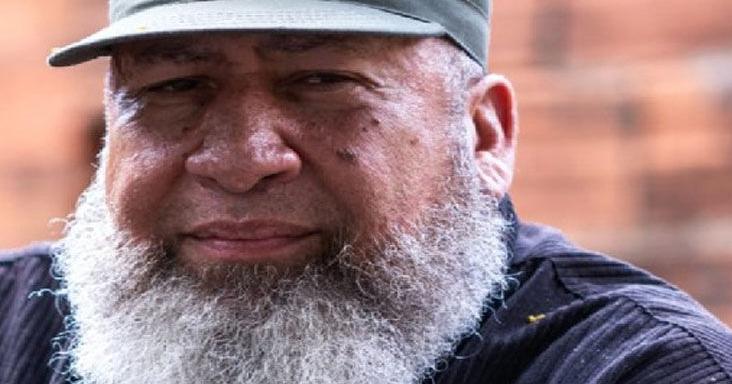
Fifteen years after he was taken into custody amid unproven claims of a conspiracy to assassinate Trinidad and Tobago’s then-prime minister Kamla Persad-Bissessar and multiple senior cabinet members, David “Buffy” Milliard is opening up about the lasting harm of the 2011 ordeal that never led to a single criminal charge against him. Speaking in an exclusive interview with the Sunday Express at the outlet’s Port of Spain headquarters on a recent day, Milliard detailed the irreversible damage to his personal reputation and professional livelihood—while still voicing unexpected understanding for the actions state security officials took at the time.
The 2011 incident unfolded at the peak of a nationwide state of emergency declared by Persad-Bissessar’s administration to curb rampant gang violence. In a shock address that grabbed national headlines, the prime minister announced a retaliatory assassination plot against her and three cabinet ministers, allegedly orchestrated by criminal networks targeted in the government’s anti-gang crackdown. Milliard was among 16 men—15 of whom were Muslim—picked up under a Preventive Detention Order, a sweeping security measure that allowed authorities to hold individuals without immediate charge. To this day, Milliard maintains his complete innocence, and no legal action was ever taken against him or any of the other 15 detainees in connection to the alleged plot.
Milliard recalled the moment of his arrest vividly: he was socializing at a barbecue stand on Port of Spain’s Independence Square shortly before midnight when dozens of police officers surrounded the area. “I looked up and said, ‘Chief, you have about 30 police officers here, so I guess I’ll come in quietly,’” he shared. Officers searched his van before moving him through three different police stations, and it was only at the final stop that a senior commander laid out the extraordinary accusation against him: “We have detained you because we believe you may be involved in an assassination plot to assassinate the prime minister and four sitting ministers.”
Milliard said he was left stunned by the claim. “I said, ‘Please say it again.’ He said it again. I said, ‘Say it one more time. I’m hoping on the third time it will disappear,’” he recalled. The following morning, he was interrogated by roughly 15 agents from multiple national intelligence and security agencies. He voluntarily surrendered his cellphones and other electronic devices for inspection, inviting investigators to produce any evidence tying him to the conspiracy. In the end, no such evidence—digital or otherwise—was ever presented to him.
Even without evidence to support the accusation, Milliard rejects the idea that security officials acted out of malice or a deliberate intent to frame the detainees. “The police are not crazy men,” he argued. “If somebody, anybody, said to them somebody is planning to kill the prime minister of our country and four ministers, would you not establish a net and start investigating? Of course, you would.” He pushed back against claims of a coordinated frame-up, noting that if authorities had wanted to falsely convict the group, they easily could have filed criminal charges that public opinion would have accepted. “If they wanted to set us up, we would have been charged,” he said. “Instead, none of the detainees were charged in connection with the alleged assassination plot.”
While Milliard escaped formal prosecution, the harm from his detention was immediate and lasting. “Perception is reality to he or she who perceives,” he explained. “Once you are detained for something like that, your business disappears.” Longtime clients cut ties, others demanded hours of explanation before agreeing to continue working with him, and even strangers approached him in public with baseless accusations. He recalled one encounter at a local supermarket where a customer directly asked why he wanted to kill Persad-Bissessar. After a 20-minute conversation clarifying his innocence, the man apologized—a moment that reinforced Milliard’s belief that honest dialogue can correct harmful public misperception.
Unlike many other detainees who were encouraged by legal counsel to pursue multi-million dollar compensation lawsuits against the state, Milliard has deliberately refused to take legal action for damages. He argues that any government compensation would ultimately draw from public tax revenue paid by ordinary working citizens. “The government has no money of their own. The government has money that is derived from taxation,” he explained. “Why would I take $15 million from the people who live around me because somebody heard something and took the necessary steps to prevent it? Who pays taxes? Ordinary citizens. My neighbours, whether they are 1%ers or they are 99%ers like me. Sufferers. You pay taxes. And when that money goes into the treasury, people perceive it to be Government funds, but it’s not. The lineage of that money is the pocket of a hardworking man.”
Milliard also praised the respectful and professional treatment he received from police and prison staff throughout his detention. He noted that correctional officers accommodated religious needs, providing halal meals for Muslim detainees and allowing regular prayer, and there was never any attempt to intimidate the held men. When detainees were released on December 5, 2011, shortly after midnight, then-prisons commissioner Martin Martinez personally arranged for each man to contact their families for a ride home, refusing to leave them stranded on the side of the highway late at night. “He said, ‘I cannot in good conscience let you go to stand on the highway at 12 o’clock at night.’ Who does that?” Milliard said.
Drawing a parallel to a recent high-profile detention case, Milliard expressed sympathy for businessman Dominic Hadeed, his wife Genevieve Hadeed, and their relative Star Sabga, who were recently taken into custody in an ongoing investigation. He urged the public to let law enforcement complete their work without rushing to judgment. “I feel sorry for Mr Hadeed. It’s a very hard experience for himself and his wife, but in actuality, if there’s any truth whatsoever, any reason for the national security apparatus to operate, they have no choice,” he said. When asked for advice for Hadeed, Milliard simply said, “May the truth come out.” Reflecting on his own case, he noted that while the current Trinidadian government is led by the same party that ordered his 2011 detention, “they could have sank me” — a comment that underscores the lasting vulnerability of his reputation after the uncharged detention.