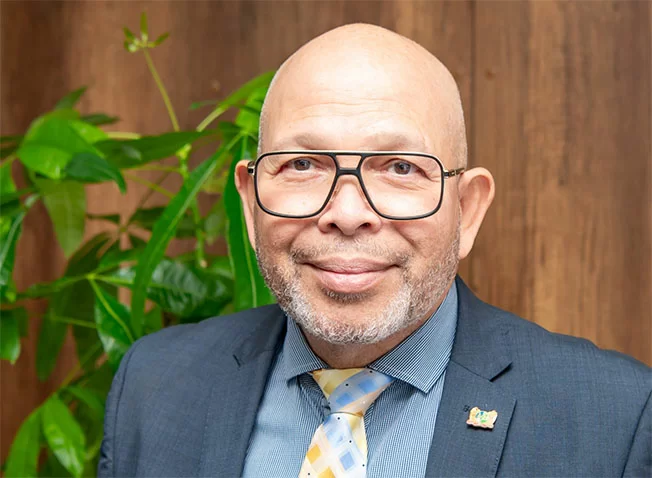
In the wake of a high-profile AI-fueled image scandal involving four secondary school students in Suriname, the nation’s Minister of Education, Science and Culture Dirk Currie is advancing a cross-ministerial initiative to revamp support systems for young people who have come into contact with the justice system, aiming to give them a second chance to rebuild their lives.
The scandal that prompted this new push dates back to June 24, when four students from Suriname’s Arthur A. Hoogendoorn Atheneum (AAHA) were taken into custody. Authorities alleged the group used artificial intelligence to generate and distribute non-consensual pornographic deepfake images of their fellow classmates. While the four young people have since been released from detention, the incident has sparked sustained policy focus from the Ministry of Education, Science and Culture. In the immediate aftermath of the scandal, Currie already called for a sweeping, multi-pronged approach to boost youth awareness of responsible AI use, and held direct talks with AAHA’s school leadership.
This week, Currie carried out an exploratory visit to the Opa Doeli Youth Transition Center, a facility that supports young people entering the justice system, to flesh out his policy goal of offering future prospects to youth who have made harmful mistakes. During the visit, the minister held in-depth discussions with the center’s leadership, he confirmed in comments shared by Suriname’s Communication Service.
Currie has already coordinated on the initiative with Harish Monorath, his counterpart at the Ministry of Justice and Police. In the coming weeks, a joint working meeting is set to convene between education experts and Opa Doeli’s leadership to map out concrete improvements. The core agenda for this meeting: identifying structural changes to allow detained young people to continue their formal education uninterrupted, and better align existing resocialization programs with available education offerings.
Currie emphasized that sustained, accessible education is a foundational pillar for successful reintegration of young offenders into broader society. “Ultimately, our goal is to ensure that when young people complete their sentences, they are welcomed and supported to rejoin community life in a meaningful way,” he said. Turning back to the AAHA incident, the minister added that school leadership is currently working through a careful process to map a safe, supportive return to classes for the four students involved. “We cannot condemn young people to a lifetime of punishment for one mistake,” Currie stressed. “The core of our work is to give every young person the chance to course-correct and build a positive future.”