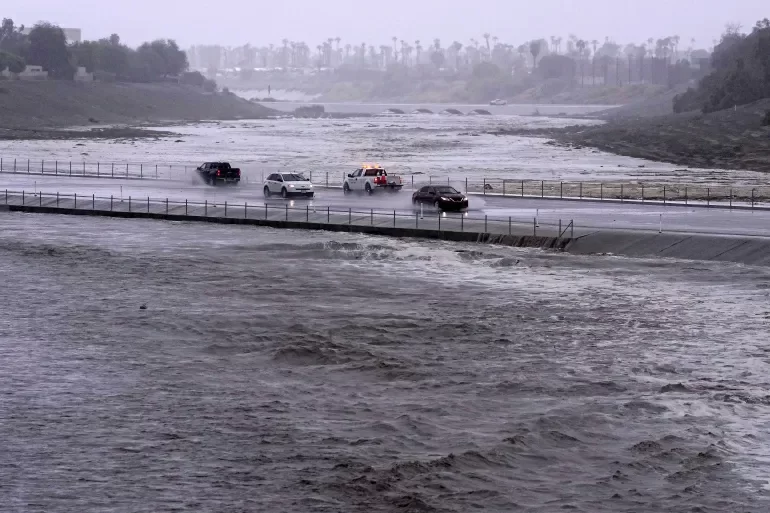
The United Nations has issued an urgent global alert, calling on national governments and humanitarian aid groups to ramp up preparations for a surge in extreme weather events — including prolonged heat waves, severe droughts, and intense rainfall — driven by the developing El Niño weather phenomenon, the UN World Meteorological Organization (WMO) announced Friday.
WMO confirmed that El Niño conditions have already emerged across the equatorial Pacific, and forecasters project the phenomenon will intensify rapidly between July and September. El Niño typically reaches its maximum strength between November and February of the following year, bringing far-reaching disruptions to global weather patterns.
To help communities and authorities prepare for coming impacts, UN agencies have activated enhanced climate information services and early warning systems. These tools are designed to enable governments and first responders to roll out targeted support plans for vulnerable farming communities and at-risk populations that are most exposed to climate hazards.
“El Niño amplifies the likelihood of drought, extreme rainfall, and deadly heat waves across both continental landmasses and ocean ecosystems,” explained WMO Secretary-General Celeste Saulo. She emphasized that “advanced seasonal forecasting and early warning systems are absolutely critical to saving lives and reducing the devastating economic and social impact of extreme weather events.”
El Niño is a naturally occurring climate pattern marked by unusual warming of surface waters in the central and eastern equatorial Pacific Ocean. This warming triggers global shifts in wind patterns, atmospheric pressure systems, and precipitation distributions that can last between 9 and 12 months. On average, El Niño occurs every two to seven years, though its impact varies widely across different world regions. It alternates with its cool counterpart La Niña as part of the broader El Niño-Southern Oscillation (ENSO) cycle, which also includes neutral climate phases — even during these neutral periods, extreme weather can still occur.
This year’s El Niño comes on the heels of record-breaking global ocean temperatures that hit an all-time high in June, with the phenomenon already cited as a key contributing factor. The previous major El Niño event helped push 2023 to become the second-warmest year on record, and 2024 to the hottest year ever recorded, with global average temperatures reaching roughly 1.55 degrees Celsius above the pre-industrial baseline of 1850 to 1900.
Across Europe, the early impacts of the 2025 El Niño event are already being felt, with record-breaking heat waves causing widespread harm to public health. According to France’s national public health agency Santé publique France, an estimated 1,200 heat-related deaths were recorded in the country alone in June. In Spain, public health officials registered nearly 900 heat-linked fatalities, concentrated largely among elderly populations in southern regions and dense urban areas.
In Italy, the country’s National Institute of Health reported that more than 700 people sought medical care for heat exhaustion and heat stroke, with the highest caseloads recorded in the central Lazio region and the island of Sicily. Even in northern Europe, Germany has seen a sharp rise in heat-related hospital admissions, with around 450 cases recorded over the past six weeks, most involving vulnerable demographic groups.
In response to the ongoing heat wave crisis, national and local public health authorities have issued widespread heat warnings and emergency services have boosted preparedness, opening additional public cooling centers and free water distribution points in the hardest-hit areas. Local governments have urged residents to prioritize consistent hydration and sun protection to avoid heat-related illness.
The rising death toll and public health burden across European nations underscores the direct, life-threatening impact of El Niño amplified by long-term anthropogenic climate change, and reinforces the urgent need for robust early warning infrastructure and proactive public health prevention measures to protect at-risk populations.