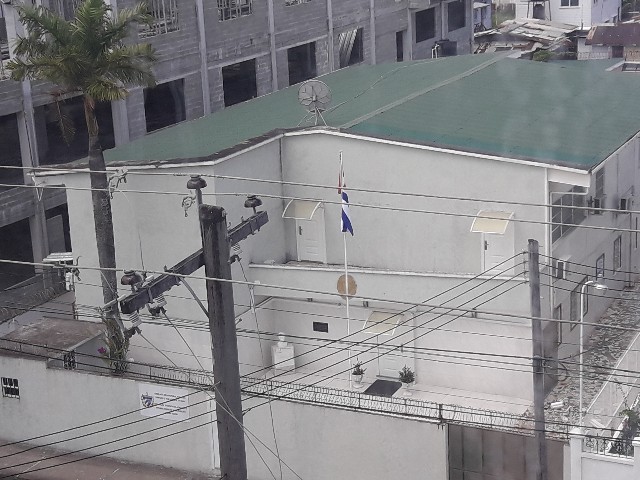
As of Friday, July 3, 2026, Guyana has joined growing international discourse around Cuba’s political and economic future, issuing an official statement asserting that the Cuban people alone must determine their own path through free and fair elections while calling for diplomatic dialogue to de-escalate ongoing regional tensions. The declaration comes against a backdrop of sustained pressure from the United States pushing for democratic transitions and sweeping economic overhauls in Cuba.
In its official release, Guyana’s Ministry of Foreign Affairs laid out its core position: any lasting resolution to Cuba’s current challenges must be rooted in the explicit will of the Cuban public, grounded in universal democratic norms, respect for the rule of law, international humanitarian standards, governmental transparency, and accountable governance. The ministry referenced the foundational text of the United Nations Declaration of Human Rights, which enshrines the principle that the authority of governing bodies derives from the will of the people, a will that must be expressed through regular, legitimate elections conducted via universal equal suffrage and secret, free voting processes.
The Guyanese government emphasized that it stands in solidarity with the Cuban population amid the country’s ongoing economic and humanitarian struggles, and it remains open to supporting any sustainable solution that addresses these issues. The statement comes weeks after Cuba’s national government rolled out broad economic reforms designed to move the country away from its long-standing command-style economic model. The policy shift has unfolded alongside widespread concerns that the U.S. is planning military intervention to remove the current administration led by President Miguel Diaz-Canel from power.
Against this volatile backdrop, Guyana reaffirmed its belief that inclusive dialogue is the only viable path forward to unlock long-term development for the Cuban people. “We encourage diplomatic dialogue that would promote stability and lead to the prosperity of the Cuban people, and the creation of opportunities that optimise the full potential of the Cuban people in an economic environment that guarantees the freedom of the Cuban people,” the ministry’s statement read.
This position aligns with comments Guyana’s leader made in May 2026, on the sidelines of the inaugural Shield of the Americas Summit hosted by U.S. President Donald Trump. During an interview with Fox News, the Guyanese head of state called for a political transition that would open access to greater prosperity and democratic governance for Cubans. “There must be dialogue but those changes must lead to the improvement of the people of Cuba. It must lead to better conditions for the people of Cuba, must lead to a society in which the rule of law, in which democracy, in which freedom is celebrated,” he stated at the time.
In addition to citing the UN Declaration of Human Rights, Guyana’s foreign ministry also referenced provisions from the United Nations Convention on Civil and Political Rights, which guarantees all citizens the right and opportunity to participate in public affairs—either directly or through freely elected representatives—and to vote and stand for office in regular, legitimate elections held via universal equal suffrage and secret ballot that protects the free expression of voters’ will.
Guyana is not alone among Caribbean U.S. allies in taking this stance. Trinidad and Tobago Prime Minister Kamla Persad-Bissessar, who also attended the Shield of the Americas Summit, has previously issued her own call for democratic reform in Cuba, aligning the two neighboring Caribbean nations’ positions on the ongoing regional debate over Cuba’s future.