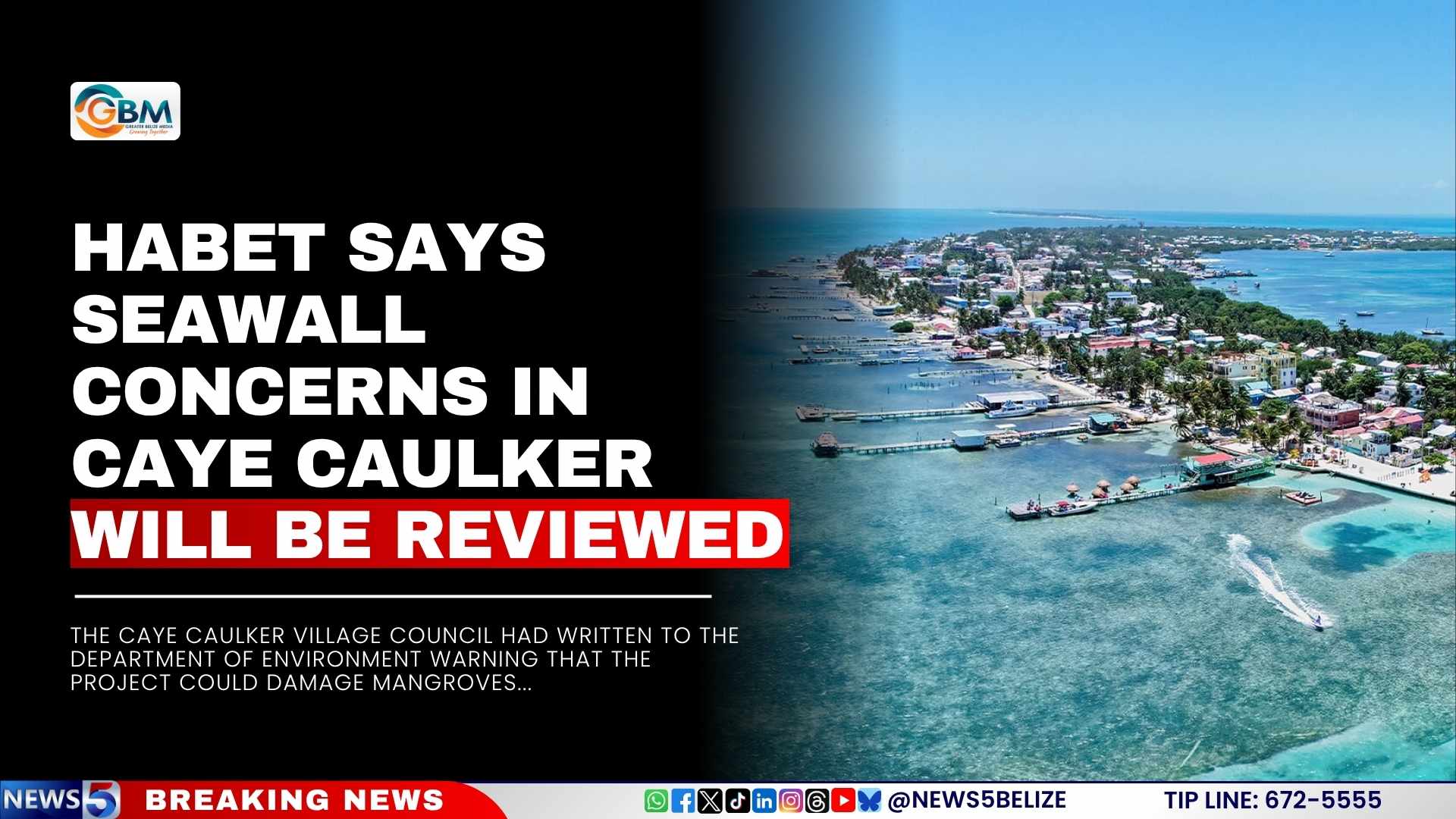
On July 2, 2026, Belize’s Ministry of Sustainable Development announced it would launch a joint review of a controversial proposed seawall and dredging project targeting the western mangrove ecosystem of Caye Caulker, responding to widespread community pushback over the development’s potential environmental and economic impacts.
The Caye Caulker Village Council, the governing body for the small island community, formally submitted a letter of concern to Belize’s Department of Environment, flagging two core risks of the planned construction: irreversible damage to the island’s critical mangrove habitats, and permanent restrictions on public access to Caye Caulker’s waterfront. In the correspondence, the council highlighted that mangroves do not just support local biodiversity – they act as a natural coastal defense, mitigating shoreline erosion and buffering the island against deadly storm surges that threaten Caribbean coastal communities during hurricane season. The council also warned that unregulated development in this sensitive zone would erode the natural landscape that draws millions of tourist dollars to the island annually, threatening Caye Caulker’s core economic driver.
Orlando Habet, Minister of Sustainable Development, confirmed that the ministry has committed to a full, transparent assessment of the project, noting he has not yet received the formal letter outlining community concerns but will initiate review immediately upon formal submission. Habet emphasized that the review will be conducted in close partnership with the Department of Environment, with evaluators weighing both potential benefits of the proposed infrastructure against the documented risks.
“Even based on the community concerns that have already been raised, we have to approach this with an open mind: we look at what potential benefits the seawall could deliver, and we also take an honest look at the potential downsides,” Habet explained. He added that poorly sited coastal infrastructure often creates unintended harm, noting that unplanned seawall construction frequently exacerbates erosion on adjacent stretches of shoreline rather than solving the problem it aims to address.
Habet stressed that any final approval for the project must strike a careful balance between legitimate development needs and rigorous environmental protection – a balance that is particularly critical for small, sensitive coastal communities like Caye Caulker. He also underscored the value of preserving Caye Caulker’s distinctive identity as a laid-back, pedestrian-focused tourist destination, contrasting the island with the more developed, vehicle-dense nearby San Pedro Town. “I think that there has to be a balance… you don’t want to see all those vehicles and golf carts where people are already accustomed to walk,” Habet said. For now, the project remains under formal review as environmental authorities work to address community concerns and reach a science-backed decision.