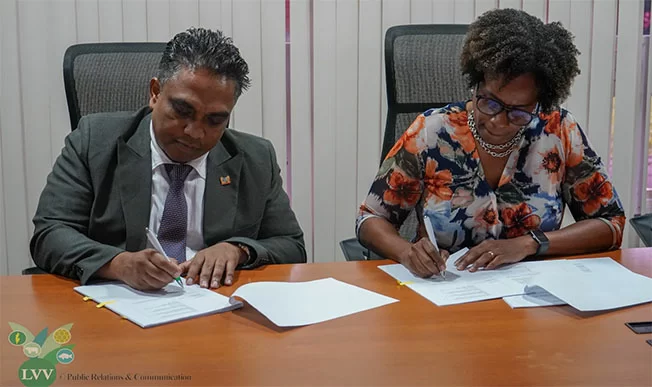
PARAMARIBO, SURINAME – July 1, 2026 – Suriname’s Ministry of Agriculture, Livestock and Fisheries (LVV) has solidified a landmark partnership with the Food and Agriculture Organization of the United Nations (FAO), signing three project contracts that will inject nearly 40 million Surinamese dollars into transforming the South American nation’s agri-food sectors. The agreement signing ceremony, held Tuesday, marks the official kickoff of new development initiatives and the expansion of ongoing work to boost local production, address critical pest threats, and advance sustainable fishing across the region.
Representatives from both sides formalized the partnership, with LVV Minister Mike Noersalim signing on behalf of the Surinamese government and Gillian Smith representing the FAO. In remarks following the signing, Noersalim emphasized that the three projects align perfectly with the ministry’s long-term strategic vision to overhaul Suriname’s national agri-food systems. “Agriculture is the foundation of everything we build as a nation,” Noersalim noted, stressing the importance of forward-thinking investment to prepare for shifting economic dynamics.
The minister specifically highlighted the growing influence of Suriname’s emerging oil and gas sector, which is driving rapid economic expansion and pushing up domestic demand for safe, locally sourced food. This creates an urgent opportunity—and challenge—to strengthen the agricultural sector so it can keep pace with rising demand and support broader economic growth. To meet this goal, the LVV will actively support small and medium producers as they transition to professional, market-oriented operations, Noersalim added.
The largest of the three new initiatives is the $300,000 Boosting the Livestock Sector project, labeled TCP/SUR/4002, which centers on reducing Suriname’s reliance on imported milk, beef, and mutton by modernizing domestic production. A core component of the project will upgrade the country’s national laboratory capacity, allowing Suriname to conduct its own sustainable soil and feed analysis domestically instead of relying on external testing facilities.
The second project moves forward the second phase of a crop protection initiative, valued at $240,000, focused on controlling two devastating invasive pests: the carambola fruit fly and the tomato leafminer. The project will continue the work of Suriname’s entomology laboratory, which has already achieved key breakthroughs, including successfully rearing natural biological control agents for the carambola fruit fly and identifying a unique Surinamese biotype of the tomato leafminer that allows for more targeted management strategies.
The third project extends Suriname’s participation in the regional REBYC-III & EAF4SG fisheries management program through 2027. Under the initiative, Suriname will continue working with regional partners to advance sustainable bycatch management and protect marine biodiversity across coastal and deep-sea fishing grounds, cementing the fisheries sector as a core priority for the country’s sustainable development agenda.
The partnership comes as Suriname works to diversify its economy amid a growing extractives sector, ensuring that agricultural development keeps pace with national growth and delivers food security for local communities.