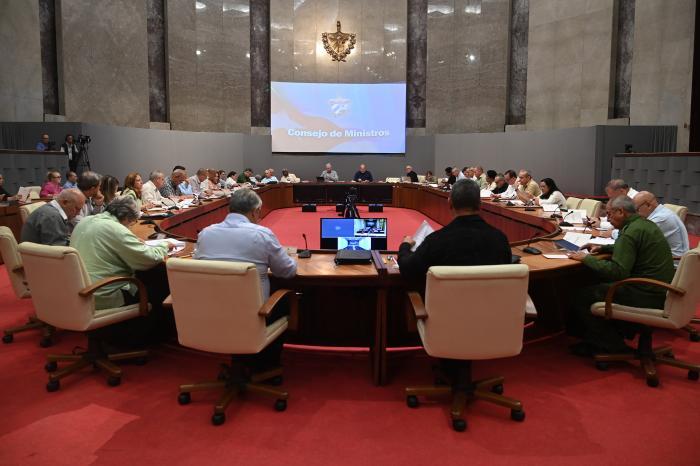
HAVANA – July 1, 2026 – Cuba’s top governing body, the Council of Ministers, has finalized and outlined a clear implementation roadmap for the country’s long-planned economic and social reforms, with President Miguel Díaz-Canel Bermúdez framing the transformative package as a critical effort to preserve the nation’s revolutionary and socialist project amid decades of unprecedented external pressure.
Opening the high-stakes working session, which was led by Prime Minister Manuel Marrero Cruz, Díaz-Canel – who also serves as First Secretary of the Central Committee of the Communist Party of Cuba – emphasized that the overarching goal of these reforms is to save the Revolution. “We are facing a complex dilemma that we can solve: how to give continuity to the process of socialist construction on a small Caribbean island that has suffered the longest blockade in the history of humanity by the most powerful nation in the world,” Díaz-Canel warned attendees.
He stressed that the Cuban people must meet this defining challenge without surrender, drawing strength from ideological firmness, national unity, responsibility, courage and strategic audacity. “Today, no country in the world is more attacked than Cuba, subject to a multidimensional war, and we have the responsibility, under these conditions, not only to save it, but also to continue perfecting our process of socialist construction,” the president added.
At the core of the reform agenda is a commitment to unlocking the country’s productive potential to generate shared wealth distributed through principles of social justice. Díaz-Canel instructed that any policy capable of unleashing productive forces must be rolled out immediately, to shift all economic actors away from the rigid operating dynamics outlined in previous economic plans. He also made leveling the playing field for all approved domestic economic actors a top priority, noting that all contributors to the reforms are aligned with Cuba’s socialist construction project and will support the country’s 2030 National Economic and Social Development Plan, the 2026 government social and economic program, and local territorial development strategies.
Legal certainty and transparent governance were highlighted as non-negotiable foundations for successful reform implementation. “The rules for everything we are going to do must be clear; there must be transparency so that we can monitor, from both a popular and institutional perspective, everything we do,” Díaz-Canel said. He also reiterated the urgency of clear public communication: the government must explain to citizens how each reform advances socialist construction, drives economic growth, improves outcomes for vulnerable populations, and strengthens the rights of all Cubans.
Widespread public participation is another central pillar of the rollout, the president emphasized, noting that effective reform cannot be implemented without buy-in and input from the Cuban population. “We haven’t exhausted any existing discussions; perhaps someone will propose something even better than what we’ve achieved so far, and where there’s a misunderstanding, we need to explain why and listen,” he said, calling for expanded open debate, consensus-building and adaptive thinking to navigate the extraordinarily complex domestic and global context. Closing his remarks, he urged leaders to align their approach with Fidel Castro’s foundational concept of the Cuban Revolution, stressing that success depends not just on implementing reforms, but implementing them well to deliver tangible results for the public.
The newly approved implementation roadmap, updated following extensive national consultation, integrates feedback from 673 public and expert proposals, 79% of which have been incorporated into the final plan to strengthen the rollout process. The input was collected following plenary sessions of the Communist Party Central Committee and the National Assembly of People’s Power, as well as targeted consultations with the National Association of Economists and Accountants of Cuba and independent policy experts.
Prime Minister Marrero Cruz outlined key immediate priorities for the state sector, including devolving new autonomy to state-owned socialist enterprises, decentralizing wholesale and retail price approval to business entities, restructuring national business management bodies, granting provincial governments greater authority to create, merge and dissolve local state-owned enterprises, relaxing rules for after-tax profit allocation, and devolving salary scale approval to individual state enterprise systems.
For the non-state sector, a key set of reforms will cut red tape for new economic actors, speed up approval for pending non-agricultural micro, small, and medium-sized enterprises (MSMEs) and cooperatives, raise the previous limit on employee headcount to allow firms to hire more than 100 workers, permit individual entrepreneurs to own multiple private businesses, expand the range of allowed business structures, and shorten the list of prohibited economic activities for non-state operators. For the agricultural sector, a top priority is updating land management and use rules for all economic actors and relaxing marketing restrictions to boost domestic food production.
In total, the reform agenda covers 23 critical policy areas and includes 176 distinct approved measures. The full text of the reform plan is publicly available on the official government platform (www.sovereignty.gob.cu) and the website of the Cuban Presidency (www.presidency.gob.cu). Marrero Cruz emphasized that all state bodies must update their internal work systems to dedicate sufficient time and analysis to implementation, noting that “the greatest transformation must be in our way of thinking.”
Justice Minister Rosabel Gamón Verde noted that the reforms require adjustments to existing national regulations and the drafting of new legal frameworks, confirming that the government will accelerate the legislative process while upholding core standards of legality, democratization, public participation, and regulatory quality. Esteban Lazo Hernández, President of the National Assembly of People’s Power, added that standard legislative timelines will be significantly shortened by eliminating unnecessary procedural steps, all while remaining fully aligned with the Cuban Constitution and maintaining required public consultations.
Beyond the reform roadmap, the Council of Ministers addressed a range of other pressing national agenda items during the session. Members reviewed an analysis of Cuban economic performance in the first half of 2026, which confirmed that the economy continues to face severe headwinds from the long-running U.S. blockade and oil embargo that disrupt all sectors of national life. The body also reviewed mid-year State Budget execution reports through the end of May, approved the final audit report for the 2025 national budget (which will be submitted to the next National Assembly session), and signed off on a plan for early job placement for higher education and mid-level technical program graduates who will complete their studies in 2027.
The meeting also received a progress report on national efforts to prevent juvenile delinquency, expand support for minors who have come into contact with the law for criminal acts or harmful behaviors, and intensify coordinated intervention across national law enforcement bodies, central government agencies, and civil society organizations nationwide.