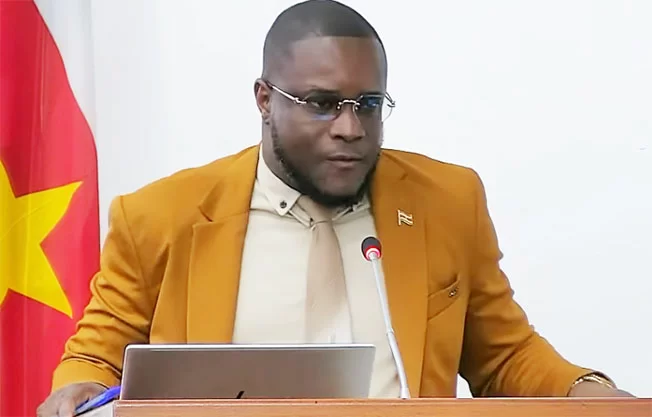
During ongoing national budget deliberations in Suriname, two sitting members of parliament representing the country’s western districts of Coronie and Nickerie have publicly called on the national government to prioritize targeted, large-scale investment in key local sectors to reverse uneven regional development that has left the resource-rich region falling far behind national growth trajectories.
Speaking on behalf of his constituency Coronie, National Assembly member Le-Roy Doorson, who represents the National Democratic Party (NDP), painted a stark picture of the once-thriving regional agricultural sector. Once celebrated as one of Suriname’s most productive agricultural hubs, Coronie now counts only one active commercial rice farmer among its residents, Doorson told fellow lawmakers during the budget debate. He has urged the administration to introduce targeted policy measures designed to revitalize the district’s legacy rice and coconut sectors, while also improving access to underutilized agricultural land to draw new participants into the industry.
Beyond agriculture, Doorson highlighted a series of long-standing unaddressed infrastructure and public governance issues that are holding back Coronie’s development. He called out the poor condition of the critical East-West Connector road, persistent seasonal flooding that disrupts livelihoods, the urgent need to encourage young people to pursue careers in farming, and a lack of government transparency around public land allocation within the district. All of these issues, he argued, require immediate government attention to unlock Coronie’s economic potential.
Joining the call for greater investment was Rawien Raghoenandan, a National Assembly member from the ruling Progressive People’s Party (VHP) representing neighboring Nickerie district. Raghoenandan outlined his own constituency’s most pressing priorities, starting with widespread gaps in reliable drinking water access for local residents. He also noted that Nickerie’s large fishing community needs a modern, upgraded docking facility to support their operations, called for urgent remediation of the uncontrolled waste dump located along H.D. Soekoeweg, and stressed that the aging Henar Bridge requires immediate structural repairs and upgrades to remain safe for public use.
Across multiple political factions in the National Assembly, lawmakers have echoed the core argument put forward by the two district representatives: western Suriname holds significant untapped economic potential across agriculture, fishing and other key sectors, but unlocking that growth will require tangible improvements to core infrastructure and targeted public investment that has not yet been forthcoming. The assembled representatives have formally called on the Suriname government to integrate investments in agricultural development, fisheries expansion and core regional public services into the final implementation plan for the upcoming national budget, to address the growing development gap between the western region and more prosperous areas of the country.