A 2024 independent study commissioned by the United States Agency for International Development (USAID) has laid bare the dramatic expansion of gang activity across Trinidad and Tobago over the past 15 years, generating international policy ripple effects and sparking debate over data accuracy with local authorities.
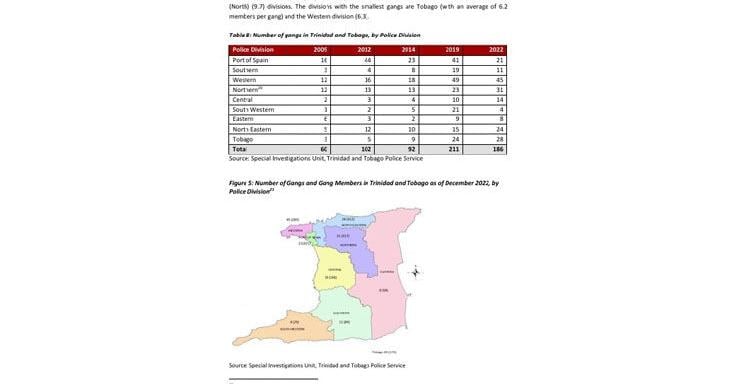
Authored by leading criminologist Dr. Randy Seepersad and published in February 2024 as part of the broader Eastern and Southern Caribbean Criminal Dynamics Study, the report counted 186 distinct gang groups encompassing 1,750 confirmed members across the twin-island nation as of 2022. This figure marks a stark upward trajectory from historical law enforcement data provided by the Trinidad and Tobago Police Service (TTPS) Special Investigations Unit: just 60 gangs were recorded nationwide in 2009, rising to 102 in 2012, 130 gangs with 1,014 members in 2020, and hitting the 2022 totals that anchor the current study.
As part of the research, Seepersad’s team conducted a comprehensive survey of 777 Form 4 and 5 students in Tobago’s public secondary schools – representing 68.9% of all enrolled students in those grade levels. The results revealed that 3.7% of respondents were active gang members at the time of the survey, with affiliation rates varying by academic year: 2.4% for Form 4 students and 5.5% for Form 5 students. Researchers noted they were unable to collect matching data from Trinidad’s public school system due to a lack of access permission.
The USAID-funded project, which analyzed gang dynamics across 11 Caribbean nations, found that Trinidad and Tobago posts the highest prevalence of gangs and gang-related violent crime among all surveyed countries. TTPS data included in the report shows that 33.3% of all murders recorded between 2000 and 2022 have been tied to gang activity. This share has grown dramatically over the decades: just 3.3% of murders were gang-linked in 2000, peaking at 52.7% in 2007 before a temporary dip to 15.9% in 2010, followed by a fluctuating but overall upward trend that reached 40.3% of all murders in 2022.
Geographic analysis of 2022 data found gang activity is concentrated most heavily in the western region of Port of Spain, which hosts 45 distinct gangs. Other high-density regions include the Northern Division with 31 gangs, Tobago with 28 gangs, and Port of Spain’s North Eastern Division with 24 gangs. In terms of gang-related homicides between 2000 and 2022, Port of Spain led all regions with 61.1% of local murders linked to gangs, followed by North Central (50.9%), the Western Division (49.2%), and the North Eastern Division (41%). The Besson Street Police Station district recorded the highest raw number of gang-related murders at 156, accounting for 16.6% of all gang killings nationwide over the 22-year period.
The study also identified clear patterns linking gang location to criminal activity. Coastal gangs are disproportionately involved in drug and firearms trafficking, while inland-controlled gangs tend to engage in more violent turf conflicts, including shootings, woundings, and homicides, as factions fight for territory and control of illicit drug markets. Beyond these core activities, gangs across the nation are involved in a wide range of offences including motor vehicle theft, armed robbery, illegal quarrying, and prison-based criminal activity. In Tobago, gangs often provide safe haven to Trinidad-based criminals fleeing law enforcement or rival groups, though violence against tourists remains extremely rare.
The report also confirmed that gangs have expanded their influence into two key spheres long considered outside their core control: secondary schools and national prison systems. Prisons continue to operate as de facto safe havens for gang leadership, allowing top members to direct faction activity from behind bars and recruit new members despite ongoing law enforcement efforts. Collusion between gangs and corrupt law enforcement personnel, while inconsistent, has also become more common in recent years, the study found.
These findings have already had international policy consequences: the United Kingdom’s Visas and Immigration department referenced Seepersad’s statistics, alongside local media reports, in a 2026 asylum policy assessment that adjusted entry rules for Trinidad and Tobago nationals seeking asylum on the basis of gang-related threats. Last week, Trinidad and Tobago’s Homeland Security Minister Roger Alexander publicly questioned the accuracy of the UK’s adopted figures, saying the numbers “are very different to what we have presently” and noting that the UK’s count is higher than local official data. Alexander did not release his own government’s competing statistics to contradict the study’s findings.