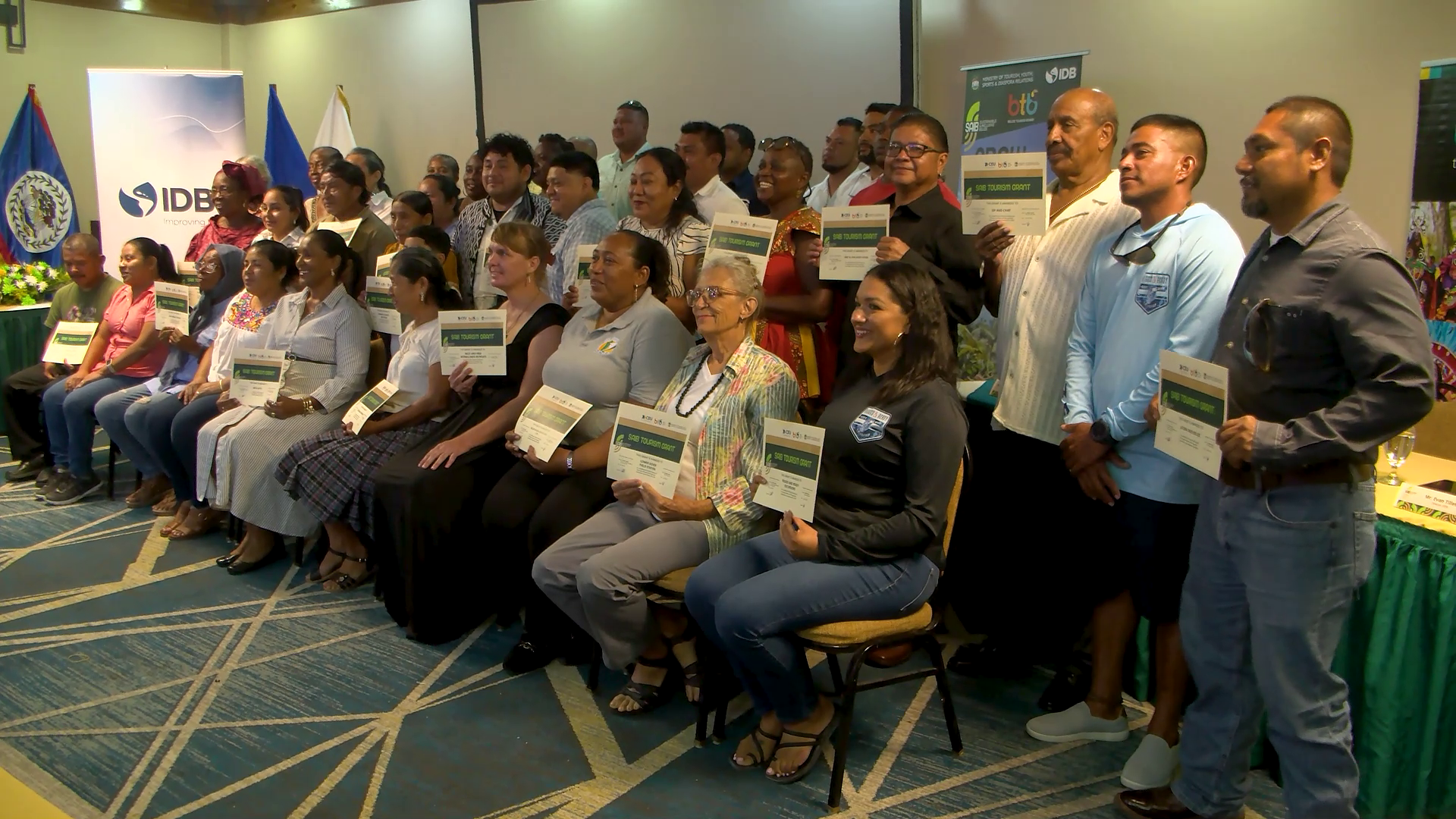
Belize’s critical tourism sector is set for targeted, sustainable expansion after a multi-million dollar grant program disbursed over $1.1 million in funding to local small and medium-sized tourism business owners on June 25, 2026.
Thirty-nine entrepreneurs drawn from across the entire country received awards through the Sustainable and Inclusive Belize program, with individual grants capped at $30,000 per business. Far from just providing unrestricted capital, the initiative is designed to address three core priorities for Belize’s tourism ecosystem: helping operators refine and strengthen their tourism products, build greater climate resilience to withstand environmental and economic shocks, and elevate the quality of visitor experiences for travelers exploring the country.
Simone Bell, an Investment and Innovation Specialist at the Belize Tourism Board, explained that the program combines financial support with targeted capacity building to set businesses up for long-term success, rather than short-term growth. “This program is one of the core tools we are using to strengthen Belize’s overall tourism product,” Bell shared in an on-record interview. “Our national brand is our most valuable asset, and we work every day to protect it. Every local business involved in tourism—from independent artisans and adventure tour operators to small lodgings, hotels and neighborhood restaurants—plays a part in shaping that brand. We want every visitor experience to be truly memorable, and that means making sure every business has the tools they need to succeed. That’s how we strengthen Belize’s standing and become a more competitive destination across the region.”
When asked how the accompanying training components benefit participating entrepreneurs and the broader tourism sector, Bell outlined the core curriculum focused on closing common skill gaps for small business owners. Training modules cover formal business planning, hands-on capacity building for financial management, and strategic growth planning. In a recent training session held in partnership with Belize’s Development Finance Corporation (DFC), participants walked through a line-by-line review of financial statements to build literacy around core financial documents, a skill many small operators lack.
Bell noted that many small tourism business owners spend almost all of their time working day-to-day in their operations, rather than stepping back to work on long-term strategic planning for their businesses. The program creates structured space to identify growth opportunities, address operational gaps, and build intentional resilience. “When you take the time to step back, plan and restructure your business, you quickly see how much more you can do to grow your offering, expand your reach, tap into new markets and adopt sustainable practices that build climate resilience,” Bell explained. “When unexpected shocks hit, you already have a plan in place. That’s the core mission of this program and its tourism-focused component.”
The initiative is already scaling its impact: a second cohort of 40 additional tourism entrepreneurs is currently completing required training and will receive their own grant disbursements in the near future. The entire Sustainable and Inclusive Belize program is financed by the Inter-American Development Bank, and its reach extends far beyond the tourism sector. To date, the initiative has also provided grant support to more than 600 small and medium-sized entrepreneurs across Belize’s agricultural industry, supporting broad-based economic growth across multiple key sectors of the national economy.