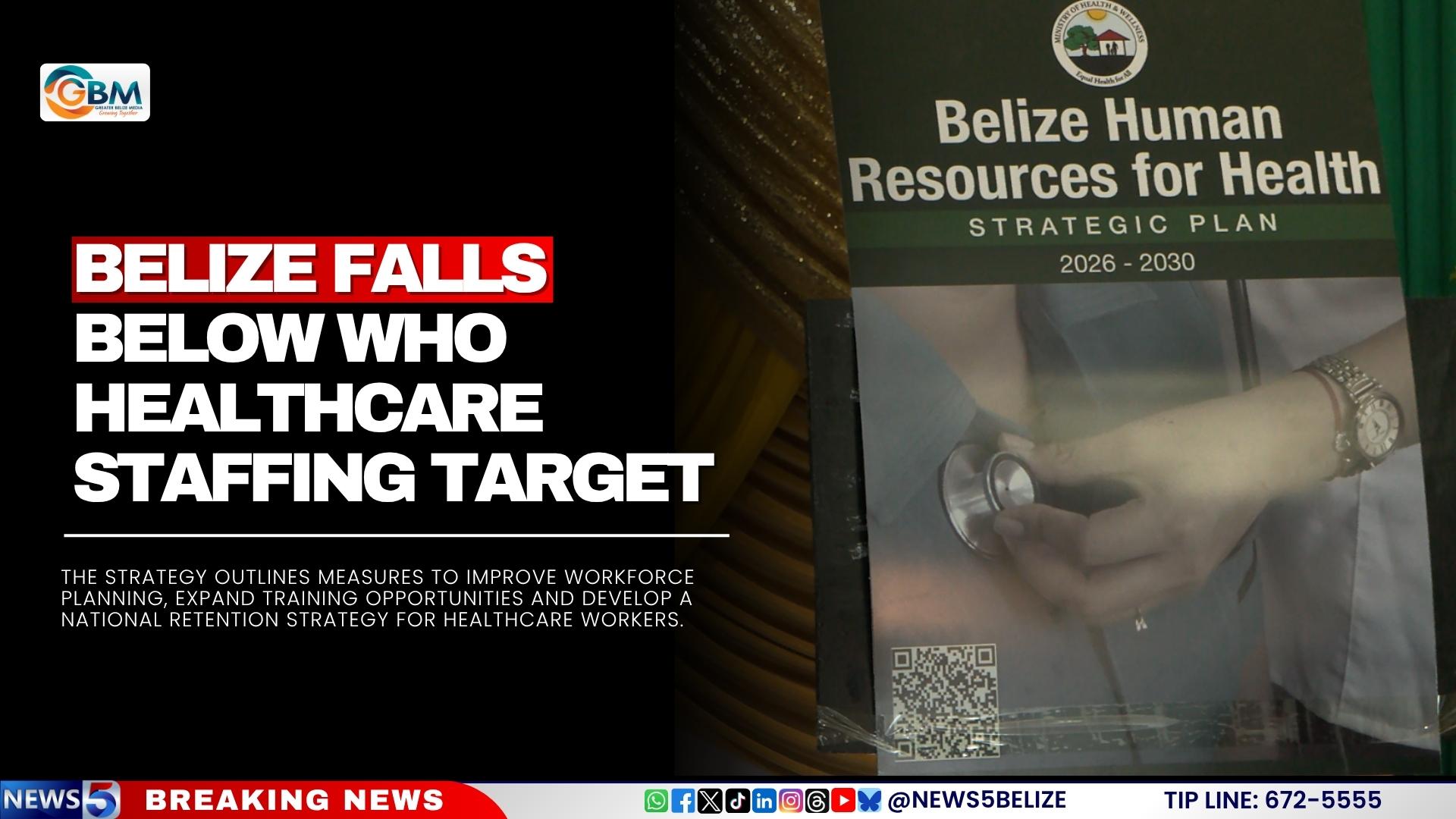
On June 25, 2026, Belize formally introduced a bold new five-year policy and strategic framework aimed at resolving a persistent shortage of healthcare workers that has left the country below the World Health Organization’s (WHO) minimum staffing threshold for universal health coverage.
Current official data from Belize’s Ministry of Health and Wellness shows the nation counts just 38.2 practicing physicians, nurses, and midwives per 10,000 residents — a figure that falls 6.3 workers short of the 44.5 per 10,000 minimum recommended by the WHO to deliver accessible, quality universal health care. This deficit comes as Belize already confronts two overlapping pressures: long-standing struggles to both recruit new healthcare professionals and retain existing skilled staff, and the upcoming departure of the Cuban Medical Brigade, which is projected to further stretch the country’s already strained health system.
Dr. Andre Chell, Director of Policy, Research and Planning at the Ministry of Health and Wellness, confirmed that the gap in healthcare staffing is a well-documented challenge for the nation, and the newly unveiled Belize Human Resources for Health Policy and Strategic Plan 2026-2030 was designed to directly tackle these barriers. “We know that we have shortage of healthcare workers,” Chell noted. “These two documents try to address those challenges.”
The strategic framework lays out a multi-pronged approach to closing the staffing gap: strengthening national workforce planning systems, expanding accessible training opportunities for aspiring healthcare workers, and developing the first comprehensive national retention strategy that covers all categories of health sector employees. While the Belizean government has already rolled out targeted retention initiatives for nursing staff, Chell explained that the new strategy extends these protections and incentives to every role across the health system. “We now want to look at the other cadres of healthcare workers,” he said. “Both the policy and the strategic plan speak to actually developing a national retention strategy for all cadres of healthcare workers.”
Belize Health Minister Kevin Bernard emphasized that the COVID-19 pandemic served as a critical wake-up call, laying bare existing vulnerabilities in the country’s healthcare workforce and underscoring the urgent need for targeted investment in frontline staff. “The COVID-19 pandemic reinforced something many of us already knew, but perhaps did not fully appreciate until our health system was tested,” Bernard said. He paid tribute to the country’s healthcare workers for their efforts during the public health crisis, noting that they “worked long hours, adapted quickly to changing circumstances, and continued providing care under significant pressure.”
Unlike top-down policy proposals, the new framework was developed through months of collaborative consultations with practicing healthcare workers and a broad range of sector stakeholders, ensuring the plan directly addresses the most pressing, on-the-ground challenges facing Belize’s health system today.